
Catalogue Search | MBRL


Are you sure you want to remove the book from the shelf?

{{itemTitle}}
1,137
result(s) for
"Art, Cuban"
Sort by:


Corporeal Readings of Cuban Literature and Art
Tracing corporeality and materiality across Cuban texts
and images of the twentieth century
This volume looks at Cuban literature and art that challenge
traditional assumptions about the body. Examining how writers and
artists have depicted racial, gender, and species differences
throughout the past century, Christina García identifies historical
continuities in the way they have emphasized the shared materiality
of bodies. García shows how these works interact with ecologies of
the human and nonhuman across diverse media, time periods, and
ideologies.
García examines corporeality in a variety of works, including
the poetry of Nicolás Guillén and experimental writings of Severo
Sarduy; transspecies drawings, paintings, and sculptures by Roberto
Fabelo; Tomás Gutiérrez Alea's popular queer film Fresa y
chocolate ; and contemporary narrative fictions by Ena Lucía
Portela, Antonio José Ponte, and Ahmel Echevarría. Using the lenses
of new materialism, critical race studies, critical animal studies,
queer studies, and poststructuralism, García engages with Cuban
cultural production at the intersection of diverse social
issues.
In this book, García explores how certain artistic practices
focus on portraying ecological relationships instead of
recognizable subjects or shared identity. Corporeal Readings of
Cuban Literature and Art demonstrates that through their
attention to the connections that different kinds of bodies share,
Cuban creators have long undermined rules of classification and
unification, reimagining community as shared vulnerability and
difference.
Publication of this work made possible by a Sustaining the
Humanities through the American Rescue Plan grant from the National
Endowment for the Humanities.
eBook


Ernest Hemingway and the Faded Fame of Antonio Gattorno
The second instalment in \"Hemingway as a Caribbean Writer\" examines Hemingway's day-to-day life at the Finca Vigía and his influence on the development of a budding Cuban artist. The final article in this series, Enrique Cirules's \"Ernest Hemingway and the Faded Fame of Antonio Gattorno\" considers Hemingway's role in the life of a Antonio Gattorno, an artist from Havana who, in part from Hemingway's advice, relocated to the U.S.
Journal Article


Spectator as Witness: Trauma and Testimonio in Contemporary Cuban Art
The current scholarship on testimonio largely focusses on its application in literature, failing to address the genre’s possibilities beyond written and spoken narratives. However, voices that exist outside of the literary realm have employed testimonio-driven strategies to produce witness accounts of events and experiences that were previously ignored by or erased from the collective consciousness. Broadening the genre’s scope, this article examines visual manifestations of testimonio in contemporary Cuban and diasporic art, focusing on works by Coco Fusco, Felix González-Torres, and Ana Mendieta that speak to personal and collective experiences of trauma. Experiences associated with exile, displacement, and erasure are particularly relevant to this article, as the artists in focus identify as dissident, immigrant, Latinx, queer, woman, and/or Other. Given the growing interest in accessible approaches to reworking trauma, this article contributes towards the current scholarship on nuanced understandings of healing, ultimately participating in uncovering the complexities of living through and with trauma. The works discussed offer critical reflections related to the AIDS crisis, colonization, and violence against female and Latinx bodies, which have produced personal, collective, and generational traumas that are rarely acknowledged by Western societies. Therefore, by employing a framework centered on testimonio, this article reveals possibilities for marginalized and minoritized spectators to partake in the reworking of trauma through witnessing, while also illuminating, the limitations of art’s healing capabilities for victims.
Journal Article
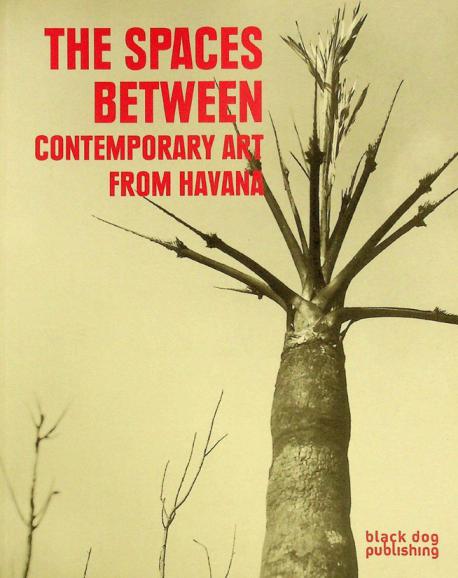
The spaces between contemporary art from Havana
\"The catalogue of one of the most important exhibitions of contemporary Cuban art outside of the Caribbean. It explores the issues of money, identity and bureaucracy in the works of renowned artists such as Juan Carlos Alom, Celia y Junior and Eduardo Ponjuan and encompasses much of the richness of the Havanan art scene. As opined by the book's title, this is a publication focused toward the shared spaces and communal sensibilities of a city, rather than an attempt to survey the entire contemporary output of this anomalous nation. In essence, the study is a concentrated one of modern Havana, taking note of those artistic, cultural, socio- economic and anthropological influences on its art scene without the intent of becoming pedagogic in the process. Including major contemporary figures such as Juan Carlos Alom, Celia y Junior and Eduardo Ponjuan, The Spaces Between discusses the modern current of unfocused politicisation within the works featured, where issues of money, identity and bureaucracy are garnered from each viewers reading and imagination, suggesting reflections of the current emphasis on the spectator as a contributor to the making of meaning. Published in collaboration with the Morris and Helen Belkin Art Gallery, Vancouver, the book maintains the ambient approach of the partnering exhibition in an attempt to depict the context of Havana artists in the modern era. In part it discusses the lo-tech necessities of contemporary artists working in the city today, which has formed if not a coherent style, then a municipal approach to practice. As such, much of the work uses recycled materials or simple video and text-based elements to convey its meaning in a manner more diverse and ambiguous than prior generations of Cuban artists.\"--Publisher's web site.
Book

Cuban Artists Across the Diaspora
No detailed description available for \"Cuban Artists Across the Diaspora\".
eBook


A Pool of Water: Backyard Borders between Cuba and the United States
Response to Glenda León’s installation artwork Sueño de verano (“Summer Dream,” 2012) and Juana Valdes’s installation artwork, Te-Amo (“I-Love-You,” 2007)
Journal Article