
Catalogue Search | MBRL


Are you sure you want to remove the book from the shelf?

{{itemTitle}}
78
result(s) for
"Art, Etruscan."
Sort by:

The collection of antiquities of the American Academy in Rome
The foundation of the American Academy in Rome dates back more than one hundred years to the early decades of the last century. Over the years, the Academy has acquired a study collection of material goods from antiquity, including coins, statues and figurines, lamps, stucco and other architectural fragments, jewelry, and inscriptions. While most are Roman in origin, some pieces are Greek or Etruscan. Some were gifts, others come from long-ago excavations, a few were bought. The Collection of Antiquities of the American Academy in Rome, the latest addition to the Supplements to the Memoirs of the American Academy in Rome series, focuses on highlights of the collection.
Book

On the Fascination of Objects
The Shefton Collection in Newcastle upon Tyne contains a fine array of Greek and Etruscan objects and takes its name from its founder Professor Brian Shefton (1919 – 2012). In spite of the importance of this collection it has not been widely published and remains something of a hidden gem. Brian Shefton was an insightful collector, as well as a distinguished scholar of Greek and Etruscan archaeology, and the 14 papers presented here reflect the broad scope of the collection; ranging across pottery, jewelery, terracottas and metalwork. The contributions, written by leading experts in the field, focus on specific objects or groups of objects in the Collection, providing new interpretations and bringing previously unpublished items to light. The history of the Shefton Collection is explored. Together these contributions provide a tribute to a remarkable individual who made a substantial and notable contribution to his discipline.
eBook

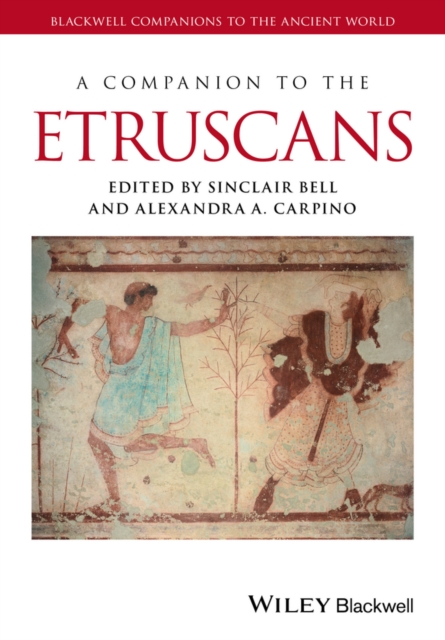
A companion to the Etruscans
This new collection presents a rich selection of innovative scholarship on the Etruscans, a vibrant, independent people whose distinct civilization flourished in central Italy for most of the first millennium BCE and whose artistic, social and cultural traditions helped shape the ancient Mediterranean, European, and Classical worlds.
* Includes contributions from an international cast of both established and emerging scholars
* Offers fresh perspectives on Etruscan art and culture, including analysis of the most up-to-date research and archaeological discoveries
* Reassesses and evaluates traditional topics like architecture, wall painting, ceramics, and sculpture as well as new ones such as textile archaeology, while also addressing themes that have yet to be thoroughly investigated in the scholarship, such as the obesus etruscus, the function and use of jewelry at different life stages, Greek and Roman topoi about the Etruscans, the Etruscans' reception of ponderation, and more
* Counters the claim that the Etruscans were culturally inferior to the Greeks and Romans by emphasizing fields where the Etruscans were either technological or artistic pioneers and by reframing similarities in style and iconography as examples of Etruscan agency and reception rather than as a deficit of local creativity
eBook

THE RETURN OF THE PIPERS: IN SEARCH OF NARRATIVE MODELS FOR THE AITION OF THE QVINQVATRVS MINVSCVLAE
The article argues that the famous story about the strike, exile and return of the Roman aulos players, which is recorded in the sixth book of Ovid's Fasti and referred to by other Latin and Greek sources, is based on a narrative model that already existed in Greece in the Archaic period. The study draws parallels between the tale of the pipers and the myth of the return of Hephaestus to Olympus, suggesting that, apart from similar plots, the two stories share many motifs, such as references to themes derived from comedy and satyr drama. Searching for a possible channel of transmission of the story from Archaic Greece to Augustan Rome, the study explores the presence of satyric motifs in Etruscan vase-painting and Roman processional rites. It is furthermore emphasized that many of these motifs, which also appeared in lost satyr-plays, are echoed in Augustan poetry.
Journal Article

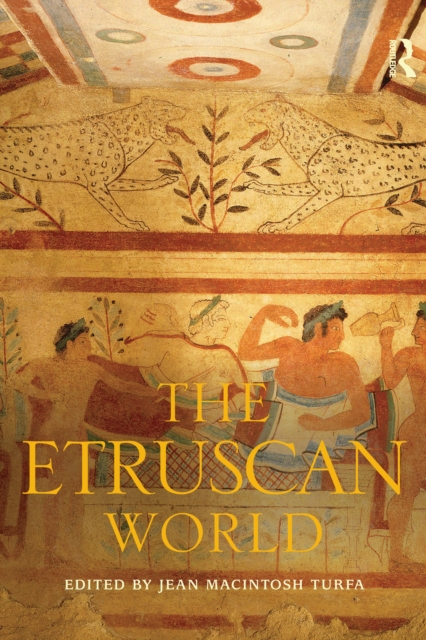
The Etruscan World
The Etruscans can be shown to have made significant, and in some cases perhaps the first, technical advances in the central and northern Mediterranean. To the Etruscan people we can attribute such developments as the tie-beam truss in large wooden structures, surveying and engineering drainage and water tunnels, the development of the foresail for fast long-distance sailing vessels, fine techniques of metal production and other pyrotechnology, post-mortem C-sections in medicine, and more. In art, many technical and iconographic developments, although they certainly happened first in Greece or the Near East, are first seen in extant Etruscan works, preserved in the lavish tombs and goods of Etruscan aristocrats. These include early portraiture, the first full-length painted portrait, the first perspective view of a human figure in monumental art, specialized techniques of bronze-casting, and reduction-fired pottery (the bucchero phenomenon). Etruscan contacts, through trade, treaty and intermarriage, linked their culture with Sardinia, Corsica and Sicily, with the Italic tribes of the peninsula, and with the Near Eastern kingdoms, Greece and the Greek colonial world, Iberia, Gaul and the Punic network of North Africa, and influenced the cultures of northern Europe.
In the past fifteen years striking advances have been made in scholarship and research techniques for Etruscan Studies. Archaeological and scientific discoveries have changed our picture of the Etruscans and furnished us with new, specialized information. Thanks to the work of dozens of international scholars, it is now possible to discuss topics of interest that could never before be researched, such as Etruscan mining and metallurgy, textile production, foods and agriculture. In this volume, over 60 experts provide insights into all these aspects of Etruscan culture, and more, with many contributions available in English for the first time to allow the reader access to research that ma
eBook
Experiencing Etruscan Pots
In a world without plastics, ceramics, alongside organic containers, were used for almost every substance which required protection or containment: from perfume to porridge. The experience of an Etruscan person, living day to day, would have been filled with interactions with ceramics, making them objects which can recall intimate transactions in the past to the archaeologist in the present. Characterising that experience of Etruscan pottery is the concern of this book. What was it like to use and live with Etruscan pottery? How was the interaction between an Etruscan pot structured and constituted? How can that experience be related back to bigger questions about the organisation of Etruscan society, its increasingly urban nature and relationship with other Mediterranean cultures? More specifically, this volume aims to unpick both the physical encounter between vessel and hand, and the emotional interaction between the user of a pot and the images inscribed upon its surface.
eBook

Archaeological, art-historical, and artistic approaches to classical antiquity. Viccy Coltman (ed.), Making Sense of Greek Art, University of Exeter Press, 2012
Making sense of Greek Art is a Festschrift in memory of John Betts containing papers by ten of his students and colleagues. Their papers on Greek, Etruscan, Roman, and nineteenth-century topics reveal a wide range of methodologies. Two papers focus on subjects that might be covered in a course on Greek art and archaeology: one evaluates votive offerings in the sanctuary of Artemis Orthia at Sparta (Nicki Waugh); and the other compares archaeological and art-historical approaches to the study of Greek vases (Zosia Archibald). Three are concerned with Etruscan and Roman works: an Etruscan reinterpretation of a Greek myth (Vedia Izzet); Hellenistic and Roman versions of Aphrodite holding a mirror (Shelley Hales); and early Augustan uses of Archaistic art (Christopher H. Hallett). The other five papers illustrate the uses of classical artefacts during the nineteenth century: classical elements in Jacques-Louis David’s paintings (Ed Lilley); display of antiquities in the library of an English country house (Viccy Coltman); Tanagra figurines in paintings by Lawrence Alma-Tadema and Jean-Léon Gérôme (Genevieve Liveley); Alma-Tadema’s drawings for a theatrical production of Hypatia (Michael Liversidge); and plaster casts of the Elgin marbles exhibited in the Greek court of the Crystal Palace (Kate Nichols).
Journal Article

Two ways of seeing the Etruscan female
This paper studies two concrete aspects of the role of women in Etruria in the VIth century BC: on the one part, her situation in society and family, and on the other, the possibilities that women had, within the previous context, of choosing their outward appearance and clothing. These questions will be analyzed using classical texts, inscriptions, and above all, Etruscan art of the Archaic Period.
Journal Article