
Catalogue Search | MBRL


Are you sure you want to remove the book from the shelf?

{{itemTitle}}
609
result(s) for
"Art, European Influence."
Sort by:
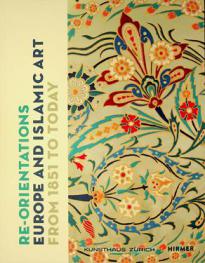
Re-orientations : Europe and Islamic art from 1851 to today
\"A wide variety of works explore the relationship between Islamic art and modernism in Western Europe. The art and architecture of the Islamic world strongly influenced the development of Western modernism. Re-Orientations reflects the diversity of this fascinating cultural exchange by showcasing a rich variety of works from the mid-nineteenth century to the present day, including drawings, watercolors, paintings, photographs, ceramics, textiles, videos, installations, and more.During the nineteenth century European collectors caught in Orientalism and 'Islamophilia' began to acquire Islamic art. With the advent of modernism, avant-garde artists and those working in the applied arts sought inspiration in the forms and colors of Islamic art. The catalog, which accompanies a 2023 exhibit at the Kunsthaus Zürich, delves into this historical context and more to examine the relationships between the featured works. Re-Orientations showcases art by Hélène Adant, Anila Quayyum Agha, Marwan Bassiouni, Edmond Bénard, Henriette Browne, Karl Gerstner, Jean-Léon Gérôme, Jaʻfar ibn Najaf ʻAli, Elisabeth Jerichau-Baumann, Wassily Kandinsky, Gülsün Karamustafa, Bouchra Khalili, Paul Klee, J. & L. Lobmeyr, Henri Matisse, Gabriele Münter, MuhammadʻAli Ashraf, Muhammad Jaʻfar, Muhammad Yusuf, Osman Hamdi Bey, Lotte Reiniger, Charles Claude Rudhardt, and Salah al-Din, as well as historic pieces by unknown artists from Algeria, Egypt, India, Iran, Iraq, Morocco, Spain, Syria, Tunisia, Turkey, and Uzbekistan.\"-- Provided by publisher.

Contraband guides : race, transatlantic culture, and the arts in the Civil War era
In his best-selling travel memoir, The Innocents Abroad, Mark Twain punningly refers to the black man who introduces him to Venetian Renaissance painting as a \"contraband guide,\" a term coined to describe fugitive slaves who assisted Union armies during the Civil War. By means of this and similar case studies, Paul H. D. Kaplan documents the ways in which American cultural encounters with Europe and its venerable artistic traditions influenced nineteenth-century concepts of race in the United States.
Americans of the Civil War era were struck by the presence of people of color in European art and society, and American artists and authors, both black and white, adapted and transformed European visual material to respond to the particular struggles over the identity of African Americans. Taking up the work of both well- and lesser-known artists and writers—such as the travel writings of Mark Twain and William Dean Howells, the paintings of German American Emanuel Leutze, the epistolary exchange between John Ruskin and Charles Eliot Norton, newspaper essays written by Frederick Douglass and William J. Wilson, and the sculpture of freed slave Eugène Warburg—Kaplan lays bare how racial attitudes expressed in mid-nineteenth-century American art were deeply inflected by European traditions.
By highlighting the contributions people of black African descent made to the fine arts in the United States during this period, along with the ways in which they were represented, Contraband Guides provides a fresh perspective on the theme of race in Civil War–era American art. It will appeal to art historians, to specialists in African American studies and American studies, and to general readers interested in American art and African American history.
eBook

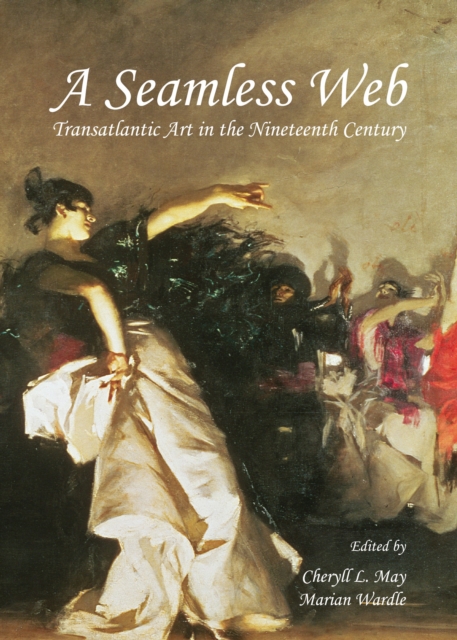
A Seamless Web
In recent years, American art scholars have increasingly focused on the importance of cross-cultural exchanges during the nineteenth century. As essayist François Brunet puts it, mid-nineteenth century landscapes were \"transnational . . . permeated by complex transactions where American originality produced itself not only in imitation of or reaction against European influences, . . . but as critical mirroring and incorporating of European images.\" Articles in this collection make clear.
eBook

Kongo : power and majesty
\"A landmark presentation that will radically redefine our understanding of Africa's relationship with the West, Kongo: Power and Majesty, opening at The Metropolitan Museum of Art this September, will focus on one of the continent's most influential artistic traditions, from the earliest moment of direct engagement between African and European leaders at the end of the 15th century through the early 20th century. The creative output of Kongo artists of Central Africa will be represented by 134 works drawn from more than 50 institutional and private collections across Europe and the United States, reflecting five hundred years of encounters and shifting relations between European and Kongo leaders. From a dynamic assembly of 15 monumental power figures to elegantly carved ivories and finely woven textiles, the exhibition will explore how the talents of Central Africa's most gifted artists were directed toward articulating a culturally distinct vernacular of power.\"--Metropolitan Museum of Art website
Book

China in the Frame
Mechanisms of representation of the cultural Other and their connections with processes of self-expression constitute the core of China in the Frame. This original ethnographic study of Chinese-themed displays of artworks in a selection of permanent and temporary exhibitions in Italy highlights specific forms of the materialisation of ideas of cultural identities. The Other represented by these displays is China, the identity of which is nowadays perceived by a wider western public, if not un.
eBook

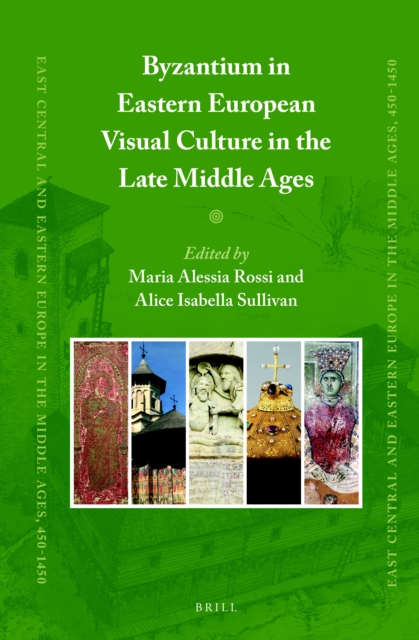
Byzantium in Eastern European Visual Culture in the Late Middle Ages
Byzantium in Eastern European Visual Culture in the Late Middle Ages focuses on how the heritage of Byzantium was continued and transformed alongside local developments in the artistic and cultural traditions of Eastern Europe between the fourteenth and sixteenth centuries.
eBook
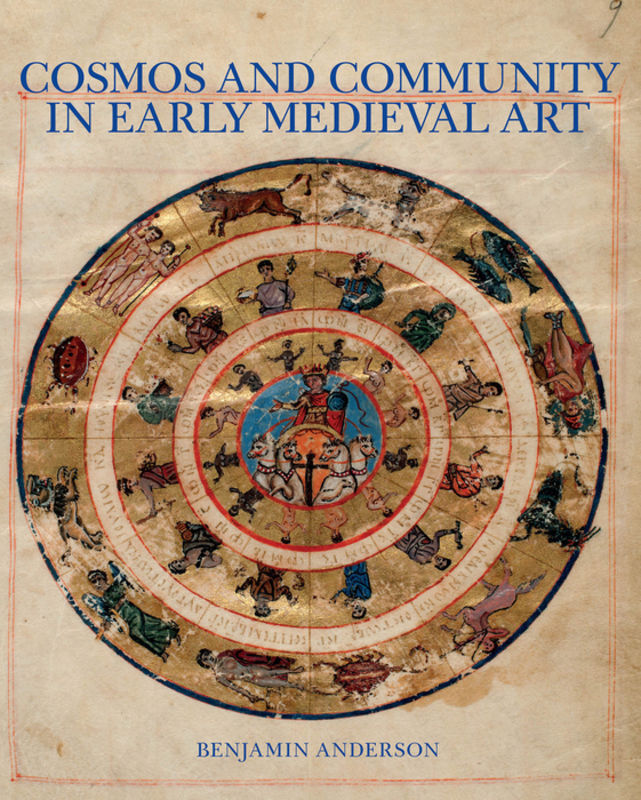
Cosmos and community in early medieval art
In the rapidly changing world of the early Middle Ages, depictions of the cosmos represented a consistent point of reference across the three dominant states-the Frankish, Byzantine, and Islamic Empires. As these empires diverged from their Greco-Roman roots between 700 and 1000 A.D. and established distinctive medieval artistic traditions, cosmic imagery created a web of visual continuity, though local meanings of these images varied greatly. Benjamin Anderson uses thrones, tables, mantles, frescoes, and manuscripts to show how cosmological motifs informed relationships between individuals, especially the ruling elite, and communities, demonstrating how domestic and global politics informed the production and reception of these depictions. The first book to consider such imagery across the dramatically diverse cultures of Western Europe, Byzantium, and the Islamic Middle East, Cosmos and Community in Early Medieval Art illuminates the distinctions between the cosmological art of these three cultural spheres, and reasserts the centrality of astronomical imagery to the study of art history.
eBook

Receptions of Antiquity, Constructions of Gender in European Art, 1300–1600
Receptions of Antiquity, Constructions of Gender in European Art, 1300-1600 examines the way in which late medieval and early modern visual culture engaged with Greek and Roman antiquity to construct and challenge contemporary gender norms.
eBook