
Catalogue Search | MBRL


Are you sure you want to remove the book from the shelf?

{{itemTitle}}
122
result(s) for
"Art, Modern -- 20th century -- Themes, motives"
Sort by:


The disabled body in contemporary art
This volume analyzes the representation of disabled and disfigured bodies in contemporary art and its various contexts, from art history to photography to medical displays to the nineteenth- and twentieth-century freak show.
eBook

Paradise is now : palm trees in art
Seit èuber zweitausend Jahren erfreut sich die Palme im Morgen- und Abendland einer auاergewèohnlichen Beliebtheit. èUber Kontinente, Religionen und Kulturen hinweg erzèahlt sie Geschichten von Wohlstand, Frieden und Seelenheil. Kein anderes Motiv transportiert diese Glèucksversprechen èuberzeugender als die Palme. Allgegenwèartig in der Werbung und den sozialen Medien beschwèort sie in der sèakularen Welt Vorstellungen von Luxus, Jetset und ewigen Sonnenschein herauf und reprèasentiert ein modernes Paradies. Auch die bildende Kunst kann ihrem visuellen Reiz und ihrer metaphorischen Kraft nicht widerstehen. Vor diesem reichen kulturellen Hintergrund wird in der begleitenden Publikation zur Ausstellung 'Paradise is Now' die vielseitige Darstellung von Palmen in der zeitgenèossischen Kunst aufgezeigt: Was steht hinter der Popularitèat dieses Emblems und welche Bedeutungsebenen und Widersprèuche offenbaren sich im Zuge der kèunstlerischen Auseinandersetzung? Neben Texten von Bret Easton Ellis, Leif Randt und Norman Rosenthal versammelt die Publikation u.a. Werke von John Baldessari, Marcel Broodthaers, Rodney Graham, Secundino Hernâandez, David Hockney, Alicja Kwade, Sigmar Polke, Ed Ruscha und Rirkrit Tiravanija. Exhibition: Robert Grunenberg & Salon Dahlmann, Berlin, Germany (26.04.-30.06.2018).
Book
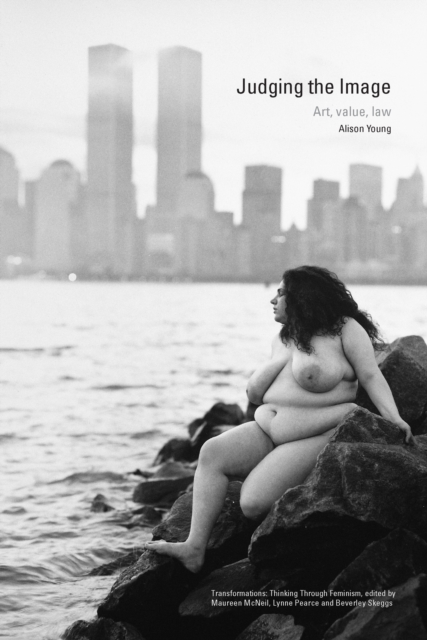
Judging the Image
Art, value, law - the links between these three terms mark a history of struggle in the cultural scene. Studies of contemporary culture have thus increasingly turned to the image as central to the production of legitimacy, aesthetics and order. Judging the Image extends the cultural turn in legal and criminological studies by interrogating our responses to the image. This book provides a space to think through problems of ethics, social authority and the legal imagination. Concepts of memory and interpretation, violence and aesthetic, authority and legitimacy are considered in a diverse range of sites, including:
body, performance and regulation
judgment, censorship and controversial artworks
graffiti and the aesthetics of public space
HIV and the art of the disappearing body
witnessing, ethics and the performance of suffering
memorial images - art in the wake of disaster.
eBook

Breaking Resemblance
In recent decades curators and artists have shown a distinct interest in religion, its different traditions, manifestations in public life, gestures and images. Breaking Resemblance explores the complex relationship between contemporary art and religion by focusing on the ways artists re-work religious motifs as a means to reflect critically on our desire to believe in images, on the history of seeing them, and on their double power— iconic and political. It discusses a number of exhibitions that take religion as their central theme, and a selection of works by Bill Viola, Lawrence Malstaf, Victoria Reynolds, and Berlinde de Bruyckere—all of whom, in their respective ways and media, recycle religious motifs and iconography and whose works resonate with, or problematize the motif of, the true image.
eBook

Nonconformers : a new history of self-taught artists
When the art world has paid attention to makers from outside the cultural establishment, including so-called outsider and self-taught artists, it has generally been within limiting categories. Yet these artists, including many women, people with disabilities, and people of color, have had a transformative influence on the history of modern art. Responding to growing interest in these artists, this book offers a nuanced history of their work and how it has been understood from the early twentieth century to the present day.0Nonconformers includes work by well-known figures such as Henry Darger, Hilma af Klint, and Bill Traylor alongside many other artists who deserve widespread recognition. After reviewing how self-taught artists factored into key movements of twentieth-century art, the book shifts to highlighting the voices of contemporary practitioners through new interviews with artists William Scott, Mamadou Cisse, and George Widener. An international group of contributors addresses topics such as the development of the Black Folk Art movement in America and l'Art Brut in France, the creative process of self-taught artists working outside of traditional studios, and the themes of figuration, landscape, and abstraction. Global in scope and with chronological breadth, this alternative narrative is an essential introduction to the genre long known as \"Outsider Art\"--Publisher.
BOOK

The Total Work of Art in European Modernism
In this groundbreaking book David Roberts sets out to demonstrate the centrality of the total work of art to European modernism since the French Revolution. The total work of art is usually understood as the intention to reunite the arts into the one integrated whole, but it is also tied from the beginning to the desire to recover and renew the public function of art. The synthesis of the arts in the service of social and cultural regeneration was a particularly German dream, which made Wagner and Nietzsche the other center of aesthetic modernism alongside Baudelaire and Mallarmé. The history and theory of the total work of art pose a whole series of questions not only to aesthetic modernism and its utopias but also to the whole epoch from the French Revolution to the totalitarian revolutions of the twentieth century. The total work of art indicates the need to revisit key assumptions of modernism, such as the foregrounding of the autonomy and separation of the arts at the expense of the countertendencies to the reunion of the arts, and cuts across the neat equation of avant-gardism with progress and deconstructs the familiar left-right divide between revolution and reaction, the modern and the antimodern. Situated at the interface between art, religion, and politics, the total work of art invites us to rethink the relationship between art and religion and art and politics in European modernism. In a major departure from the existing literature David Roberts argues for twin lineages of the total work, a French revolutionary and a German aesthetic, which interrelate across the whole epoch of European modernism, culminating in the aesthetic and political radicalism of the avant-garde movements in response to the crisis of autonomous art and the accelerating political crisis of European societies from the 1890s forward.
eBook


Unlimited action
Unlimited action concerns the limits imposed upon art and life, and the means by which artists have exposed, refused, or otherwise reshaped the horizon of aesthetics and of the practice of art, by way of performance art. It examines the ‘performance of extremity’ as practices at the limits of the histories of performance and art, in performance art’s most fertile and prescient decade, the 1970s. Dominic Johnson recounts and analyses game-changing performance events by six artists: Kerry Trengove, Ulay, Genesis P-Orridge, Anne Bean, the Kipper Kids, and Stephen Cripps. Through close encounters with these six artists and their works, and a broader contextual milieu of artists and works, Johnson articulates a counter-history of actions in a new narrative of performance art in the 1970s, to rethink and rediscover the history of contemporary art and performance.
eBook