
Catalogue Search | MBRL


Are you sure you want to remove the book from the shelf?

{{itemTitle}}
1,827
result(s) for
"Art, Ottoman."
Sort by:

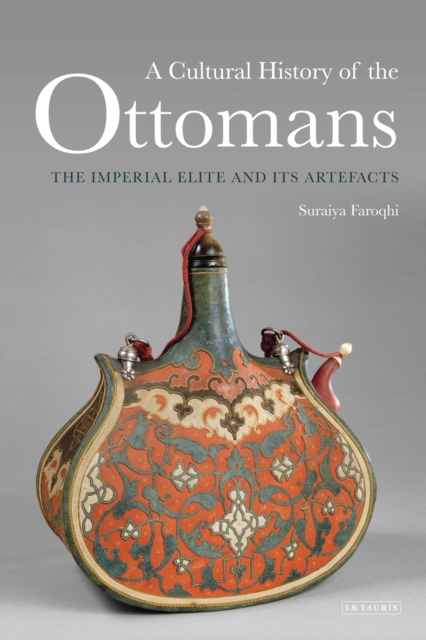
A cultural history of the Ottomans : the imperial elite and its artefacts
The Ottoman Empire was more than a center of military and economic activity; it was a vivid and flourishing cultural realm. The artefacts and objects remaining from all corners of this vast empire tell us a great deal about the everyday concerns of the Ottomans. In this book, Faroqhi, a leading historian on the Ottoman Empire, has selected the most revealing, surprising and striking examples of the artefacts which illuminate the lesser-known cultural and artistic world of the Ottomans. Each image reproduced in full color is deftly linked to the latest historiography, and the social, political and economic implications of her selections are never forgotten. In Faroqhi's hands, the objects become ways to learn more about trade, gender and socio-political status. They open an enticing window onto the variety and color of everyday life; from the Sultan's court, to the peasantry and slavery. Amongst its luxuriant faiences and etchings, its sofras and carpets, \"A Cultural History of the Ottomans\" is essential reading for all students of the Ottoman Empire and its material culture.\"
BOOK

Affect, emotion, and subjectivity in early modern Muslim Empires : new studies in Ottoman, Safavid, and Mughal art and culture
Affect, Emotion and Subjectivity in Early Modern Muslim Empires presents new approaches to Ottoman Safavid and Mughal art and culture. Taking artistic agency as a starting point, the authors consider the rise in status of architects, the self-fashioning of artists, the development of public spaces, as well as new literary genres that focus on the individual subject and his or her place in the world. They consider the issue of affect as performative and responsive to certain emotions and actions, thus allowing insights into the motivations behind the making and, in some cases, the destruction of works of art. The interconnected histories of Iran,Turkey and India thus highlight the urban and intellectual changes that defined the early modern period.Contributors are: Sussan Babaie, Chanchal Dadlani, Jamal Elias, Emine Fetvaci, Christiane Gruber, Sylvia Hougteling, Kishwar Rizvi, Sunil Sharma, and Marianna Shreve Simpson.
eBook
Tree Species in Ottoman Miniature Art (16th-Century)
The concept of the tree, which is encountered as a motif in every branch of art throughout history, has been the subject of various research and studies in each art specifically. In this context, it is valuable to examine the trees, which are an integral part and an important element of the composition in miniatures, in terms of their species. Within the scope of the research examined a large number of manuscripts from the sixteenth century. In the analysis of tree samples of these works, which contain the richest examples of the classical period, historical sources, travel books and documents were used, as well as botanical science in the determination of tree species. As a result of the findings, it can be said that many of the tree species in nature can be identified in the Ottoman miniature by the described geography. Among the tree species seen in the period, cypress, plane tree and date palm are formed, fruit trees, coniferous trees, poplar, Aesculus hippocastanum, oak and exceptional tree specimens have also been encountered. This study reveals how rich the tree (wood) inventory of the 16th-century Ottoman miniature was, as well as the richness of style and design of the period.
Journal Article

Sanctifying Domestic Space and Domesticating Sacred Space: Reading Ziyāra and Taṣliya in Light of the Domestic in the Early Modern Ottoman World
Shrine-visitation (ziyāra) and devotion to Muḥammad (such as expressed in taṣliya, the uttering of invocations upon the Prophet), both expressed through a range of ritualized practices and material objects, were at the heart of everyday Islam for the vast majority of early modern Ottoman Muslims across the empire. While both bodies of practice had communal and domestic aspects, this article focuses on the important intersections of the domestic with both shrine-visitation and Muḥammad-centered devotion as visible in the early modern Ottoman lands, with a primary emphasis on the eighteenth century. While saints’ shrines were communal and ‘public’ in nature, a range of attitudes and practices associated with them, recoverable through surviving physical evidence, travel literature, and hagiography, reveal their construction as domestic spaces of a different sort, appearing to pious visitors as the ‘home’ of the entombed saint through such routes as wall-writing, gender-mixing, and dream encounters. Devotion to Muḥammad, on the other hand, while having many communal manifestations, was also deeply rooted in the domestic space of the household, in both prescription and practice. Through an examination of commentary literature, hagiography, and imagery and objects of devotion, particularly in the context of the famed manual of devotion Dalā’il al-khayrāt, I demonstrate the transformative effect of such devotion upon domestic space and the ways in which domestic contexts were linked to the wider early modern world, Ottoman, and beyond.
Journal Article
A Cultural History of the Ottomans
Far from simply being a centre of military and economic activity, the Ottoman Empire represented a vivid and flourishing cultural realm. The artefacts and objects that remain from all corners of this vast empire illustrate the real and everyday concerns of its subjects and elites and, with this in mind, Suraiya Faroqhi, one of the most distinguished Ottomanists of her generation, has selected 40 of the most revealing, surprising and striking. Each image - reproduced in full colour - is deftly linked to the latest historiography, and the social, political and economic implications of her selections are never forgotten. In Faroqhi’s hands, the objects become ways to learn more about trade, gender and socio-political status and open an enticing window onto the variety and colour of everyday life, from the Sultan’s court, to the peasantry and slavery. Amongst its faiences and etchings and its sofras and carpets, A Cultural History of the Ottomans is essential reading for all those interested in the Ottoman Empire and its material culture. Faroqhi here provides the definitive insight into the luxuriant and varied artefacts of Ottoman world.
eBook
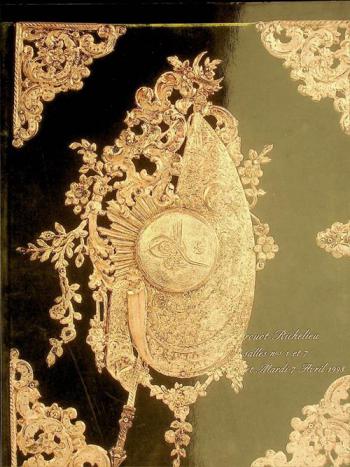
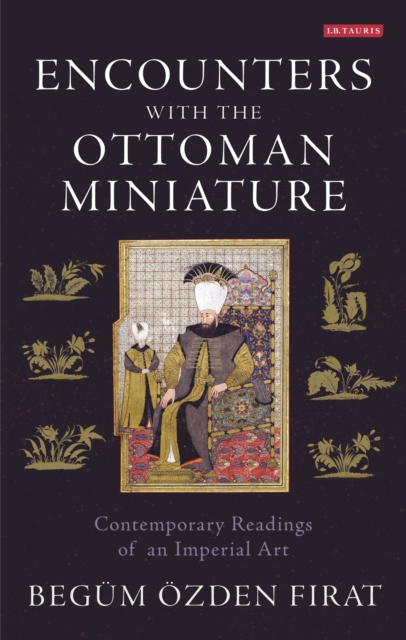
Encounters With The Ottoman Miniature
The dominant form of Ottoman pictorial art until the eighteenth century, miniatures have traditionally been studied as reflecting the socio-historical contexts, aesthetic concerns and artistic tastes of the era within which they were produced. Begum Ozden Fyrat proposes instead a radical re-reading of seventeenth-and eighteenth-century miniatures in the light of contemporary critical theory, highlighting the viewer’s encounter with the image. Encounters with the Ottoman Miniature employs contemporary concepts such as the gaze, frame/framing, reading and re-reading, drawing on thinkers such as Walter Benjamin, Roland Barthes and Gilles Deleuze to establish the vibrant cultural agency of miniature paintings. With analysis that illuminates both the social and political situations in which these miniatures were painted as well as emphasising the miniature's contemporary relevance, Firat presents an important new re-imagining of this art form.
eBook