
Catalogue Search | MBRL


Are you sure you want to remove the book from the shelf?

{{itemTitle}}
7
result(s) for
"Art, Prehistoric-Social aspects"
Sort by:

The Usage of Ochre at the Verge of Neolithisation from the Near East to the Carpathian Basin
The Usage of Ochre at the Verge of Neolithisation from
the Near East to the Carpathian Basin explores the cultural
meaning of ochre among the societies of the Late
Epipalaeolithic/Mesolithic and the Early Neolithic from the Levant
to the Carpathian Basin. Firstly, the book attempts an accurate
characterization of the material, ochre. Both its features as well
as its possible outcrops and co-occurring minerals are outlined.
The cultural background is described, in particular underlining the
continuation of chosen elements and the visible dichotomy between
sacral and profane areas of ochre application. On that basis it
proved possible to discuss the meanings of ochre, underscored by
that division. The discussion also focuses on the possibility of
matching archaeological and natural samples. This in turn would
allow the creation of a map of interconnections between societies
and/or outcrops. To that end the project employed geochemical
methods, such as SEM, EDS and a trial study with Raman
spectroscopy. The main results demonstrate the possibility of ochre
characterization based on laboratory results and the visible
interconnections between Epipalaeolithic/Mesolithic and Neolithic
societies.
eBook

Captives
InCaptives: How Stolen People Changed the Worldarchaeologist Catherine M. Cameron provides an eye-opening comparative study of the profound impact that captives of warfare and raiding have had on small- scale societies through time. Cameron provides a new point of orientation for archaeologists, anthropologists, historians, and other scholars by illuminating the impact that captive-taking and enslavement have had on cultural change, with important implications for understanding the past.Focusing primarily on indigenous societies in the Americas while extending the comparative reach to include Europe, Africa, and Island Southeast Asia, Cameron draws on ethnographic, ethnohistoric, historic, and archaeological data to examine the roles that captives played in small-scale societies. In such societies, captives represented an almost universal social category consisting predominantly of women and children and constituting 10 to 50 percent of the population in a given society. Cameron demonstrates how captives brought with them new technologies, design styles, foodways, religious practices, and more, all of which changed the captor culture.This book provides a framework that will enable archaeologists to understand the scale and nature of cultural transmission by captives and it will also interest anthropologists, historians, and other scholars who study captive-taking and slavery. Cameron's exploration of the peculiar amnesia that surrounds memories of captive-taking and enslavement around the world also establishes a connection with unmistakable contemporary relevance.
eBook

Crafting the nation in colonial India
Drawing on a wide range of archival evidence, Abigail McGowan argues that crafts seized the political imagination in western India because they provided a means of debating the present and future of the country.
eBook

Beyond War
The classic opening scene of 2001, A Space Odyssey shows an ape-man wreaking havoc with humanity’s first invention--a bone used as a weapon to kill a rival. It’s an image that fits well with popular notions of our species as inherently violent, with the idea that humans are--and always have been--warlike by nature. But as Douglas P. Fry convincingly argues in Beyond War, the facts show that our ancient ancestors were not innately warlike--and neither are we. Fry points out that, for perhaps ninety-nine percent of our history, for well over a million years, humans lived in nomadic hunter-and-gatherer groups, egalitarian bands where generosity was highly valued and warfare was a rarity. Drawing on archaeology and fascinating fieldwork on hunter-gatherer bands from around the world, Fry debunks the idea that war is ancient and inevitable. For instance, among Aboriginal Australians--who numbered some 750,000 individuals before the arrival of Europeans, all living in hunter-gathering groups--warfare was an extreme anomaly. There was individual violence and aggression, of course, but the Aborigines had sophisticated methods of resolving disputes, controlling individual outbursts, and preventing loss of life. Fry shows that, far from being natural, warfare actually appeared quite recently along with changes in social organization and especially the rise of states. But Fry also points out that even today, when war seems ever present (at least on television), the vast majority of us live peaceful, nonviolent lives. We are not as warlike as it might seem, and if we can learn from our ancestors, we may be able to move beyond war to provide real justice and security for the people of the world. A profoundly heartening view of human nature, Beyond War offers a hopeful perspective on our species and a positive prognosis for a future without war.
eBook
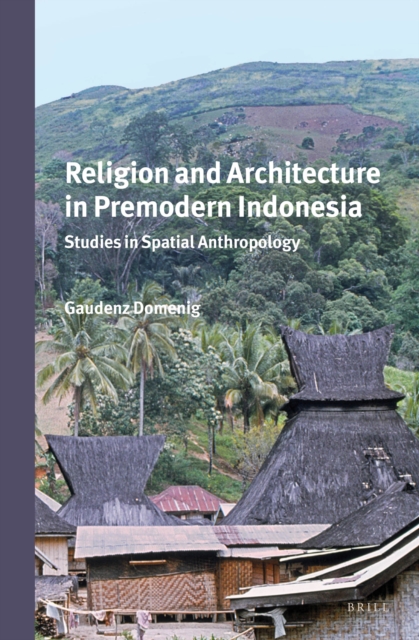
Religion and Architecture in Premodern Indonesia
In his richly illustrated Religion and Architecture in Premodern Indonesia Gaudenz Domenig investigates the nature of Indonesian ethnic religions by focusing on land opening rituals, sacred groves, and architectural responses to the custom of presenting offerings. Since deities and spirits were supposed to taste offerings on the spot, it was a task of architecture to attract them and to guide them into houses where offerings were presented. Domenig quotes numerous sources to show that certain material elements of the house were viewed as spirit attractors, spirit ladders or spirit pathways. Various 'exotic' features of Indonesian vernacular architecture thus become understandable as relics from times when architecture was still responding to indigenous religions practised in the archipelago.
eBook
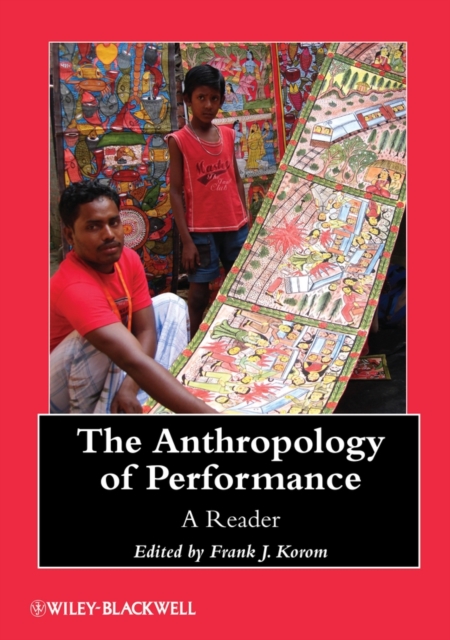
The anthropology of performance
The Anthropology of Performance is an invaluable guide to this exciting and growing area. This cutting-edge volume on the major advancements in performance studies presents the theories, methods, and practices of performance in cultures around the globe. Leading anthropologists describe the range of human expression through performance and explore its role in constructing identity and community, as well as broader processes such as globalization and transnationalism. * Introduces new and advanced students to the task of studying and interpreting complex social, cultural, and political events from a performance perspective * Presents performance as a convergent field of inquiry that bridges the humanities and social sciences, with a distinctive cross-cultural perspective in anthropology * Demonstrates the range of human expression and meaning through performance in related fields of religious & ritual studies, folkloristics, theatre, language arts, and art & dance * Explores the role of performance in constructing identity, community, and the broader processes of globalization and transnationalism * Includes fascinating global case studies on a diverse range of phenomena * Contributions from leading scholars examine verbal genres, ritual and drama, public spectacle, tourism, and the performances embedded in everyday selves, communities and nations
eBook
Motives for Language Change
This specially commissioned volume considers the processes involved in language change and the issues of how they can be modelled and studied. The way languages change offers an insight into the nature of language itself, its internal organisation, and how it is acquired and used. Accordingly, the phenomenon of language change has been approached from a variety of perspectives by linguists of many different orientations. This book, originally published in 2003, brings together an international team of leading figures from different areas of linguistics to re-examine some of the central issues in this field and also to discuss new proposals. The volume is arranged into sections, including grammaticalisation, the typological perspective, the social context of language change and contact-based explanations. It seeks to cover the subject as a whole, bearing in mind its relevance for the general analysis of language, and will appeal to a broad international readership.
eBook