
Catalogue Search | MBRL


Are you sure you want to remove the book from the shelf?

{{itemTitle}}
10
result(s) for
"Art Morocco Exhibitions"
Sort by:
Eugène Delacroix’s Jewish Wedding and the Medium of Painting
The white wall in the center of Eugène Delacroix’sA Jewish Wedding in Morocco(Figure 12.1) has always struck me as a color field announcing what modernist painting would be. Emerging from an exuberant surrounding of purple, green, red, and orange, it addresses us as forcefully as a figure or a gaze, although it is neither. The critical engagement with modernism has produced a set of categories, such as opticality, thickness, and facingness, which could be implemented to analyze this effect.¹ In proceeding this way, one would be continuing a tradition initiated by writers such as Charles Baudelaire, Paul Signac,
Book Chapter
Organizing Forces of the Field
In the first week of August 1931, the Moroccan sultan, Mohamed ben Youssef, and a large delegation ofmakhzanofficials that includedqa’idsfrom each of Morocco’s civil and military regions traveled from Casablanca to Marseille by ship and then on to Paris by train. The state visit’s main purpose was to tour the International Colonial Exposition that was staged that summer on the eastern edge of Paris in the Bois de Vincennes. Its organizers promoted the exposition as “le tour du monde en un jour,” a tour of the world in one day.¹ The sultan and the entourage were
Book Chapter
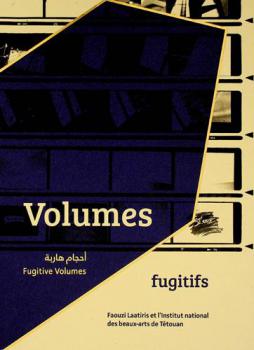
Volumes fugitifs : Faouzi Laatiris et l'Institut national des beaux-arts de Tétouan = Fugitive volumes : Faouzi Laatiris and the Tetouan Institut National des Beaux-Arts = أحجام هاربة : فوزي العتيريس والمعهد الوطني للفنون الجميلة
\"For its first 'carte blanche' exhibition, the Mohammed VI museum of Modern and Contemporary Art (MMVI) has chosen to invite Faouzi Laatiris. As an artist whose work fluctuates masterfully between appropriation and transfiguration, the everyday and the symbolic, and the joyful and the ironic, Laatiris has forged himself a unique reputation on the local art landscape. But any tribute to his part in the evolution of contemporary art in Morocco since the 1990s must also take into account of his influence on the teaching of art, and specifically through the experimental, interactive approach he initiated in 1993 with his Volume and Installation workshop at the Institut National des Beaux-Arts (INBA) in Tetouan. So this exhibition is also intended, in a more general way, as a tribute to the INBA. In opting to show with nine ex-students--all of them veterans of his workshop who are now pursuing their own careers internationally--Faouzi Laatiris has acknowledged a concern with the collective approach and the passing on of a legacy\"--Preface
Book

Degeneration and Decay in the National Museum
Moroccan museums do not exist. Moroccan museums are failed institutions. These two statements are the most common responses that Moroccan artists, curators, and academics initially give when asked to talk about museums in Morocco. The museums that they refer to are the national museums, and their critique of the institution is ultimately a critique of state support for arts infrastructures. National museums do not respond to local needs; there is no developed arts education in primary and high schools, there are no art departments in Moroccan universities, there is no national inventory of sites of patrimony, and ministerial politics reward
Book Chapter

