
Catalogue Search | MBRL


Are you sure you want to remove the book from the shelf?

{{itemTitle}}
118
result(s) for
"Art and globalization - History - 21st century"
Sort by:

The utopian globalists : artists of worldwide revolution, 1919-2009
\"An innovative history and critical account mapping the ways artists and their works have engaged with, and offered commentary on, modern spectacle in both capitalist and socialist modernism over the past ninety years. Focuses on artists whose work expresses the concept of revolutionary social transformation Provides a strong historical narrative that adds structure and clarity Features a cogent and innovative critique of contemporary art and institutions Covers 100 years of art from Vladimir Tatlin's constructivist 'Monument to the Third International', to Picasso's late 1940s commitment to Communism, to the Unilever Series sponsored Large Artworks installed at London's Tate Modern since 2000. Includes the only substantial account in print of John Lennon and Yoko Ono's 1969 Montreal 'Bed-in' Offers an accessible description and interpretation of Debord's 'society of the spectacle' theory \"-- Provided by publisher.
Book

Contemporary Art and the Cosmopolitan Imagination
Contemporary Art and the Cosmopolitan Imagination explores the role of art in conceiving and reconfiguring the political, ethical and social landscape of our time. Understanding art as a vital form of articulation, Meskimmon argues that artworks do more than simply reflect and represent the processes of transnational and transcultural exchange typical of the global economy. Rather, art can change the way we imagine, understand and engage with the world and with others very different than ourselves. In this sense, art participates in a critical dialogue between cosmopolitan imagination, embodied ethics and locational identity.
The development of a cosmopolitan imagination is crucial to engendering a global sense of ethical and political responsibility. By materialising concepts and meanings beyond the limits of a narrow individualism, art plays an important role in this development, enabling us to encounter difference, imagine change and make possible the new. This book asks what it means to inhabit a globalized world – how we might literally and figuratively make ourselves cosmopolitans, ‘at home’ everywhere. Contemporary art provides a space for this enquiry.
Contemporary Art and the Cosmopolitan Imagination is structured and written through four ‘architectonic figurations’ – foundation, threshold, passage and landing – which simultaneously reference the built environment and the transformative structure of knowledge-systems. It offers a challenging new direction in the current literature on cosmopolitanism, globalisation and art.
List of Illustrations List of Plates Introduction. Contemporary art: at home in a global world Chapter 1. Foundation – dynamic ground Chapter 2. Threshold – infinite generosity Chapter 3. Passage – transitive affects Chapter 4. Landing – imaginative engagement Afterword On Affirmative Criticality Selected Bibliography Index
Dr. Marsha Meskimmon is Professor of Modern and Contemporary Art History and Theory at the University of Loughborough, UK. Her research centres on the work of women artists and expanded theoretical and critical perspectives on aesthetics, history and gendered subjectivity. She has authored a number of books and journal articles, including Women Making Art: History, Subjectivity, Aesthetics (2003) and We Weren’t Modern Enough: Women Artists and the Limits of German Modernism (1999).
eBook


Biennials, Triennials, and Documenta
This innovative new history examines in-depth how the growing popularity of large-scale international survey exhibitions, or 'biennials', has influenced global contemporary art since the 1950s.
* Provides a comprehensive global history of biennialization from the rise of the European star-curator in the 1970s to the emergence of mega-exhibitions in Asia in the 1990s
* Introduces a global array of case studies to illustrate the trajectory of biennials and their growing influence on artistic expression, from the Biennale de la Méditerranée in Alexandria, Egypt in 1955, the second Havana Biennial of 1986, New York's Whitney Biennial in 1993, and the 2002 Documenta11 in Kassel, to the Gwangju Biennale of 2014
* Explores the evolving curatorial approaches to biennials, including analysis of the roles of sponsors, philanthropists and biennial directors and their re-shaping of the contemporary art scene
* Uses the history of biennials as a means of illustrating and inciting further discussions of globalization in contemporary art
eBook
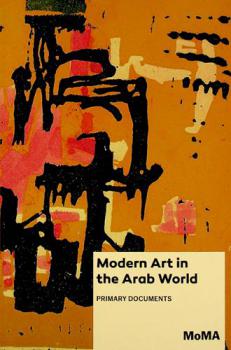
Modern art in the Arab world : primary documents
This is a compendium of critical art writings by 20th-century Arab intellectuals and artists that explore the formation of a global modernism through debates on originality, public space, spiritualism and art, postcolonial exhibition politics, and Arab nationalism, among many other topics. Modern Art in the Arab World: Primary Documents offers an unprecedented resource for the study of modernism: a compendium of critical art writings by twentieth-century Arab intellectuals and artists. The selection of texts-many of which appear here for the first time in English-includes manifestos, essays, transcripts of roundtable discussions, diary entries, exhibition guest-book comments, letters, and more. Traversing empires and nation-states, diasporas and speculative cultural and political federations, these documents bring light to the formation of a global modernism, through debates on originality, public space, spiritualism and art, postcolonial exhibition politics, and Arab nationalism, among many other topics. The collection is framed chronologically, and includes contextualizing commentaries to assist readers in navigating its broad geographic and historical scope. Interspersed throughout the volume are sixteen contemporary essays: writings by scholars on key terms and events as well as personal reflections by modern artists who were themselves active in the histories under consideration. A newly commissioned essay by historian and Arab-studies scholar Ussama Makdisi provides a historical overview of the region's intertwined political and cultural developments during the twentieth century. Modern Art in the Arab World is an essential addition to the investigation of modernism and its global manifestations. Publication of the Museum of Modern Art Distributed by Duke University Press
BOOK

The utopian globalists
THE UTOPIAN GLOBALISTS
\"Crossing continents, historical periods and cultural genres, Jonathan Harris skilfully traces the evolution of utopian ideals from early modernism to the spectacularised and biennialised (or banalised as some would say) contemporary art world of today.\"
Michael Asbury, University of the Arts, London
The Utopian Globalists is the second in a trilogy of books by Jonathan Harris examining the contours, forces, materials and meanings of the global art world, along with its contexts of emergence since the early twentieth century. The first of the three studies, Globalization and Contemporary Art (Wiley-Blackwell, 2011), anatomized the global art system through an extensive anthology of over 30 essays contextualized through multiple thematic introductions. The final book in the series, Contemporary Art in a Globalized World (forthcoming, Wiley-Blackwell), combines the historical and contemporary perspectives of the first and second books in an account focused on the 'mediatizations' shaping and representing contemporary art and its circuits of global production, dissemination and consumption.
This innovative and revealing history examines artists whose work embodies notions of revolution and human social transformation. The clearly structured historical narrative takes the reader on a cultural odyssey that begins with Vladimir Tatlin's constructivist model for a 'Monument to the Third International' (1919), a statement of utopian globalist intent, via Picasso's 1940s commitment to Soviet communism and John and Yoko's Montreal 'Bedin', to what the author calls the 'late globalism' of the Unilever Series at London's Tate Modern.
The book maps the ways artists and their work engaged with, and offered commentary on, modern spectacle in both capitalist and socialist modernism, throughout the eras of the Russian Revolution, the Cold War and the increasingly globalized world of the past 20 years. In doing so, Harris explores the idea that the utopian -globalist lineage in art remains torn between its yearning for freedom and a deepening identification with spectacle as a media commodity to be traded and consumed.
eBook

Art to come : histories of contemporary art
In 'Art to Come' Terry Smith--who is widely recognized as one of the world's leading historians and theorists of contemporary art--traces the emergence of contemporary art and further develops his concept of contemporaneity. Smith shows that embracing contemporaneity as both a historical concept and a condition of the globalized world allows us to grasp how contemporary art exists in a fluid space of increasing interdependencies, multiple contemporaneous modernities, and persistent inequalities. Throughout these essays, Smith offers systematic proposals for writing contemporary art's histories while assessing how curators, critics, philosophers, artists, and art historians are currently doing so. Among other topics, Smith examines the intersection of architecture with other visual arts, Chinese art since the Cultural Revolution, how philosophers are theorizing concepts associated with the contemporary, Australian Indigenous art, and the current state of art history.
Book
World-Forming and Contemporary Art
This book explores how contemporary art can alter the ways in which we visualise and conceptualise the world and the social relations that shape it. Drawing from the writings of philosopher Jean-Luc Nancy, it spotlights the concept of 'world-forming' and the political significance of art-making and viewing.
The central theme of 'world-forming' focuses attention on the processes of globalisation. The book explores how artists can facilitate shared creative spaces within and beyond the apparatuses of global capitalism. The book traces a philosophical progression from ontology to the political through a series of participatory practices. It forwards Jean-Luc Nancy's idea of 'world-forming' in order to show how contemporary art sustains critical and creative engagement with social practices. The overall objective of the book is to show, through participatory practices, how contemporary art can facilitate social change.
The book will be of interest to scholars working in art history, contemporary art, philosophy and politics.
eBook

The Babylon Complex: Theopolitical Fantasies of War, Sex, and Sovereignty
Babylon is a surprisingly multivalent symbol in U.S. culture and politics. Political citations of Babylon range widely, from torture at Abu Ghraib to depictions of Hollywood glamour and decadence. In political discourse, Babylon appears in conservative ruminations on democratic law, liberal appeals to unity, Tea Party warnings about equality, and religious advocacy for family values. A composite biblical figure, Babylon is used to celebrate diversity and also to condemn it, to sell sexuality and to regulate it, to galvanize war and to worry about imperialism. Erin Runions explores the significance of these shifts and contradictions, arguing that together they reveal a theopolitics that tries to balance the drive for U.S. dominance with the countervailing ideals and subjectivities of economic globalization. Examining the confluence of cultural formations, biblical interpretations, and (bio)political philosophies, The Babylon Complex shows how theopolitical arguments for war, sexual regulation, and political control both assuage and contribute to anxieties about waning national sovereignty. Theoretically sophisticated and engaging, this remarkable book complicates our understanding of how the Bible affects U.S. political ideals and subjectivities.
eBook
Impact of globalization on the local press in China
Impact of Globalization on the Local Press in China investigates Chinese news production and content, as well as the main factors that have caused significant changes to Chinese newspapers over the past three decades. By conducting an in-depth study of a particular leading newspaper group in China, Beijing Youth Daily, Zhang identifies and analyzes essential changes in press structure, news organization, and the role of journalists, thus revealing the relations between the global and local, external and internal influences, the Party-state and the media, and the media and the market. This is the first comprehensive study of news making at both macro and micro levels in China. It provides up-to-date empirical data analysis on the operation and practices of transforming Chinese newspapers; offers a tool to form, clarify, and refine concepts on media globalization and journalism in developing countries like China; and serves as a reference point for policy makers, media practitioners, academics, and students who engage in journalism studies, Chinese studies, media management, and globalization studies.
eBook