
Catalogue Search | MBRL


Are you sure you want to remove the book from the shelf?

{{itemTitle}}
21
result(s) for
"Art and literature Greece History To 1500."
Sort by:

The image of the artist in archaic and classical Greece : art, poetry, and subjectivity
\"This book explores the persona of the artist in Archaic and Classical Greek art and literature. Guy Hedreen argues that artistic subjectivity, first expressed in Athenian vase-painting of the sixth century BCE and intensively explored by Euphronios, developed alongside a self-consciously constructed persona of the poet. He explains how poets like Archilochos and Hipponax identified with the wily Homeric character of Odysseus as a prototype of the successful narrator, and how the lame yet resourceful artist-god Hephaistos is emulated by Archaic vase-painters such as Kleitias. In lyric poetry and pictorial art, Hedreen traces a widespread conception of the artist or poet as socially marginal, sometimes physically imperfect, but rhetorically clever, technically peerless, and a master of fiction. Bringing together in a sustained analysis the roots of subjectivity across media, this book offers a new way of studying the relationship between poetry and art in ancient Greece\"-- Provided by publisher.
Book

The Shadow of Creusa
Anders Cullhed's study The Shadow of Creusa explores the early Christian confrontation with pagan culture as a remote anticipation of many later clashes between religious orthodoxy and literary fictionality. After a careful survey of Saint Augustine's critical attitudes to ancient myth and poetry, summarized as a long drawn-out farewell, Cullhed examines other Late Antique dismissals as well as appropriations of the classical heritage. Macrobius, Martianus Capella and Boethius figure among the Late Antique intellectuals who attempted to save or even restore the old mythology by means of allegorical representation. On the other hand, pious poets such as Paulinus of Nola and Bible epic writers such as Iuvencus or Avitus of Vienne turned against pagan lies, and the mighty arch-bishop of Milan, Saint Ambrose, played off unconditional Christian truth against the last Roman strongholds of cultural pluralism. Thus, The Shadow of Creusa elucidates a cultural conflict which was to leave traces all through the Middle Ages and reach down to our present day.
eBook

The Hellenistic Far East
In the aftermath of Alexander the Great's conquests in the late fourth century B.C., Greek garrisons and settlements were established across Central Asia, through Bactria (modern-day Afghanistan) and into India. Over the next three hundred years, these settlements evolved into multiethnic, multilingual communities as much Greek as they were indigenous. To explore the lives and identities of the inhabitants of the Graeco-Bactrian and Indo-Greek kingdoms, Rachel Mairs marshals a variety of evidence, from archaeology, to coins, to documentary and historical texts. Looking particularly at the great city of Ai Khanoum, the only extensively excavated Hellenistic period urban site in Central Asia, Mairs explores how these ancient people lived, communicated, and understood themselves. Significant and original, The Hellenistic Far East will highlight Bactrian studies as an important part of our understanding of the ancient world.
eBook

Exploring Writing Systems and Practices in the Bronze Age Aegean
Writing does not begin and end with the encoding of an idea into a group of symbols. It is practiced by people who have learnt its principles and acquired the tools and skills for doing it, in a particular context that affects what they do and how they do it. Nor are these practices static, as those involved exploit opportunities to adapt old features and develop new ones. The act of writing then has tangible and visible consequences not only for the writers but also for those encountering what has been produced, whether they can read its content or not – with potential for a wider social visibility that can in turn affect the success and longevity of the writing system itself. With a focus on the syllabic systems of the Bronze Age Aegean, this book attempts to bring together different perspectives to create an innovative interdisciplinary outlook on what is involved in writing: from structuralist views of writing as systems of signs with their linguistic values, to archaeological and anthropological approaches to writing as a socially grounded practice. The main chapters focus on the concepts of script adoption and adaptation; different methods of logographic writing; and the vitality of writing traditions, with repercussions for the modern world. Contexts of and Relations between Early Writing Systems (CREWS) is a project funded by the European Research Council under the European Union’s Horizon 2020 research and innovation program (grant agreement No. 677758), and based in the Faculty of Classics, University of Cambridge.
eBook

Bodily Arts
The role of athletics in ancient Greece extended well beyond the realms of kinesiology, competition, and entertainment. In teaching and philosophy, athletic practices overlapped with rhetorical ones and formed a shared mode of knowledge production. Bodily Arts examines this intriguing intersection, offering an important context for understanding the attitudes of ancient Greeks toward themselves and their environment. In classical society, rhetoric was an activity, one that was in essence \"performed.\" Detailing how athletics came to be rhetoric's \"twin art\" in the bodily aspects of learning and performance, Bodily Arts draws on diverse orators and philosophers such as Isocrates, Demosthenes, and Plato, as well as medical treatises and a wealth of artifacts from the time, including statues and vases. Debra Hawhee's insightful study spotlights the notion of a classical gymnasium as the location for a habitual \"mingling\" of athletic and rhetorical performances, and the use of ancient athletic instruction to create rhetorical training based on rhythm, repetition, and response. Presenting her data against the backdrop of a broad cultural perspective rather than a narrow disciplinary one, Hawhee presents a pioneering interpretation of Greek civilization from the sixth, fifth, and fourth centuries BCE by observing its citizens in action.
eBook

Revisiting Rape in Antiquity
How did the Greeks and Romans perceive rape? How seriously was it taken, and who were seen as its main victims? These are two central questions that Rape in Antiquity: Sexual Violence in the Greek and Roman Worlds (1997), edited by Susan Deacy and Karen F. Pierce, aimed to approach in twelve chapters. Setting out to understand if the ancients had a concept of rape and how it was understood through different angles – including legal, social, cultural and historiographical – Rape in Antiquity made an invaluable contribution to the scholarship on sexual violence in the ancient world, impacting upon the development of new approaches in the decades that followed its publication. Revisiting Rape in Antiquity: Sexualised Violence in Greek and Roman Worlds maps out the influence of Rape in Antiquity while exploring how far cultural changes since the 1990s have reshaped the scholarly landscape. This collection, comprising chapters by established scholars and early career researchers from many countries, provides a new window into sexual – and sexualized – violence. Covering a long chronology, this book journeys from Homer to Byzantium, to modern receptions, to the analysis of wartime rape, ancient Greek tragedy, classical myth, how stories involving rape are retold for children, ancient law and rhetoric, classical art, Ovid, Late Antiquity, modern literature, comic books and cinema. This book is the culmination of a rich scholarly inheritance, setting out new perspectives that will hopefully inspire researchers for decades to come.
eBook

Performing Interpersonal Violence
This book offers the first attempt at understanding interpersonal violence in ancient Athens. While the archaic desire for revenge persisted into the classical period, it was channeled by the civil discourse of the democracy. Forensic speeches, curse tablets, and comedy display a remarkable openness regarding the definition of violence. But in daily life, Athenians had to draw the line between acceptable and unacceptable behavior. They did so by enacting a discourse on violence in the performance of these genres, during which complex negotiations about the legitimacy of violence took place. Since discourse and reality were intertwined and the discourse was ritualized, actual violence might also have been partly ritualized. By still respecting the on-going desire to harm one’s enemy, this partial ritualization of violence helped restrain violence and thus contributed to Athens’ relative stability.
eBook
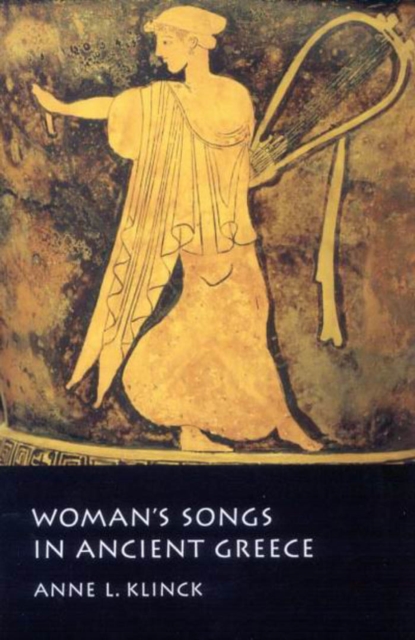
Woman's Songs in Ancient Greece
Through a balanced discussion of poetry as performance, relevant kinds and genres of poetry, the definition and scope of \"woman's song\" as a mode, partheneia (maidens' songs) and the girls' chorus, lyric in the drama, echoes and imitations of archaic woman's song in Hellenistic poetry, and inferences about the differences between male and female authors, Klinck demonstrates that woman's song is ultimately best understood as the product of a male-dominated culture but that feminine stereotypes, while refined by skilful male poets, are interrogated and shifted by female poets.
eBook
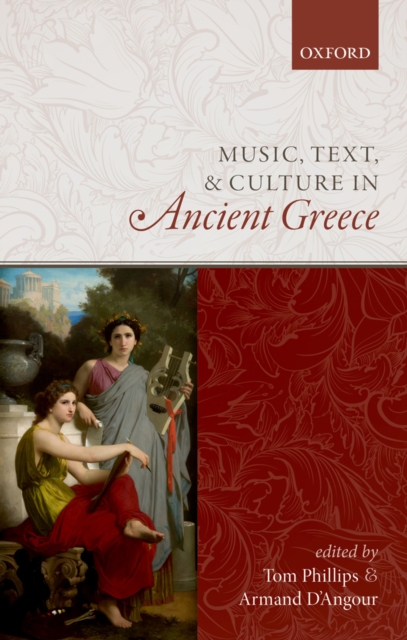
Music, text, and culture in ancient Greece
This book explores the interaction between music and poetry in ancient Greece. Although scholars have long recognized the importance of music to ancient performance culture, little has been written on the specific effects that musical accompaniment and features such as rhythmical structure and melody would have created in individual poems. The chapters in the first half of the volume engage closely with the evidential and interpretative challenges that this issue poses, and propose original readings of a range of texts, including Homer, Pindar, and Euripides, as well as later poets such as Seikilos and Mesomedes. While they emphasize different formal features, they argue collectively for a two-way relationship between music and language. Attention to the musical features of poetic texts, insofar as we can reconstruct them, enables us to better understand not only their effects on audiences, but also the various ways in which they project and structure meaning. In part two, the focus shifts to ancient attempts to conceptualize interractions between words and music; the essays in this section analyse the contested place that music occupied in Plato, Aristotle, Plutarch, and other critical writers of the Hellenistic and Imperial periods. Thinking about music is shown to influence other domains of intellectual life, such as literary criticism, and to be vitally informed by ethical concerns.
eBook
Writings of Early Scholars in the Ancient Near East, Egypt, Rome, and Greece
Medicine, astronomy, dealing with numbers ? even the cultures of the \"pre-modern\" world offer a rich spectrum of scientific texts. But how are they best translated? Is it sufficient to translate the sources into modern scientific language, and thereby, above all, to identify their deficits? Or would it be better to adopt the perspective of the sources themselves, strange as they are, only for them not to be properly understood by modern readers? Renowned representatives of various disciplines and traditions present a controversial and constructive discussion of these problems.
eBook