
Catalogue Search | MBRL


Are you sure you want to remove the book from the shelf?

{{itemTitle}}
2,726
result(s) for
"Art and society -- History -- 20th century"
Sort by:
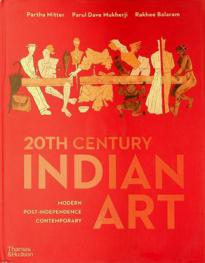
20th century Indian art : modern, post-independence, contemporary
A landmark volume presenting the history of Indian art across the subcontinent and South Asia from the late 19th century to the present day, published in association with Art Alive. Recent decades have seen significant growth in the interest, acquisition and exhibition of modern Indian and South Asian art and artists by major international museums. This essential textbook, primarily aimed at students, presents an engaging, informative history of modern art from the subcontinent as seen through the eyes of prominent Indian academics. Illustrated throughout with strong narrative content, key experts contribute multiple perspectives on modernism, modernity and plurality, and expansive ideas about contemporary art practices. A range of subjects and topics feature including Group 1890, the Madras Art Movement, Regional Modern and Dalit art, as well as artists such as Amrita Sher-Gil and Raqs Media Collective. This book also has sections devoted to the art of Pakistan, Nepal, Bangladesh and other parts of South Asia. Together with lively academic discussions and a selection of absorbing interviews with artists, this title meets a clear demand for a comprehensive and authoritative sourcebook on modern, postmodern and contemporary Indian art. It is the definitive reference for anyone with an interest in Indian art and non-Western art histories. Published in association with Art Alive.
Book

The Vienna School of Art History
Matthew Rampley’s The Vienna School of Art History is the first book in over seventy-five years to study in depth and in context the practices of art history from 1847, the year the first teaching position in the discipline was created, to 1918, the collapse of Austria-Hungary. It traces the emergence of art history as a discipline, the establishment of norms of scholarly enquiry, and the involvement of art historians in wider debates about the cultural and political identity of the monarchy. While Rampley also examines the formation of art history elsewhere in Austria-Hungary, the so-called Vienna School plays the central role in the study. Located in the Habsburg imperial capital, Vienna art historians frequently became entangled in debates that were of importance to art historians elsewhere in the Empire, and the book pays particular attention to these areas of overlapping interest. The Vienna School was well known for its methodological innovations and this book analyzes its contributions in this area. Rampley focuses most fully, however, on the larger political and ideological context of the practice of art history, in particular the way in which art historical debates served as proxies for wider arguments over the political, social, and cultural life of the Habsburg Empire.
eBook


Conceptual Revolutions in Twentieth-Century Art
From Picasso's Cubism and Duchamp's readymades to Warhol's silkscreens and Smithson's earthworks, the art of the twentieth century broke completely with earlier artistic traditions. A basic change in the market for advanced art produced a heightened demand for innovation, and young conceptual innovators – from Picasso and Duchamp to Rauschenberg and Warhol to Cindy Sherman and Damien Hirst – responded not only by creating dozens of new forms of art, but also by behaving in ways that would have been incomprehensible to their predecessors. Conceptual Revolutions in Twentieth-Century Art presents the first systematic analysis of the reasons for this discontinuity. David W. Galenson, whose earlier research has changed our understanding of creativity, combines social scientific methods with qualitative analysis to produce a fundamentally new interpretation of modern art that will give readers a far deeper appreciation of the art of the past century, and of today, than is available elsewhere.
eBook


The disabled body in contemporary art
This volume analyzes the representation of disabled and disfigured bodies in contemporary art and its various contexts, from art history to photography to medical displays to the nineteenth- and twentieth-century freak show.
eBook


Art and the Church: A Fractious Embrace
A vibrant critical exchange between contemporary art and Christianity is being increasingly prompted by an expanding programme of art installations and commissions for ecclesiastical spaces. Rather than 'religious art' reflecting Christian ideology, current practices frequently initiate projects that question the values and traditions of the host space, or present objects and events that challenge its visual conventions. In the light of these developments, this book asks what conditions are favourable to enhancing and expanding the possibilities of church-based art, and how can these conditions be addressed? What viable language or strategies can be formulated to understand and analyse art's role within the church? Focusing on concepts drawn from anthropology, comparative religion, art theory, theology and philosophy, this book formulates a lexicon of terms built around the notion of encounter in order to review the effective uses and experience of contemporary art in churches. The author concludes with the prognosis that art for the church has reached a critical and decisive phase in its history, testing the assumption that contemporary art should be a taken-for-granted element of modern church life. Art and the Church: A Fractious Embrace uniquely combines conceptual analysis, critical case studies and practical application in a rigorous and inventive manner, dealing specifically with contemporary art of the past twenty-five years, and the most recent developments in the church's policies for the arts.
1. Porch 2. Nave 3. Sanctuary 4. Crossing 5. Chapel 6. Transept 7. Crypt 8. Apse
Jonathan Koestlé-Cate 's academic background in Fine Art and History of Art led to an early interest in the history of modern and contemporary art and the church. His writing on this subject first appeared in a collection of essays published in 2003 called ‘Painting, Sculpture and the Spiritual Dimension’, edited by Brandon Taylor and Stephen Newton. Some years later, the theme of contemporary art in and for the church formed the basis of his PhD, completed in 2012 at Goldsmiths College, London. The process of this research allowed him to develop ideas cultivated over a decade of observing and reviewing church-based projects. In 2013 Koestlé-Cate joined the editorial board of Art and Christianity, a leading journal in this field, to which he has been a regular contributor for some years. In the same year he was invited to become a trustee for Art and Sacred Places, an organisation committed to sponsoring contemporary art projects in sacred sites. He is a member of the International Association of Art Critics (AICA) and currently works at Goldsmiths College as an Associate Lecturer.
eBook


The Edinburgh companion to the First World War and the arts
This authoritative reference work examines literary and artistic responses to the war's upheavals across a wide range of media and genres, from poetry to pamphlets, sculpture to television documentary, and requiems to war reporting.
eBook