
Catalogue Search | MBRL


Are you sure you want to remove the book from the shelf?

{{itemTitle}}
5
result(s) for
"Art and society Egypt History 21st century"
Sort by:

Egypt after Mubarak
Which way will Egypt go now that Husni Mubarak's authoritarian regime has been swept from power? Will it become an Islamic theocracy similar to Iran? Will it embrace Western-style liberalism and democracy?Egypt after Mubarakreveals that Egypt's secularists and Islamists may yet navigate a middle path that results in a uniquely Islamic form of liberalism and, perhaps, democracy. Bruce Rutherford draws on in-depth interviews with Egyptian judges, lawyers, Islamic activists, politicians, and businesspeople. He utilizes major court rulings, political documents of the Muslim Brotherhood, and the writings of Egypt's leading contemporary Islamic thinkers. Rutherford demonstrates that, in post-Mubarak Egypt, progress toward liberalism and democracy is likely to be slow.
Essential reading on a subject of global importance, this edition includes a new introduction by Rutherford that takes stock of the Arab Spring and the Muslim Brotherhood's victories in the 2011-2012 elections.
eBook
Creating spaces of hope : young artists and the new imagination in Egypt
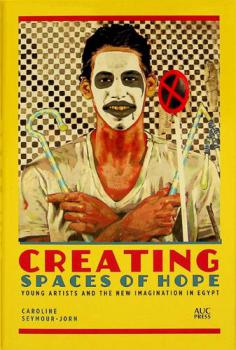
\"Creating Spaces of Hope\" explores some of the newest, most dynamic creativity emerging from young artists in Egypt and the way in which these artists engage, contest, and struggle with the social and political landscape of post-revolutionary Egypt. How have different types of artists, studio artists, graffiti artists, musicians and writers responded personally and artistically to the various stages of political transformation in Egypt since the January 25 revolution. What has the political or social role of art been in these periods of transition and uncertainty? What are the aesthetic shifts and stylistic transformations present in the contemporary Egyptian art world? Based on personal interviews with artists over many years of research in Cairo, Caroline Seymour-Jorn moves beyond current understandings of creative work primarily as a form of resistance or political commentary, providing a more nuanced analysis of creative production in the Arab world.
BOOK

Cairo Pop
Cairo Popis the first book to examine the dominant popular music of Egypt,shababiyya. Scorned or ignored by scholars and older Egyptians alike,shababiyyaplays incessantly in Cairo, even while Egyptian youth joined in mass protests against their government, which eventually helped oust longtime Egyptian president Hosni Mubarak in early 2011. Living in Cairo at the time of the revolution, Daniel Gilman saw, and more importantly heard, the impact that popular music can have on culture and politics. Here he contributes a richly ethnographic analysis of the relationship between mass-mediated popular music, modernity, and nationalism in the Arab world.
BeforeCairo Pop, most scholarship on the popular music of Egypt focused on musiqa al-ṭarab. Immensely popular in the 1950s and '60s and even into the '70s,musiqa al-ṭarabadheres to Arabic musical theory, with non-Western scales based on tunings of the strings of the'ud-the lute that features prominently, nearly ubiquitously, in Arabic music. However, today one in five Egyptians is between the ages of 15 and 24; half the population is under the age of 25. Andshababiyyais their music of choice. By speaking informally with dozens of everyday young people in Cairo, Gilman comes to understand shababiyya as more than just a musical genre: sometimes it is for dancing or seduction, other times it propels social activism, at others it is simply sonic junk food.
In addition to providing a clear Egyptian musical history as well as a succinct modern political history of the nation,Cairo Popelevates the aural and visual aesthetic ofshababiyya-and its role in the lives of a nation's youth.
eBook

Strategic maneuvering for political change : a pragma-dialectical analysis of Egyptian anti-regime columns
In Strategic Maneuvering for Political Change, the author analyzes five political columns written before 2011 by Al Aswany, a prominent Egyptian novelist, using the lens of the extended pragma-dialectical theory of argumentation. What these texts have in common is the use of narrative, fictional and semi-literary techniques to strategically maneuver in supporting the feasibility of political change. It is a contribution to explain how an anti-regime writer paved the way to the Arab Spring in Egypt, and thus goes against a common opinion that the Arab Spring in Egypt was fortuitous or a wholly social-media-based movement. This monograph is an attempt to help argumentation theorists, linguists, analysts of narratives, and political scientists better understand and evaluate how fiction and narration can be effective means of persuasion in the domain of political communication. It therefore reconsiders the non-straightforward and artistic variants of the language of politics.
eBook