
Catalogue Search | MBRL


Are you sure you want to remove the book from the shelf?

{{itemTitle}}
17
result(s) for
"Art and society France History 17th century."
Sort by:

Crowning glories : Netherlandish realism and the French imagination during the reign of Louis XIV
\"Crowning Glories integrates Louis XIV's propaganda campaigns, the transmission of Northern art into France, and the rise of empiricism in the eighteenth century--three historical touchstones--to examine what it would have meant for France's elite to experience the arts in France simultaneously with Netherlandish realist painting. In an expansive study of cultural life under the Sun King, Harriet Stone considers the monarchy's elaborate palace decors, the court's official records, and the classical theatre alongside Northern images of daily life in private homes, urban markets, and country fields. Stone argues that Netherlandish art assumes an unobtrusive yet, for the history of ideas, surprisingly dramatic role within the flourishing of the arts, both visual and textual, in France during Louis XIV's reign. Netherlandish realist art represented thinking about knowledge that challenged the monarchy's hold on the French imagination, and its efforts to impose the king's portrait as an ideal and proof of his authority. As objects appreciated for their aesthetic and market value, Northern realist paintings assumed an uncontroversial place in French royal and elite collections. Flemish and Dutch still lifes, genre paintings, and cityscapes, however, were not merely accoutrements of power, acquisitions made by those with influence and money. Crowning Glories reveals how the empirical orientation of Netherlandish realism exposed French court society to a radically different mode of thought, one that would gain full expression in the Encyclopâedie of Diderot and d'Alembert.\"-- Provided by publisher.
BOOK
Ballet in writing: precepts and rules of composition for court ballets in France under the Ancien Régime (1581-1682)
This article seeks to understand the theoretical formulations that throughout the 17th century systematized court ballet as an art, a term defined at the time as a set of precepts and rules. After a brief discussion about the first dance manuals produced in modern Europe, we analyze the treatises, discourses and librettos that addressed ballet composition. From the works of Beaujoyeulx, Saint-Hubert, Marolles, De Pure and Ménestrier, among others, it is possible to appreciate the erudite principles and precepts that guided the practice of ballet composition in France under the Ancien Régime, as well as the inclusion of dance and ballet in the domain of written production and literate culture.
Journal Article

Competing Selves in Madame de Lafayette's La Princesse de Montpensier and the Nouvelle Historique
Abstract This article analyzes the different selves operating in Madame de Lafayette's La Princesse de Montpensier. Contrary to scholarship, which tends to position the text as a mere precursor of La Princesse de Clèves, it is in La Princesse de Montpensier where one first locates the interior. Lafayette presented a princess coming to terms with her identity, debating with different selves against a backdrop of social, historical, and political ideals. The nouvelle historique was central to the development of selves; it was an important medium through which Lafayette could perceive, explore, and contest a woman's identity in relation to society. The genre also enabled writers to examine themselves. Lafayette used it to test out her own authorial self and locate her place in the literary sphere.
Journal Article
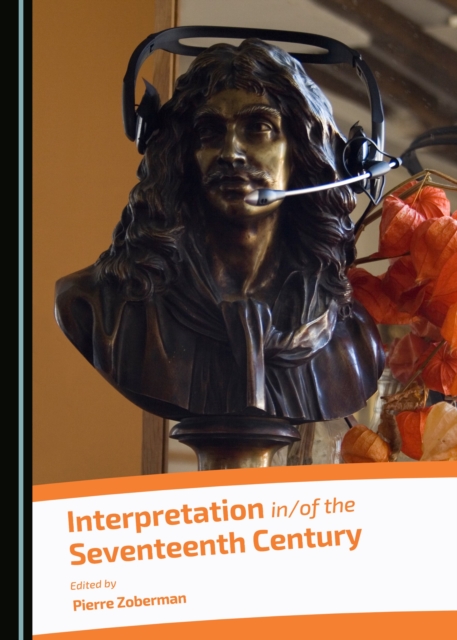
Interpretation in/of the Seventeenth Century
Interpretation in/of the Seventeenth Century explores interpretation according to, and by, the seventeenth century, namely how intellectuals and officials conceived of interpretation, and how they read their world and its relationship to the past, and of the seventeenth century. As such, the volume examines both temporal relationships, such as current interpretations of the seventeenth century or interpretation of itself and the past by the seventeenth century, and transversal relations, including practices of reading, crossings from one genre to another, and translation. The comparative conception underlying the collection's three main sections (\"Culture and Interpretation\", \"Interpretation and Literature\", and \"Shifts and Perspectives\") allows for an in-depth examination of what could be meant in seventeenth-century France by interpretation-between exegesis and translation-and what interpretive practices characterized the culture of the period. What may the ceremonies organized on a more or less grandiose scale and with more or less clearly visible programmes by the Crown or various institutions have meant for the organizers and their audiences, given the material and perspectival limitations faced by most of the viewers and participants and the difficulty to read the allegorical-symbolic representations? Science and belief play an important role in deciphering representation: discourses on optics and ghosts stories alike help shed light on the evolution of interpretation, as concept and practice, throughout this period. Literature, in the modern sense of the word, is given particular attention in the volume. Several chapters examine the connection of literary forms to conceptions of interpretation: how did topical plays, staging contemporary events, help shape the interpretation of current affairs and further political agendas? More generally,
how do dramaturgy, theatrical production and acting contribute to an understanding of the ways in which the participants in early modern European culture viewed their own time, and of the ways in which the period can be interpreted today? And can early-modern accounts of literature and society be read as signposts for a modern understanding of the period? To these and other, related, questions, the study of translation and translators in the seventeenth century and of modern translations for audiences outside of France (in particular for Molière), as well as an examination of adaptations of seventeenth-century works for other media today, bring novel perspectives.
eBook

The Jesuit Mission to New France
A new interpretation of the Jesuit mission to New France is here proposed by using, for comparison and contrast, the earlier Jesuit experience in Japan. In order to present revisionist perspectives of the Jesuit missions based on a broader international framework beyond North America, the existing historical paradigms of the Jesuit missionary activity to Amerindians based on the limited regional history of New France are re-examined.
eBook

MINERAL WATERS ACROSS THE CHANNEL: MATTER THEORY AND NATURAL HISTORY FROM SAMUEL DUCLOS'S MINERALLOGENESIS TO MARTIN LISTER'S CHYMICAL MAGNETISM, CA. 1666–86
Our essay analyses a little-known book, Observations sur les eaux minerales des plusieurs provinces de France (1675), which is a study of French mineral waters, commissioned by and conducted at the French Royal Academy of Science (est. 1666). Its author, Samuel Cottereau Duclos (1598–1685), was a senior founding figure of the Academy, its chief chymist and one of its most influential members. We examine Observations with a focus on the changing attitudes towards chymical knowledge and practice in the French Academy and the Royal Society of London in the period 1666–84. Chymistry was a fundamental analytical tool for seventeenth-century natural historians, and, as the work of Lawrence Principe and William Newman has shown, it is central to understanding the 'long' Scientific Revolution. Much study has also been done on the developing norms of openness in the dissemination and presentation of scientific, and particularly chymical knowledge in the late seventeenth century, norms that were at odds with traditions of secrecy among individual chymists. Between these two standards a tension arose, evidenced by early modern 'vociferous criticisms' of chymical obscurity, with different strategies developed by individual philosophers for negotiating the emergent boundaries between secrecy and openness. Less well studied, however, are the strategies by which not just individuals but also scientific institutions negotiated these boundaries, particularly in the formative years of their public and political reputation in the late seventeenth century. Michael Hunter's recent and welcome study of the 'decline of magic' at the Royal Society has to some extent remedied these omissions. Hunter argues that the Society—as a corporate body—disregarded and avoided studies of magical and alchemical subjects in the late seventeenth century. Our examination problematizes these distinctions and presents a more complex picture.
Journal Article

Women, Gender, and Guilds in Early Modern Europe: An Overview of Recent Research
In taking note of women's access to guild membership, one must avoid triumphalism. A number of women resisted \"inclusion\" in the guild system, finding the cost and regulation entailed by membership to outweigh its benefits. When given control over guilds, women used that control to restrict and regulate the labor market in the same way as men did. The vast majority of men and women were not able to join guilds; it is their responses to that situation and the complex bonds they nonetheless forged with the corporate system that are beginning to emerge more clearly.
Journal Article

Jesuit Scientific Activity in the Overseas Missions, 1540–1773
Within the context of national traditions in colonial science, the scientific activities of Jesuit missionaries present us with a unique combination of challenges. The multinational membership of the Society of Jesus gave its missionaries access to virtually every Portuguese, Spanish, and French colony. The Society was thus compelled to engage an astonishingly diverse array of cultural and natural environments, and that diversity of contexts is reflected in the range and the complexity of Jesuit scientific practices. Underlying that complexity, however, was what I see as a unique combination of institutional structures; namely, European colleges, overseas mission stations, and the regular circulation of personnel and information. With this institutional framework as a backdrop, I briefly trace what I see as the most salient themes emerging from recent studies of Jesuit overseas science: 1) the Societys ability to use scientific expertise to its advantage amid the complex web of dependencies upon which it missionary activities rested; 2) the ability of its missionaries to become intimate with a wide range of cultures and to appropriate natural knowledge held by indigenous peoples, especially in the fields ofmaterial medicaand geography; and 3) the different ways Jesuits used published accounts of “remote nature” (i.e., natural histories of overseas colonies) to advance their corporate and religious causes.
Journal Article
The Renaissance of Peiresc: Aubin-Louis Millin and the Postrevolutionary Republic of Letters
This essay argues for the emergence of a cultural and epistemological divide between amateur savants and members of the Royal Academy of the Sciences in late Old Regime and revolutionary France and suggests that the amateur ideal rose in significance even as intellectual activity came to be increasingly centralized in the postrevolutionary era. At the crux of the tensions between the amateur ideal and the professionalizing reality in the immediate postrevolutionary period stood Aubin-Louis Millin and his journal, theMagasin Encyclopédique. The essay examines, in particular, the revival in the pages of theMagasin Encyclopédiqueof interest in Nicolas-Claude Fabri de Peiresc, the seventeenth-century icon of an amateur ideal in which investigations in the natural sciences and scholarship were private, decentralized, often provincial activities. Although the sciences in the revolutionary and Napoleonic eras were often perceived as forward looking and dismissive of the past, this essay finds that a sentimental and nostalgic attachment to the past—to a myth of Peiresc—continued to play an important role in the identity of postrevolutionary men of letters.
Journal Article

John Adams versus Mary Wollstonecraft on the French Revolution and Democracy
This article is the first in-depth analysis of the direct intellectual engagement between one of America's most important Founding Fathers, John Adams, and the work of the leading modern feminist, Mary Wollstonecraft. It draws on the first complete transcription of Adams's marginalia in his copy of Wollstonecraft's French Revolution to argue that these two thinkers disagreed profoundly in their respective assessments of the watershed event of political modernity due to their divergent interpretations of the relationship between human nature, history, and Revolutionary violence on the one hand, and the appropriate structure of political and social institutions on the other.
Journal Article