
Catalogue Search | MBRL


Are you sure you want to remove the book from the shelf?

{{itemTitle}}
32,708
result(s) for
"Art auctions"
Sort by:


Determinants of the Price Paid at Auctions of Contemporary Art for Artworks by Twelve Artists
The use of regression modelling to understand how characteristics of artworks, of artists, and of the circumstances of sale affect the price paid at auction is well-established among cultural economists. Drawing on auction sales data provided by Artprice (accessed on 20 March 2022) I use regression modelling to investigate the determinants of the price paid for artworks by twelve artists at auctions of contemporary art over the period from 1984 to 2019. Each of the artists is modelled separately. For nine of the twelve artists, there was a clear preference among collectors for paintings with specific titles rather than untitled paintings or paintings with generic titles such as ‘abstract’ or ‘composition’. For the other explanatory factors included in the models, my analysis complements and re-contextualizes previous scholarship, showing how collectors’ preferences differed between the contexts examined. Size was a stronger driver of the price paid than in the contexts examined in other studies, and for most artists, collectors were not deterred by the largest artworks. Paintings in oil have continued to appeal to some collectors. Although the number of artists looked at is small, there are some suggestive patterns in how the age of the artist at execution affected the auction price, which might merit further investigation. My models also give some insights into change within the auction market for contemporary art.
Journal Article


Buying Beauty: On Prices and Returns in the Art Market
This paper investigates the price determinants and investment performance of art. We apply a hedonic regression analysis to a new data set of more than one million auction transactions of paintings and works on paper. Based on the resulting price index, we conclude that art has appreciated in value by a moderate 3.97% per year, in real U.S. dollar terms, between 1957 and 2007. This is a performance similar to that of corporate bonds-at much higher risk. A repeat-sales regression on a subset of the data demonstrates the robustness of our index. Next, quantile regressions document larger average price appreciations (and higher volatilities) in more expensive price brackets. We also find variation in historical returns across mediums and movements. Finally, we show that measures of high-income consumer confidence and art market sentiment predict art price trends.
This paper was accepted by Wei Xiong, finance.
Journal Article

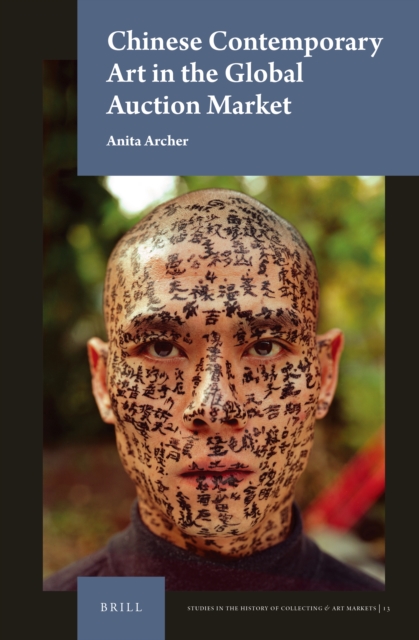
Chinese Contemporary Art in the Global Auction Market
Chinese Contemporary Art in the Global Auction Market charts the rapid emergence of a multi-million-dollar global market for Chinese Contemporary art by revealing the strategic activities of art world agents in promoting the work of 'avant-garde' Chinese artists to a Western audience.
eBook


Empirical evidence of anchoring and loss aversion from art auctions
We provide evidence for the behavioral biases of anchoring and loss aversion in paintings sold at auction. We find that anchoring is more important for items that are resold quickly and that the effect of loss aversion increases with the time that a painting is held. This evidence contributes significantly to the empirical evidence of the endowment effect: of increasing loss aversion with the length of holding. However, we do not find evidence that investors can take advantage of these behavioral biases.
Journal Article

Death, Bereavement, and Creativity
Does creativity, on average, increase or decrease during bereavement? Dates of death of relatives and close friends of 33 French artists and 15 American artists were gathered from electronic sources and biographies, and information on over 15,000 paintings was collected from the Blouin Art Sales Index and the online collections of the Metropolitan Museum of Art, the Art Institute of Chicago, the National Gallery of Art, the J. Paul Getty Museum, and the Musée d’Orsay, including more than 12,000 observations on price. An event study indicates that there is no evidence that the death of a friend or relative makes an artist more creative, and there is some evidence that prices of paintings are significantly lower during the first year following the year of death of a friend or relative. Furthermore, paintings that were created during this bereavement period are less likely to be included in a major museum’s collection.
The online appendix is available at
https://doi.org/10.1287/mnsc.2017.2850
.
This paper was accepted by John List, behavioral economics.
Journal Article