
Catalogue Search | MBRL


Are you sure you want to remove the book from the shelf?

{{itemTitle}}
8,853
result(s) for
"Artificial evolution"
Sort by:
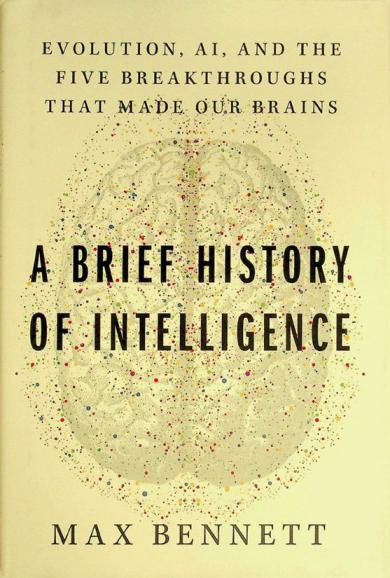
A brief history of intelligence : evolution, AI, and the five breakthroughs that made our brains
\"In the last decade, the science of understanding the human brain and replicating its most complicated processes through artificial intelligence has grown exponentially. Intricate neurological functions ranging from writing poetry to crafting original articles, arenas that had long been thought of as science fiction, have become our reality. And yet, large gaps remain in what AI can achieve-gaps that, as pioneering artificial intelligence entrepreneur Max Bennett argues compellingly, exist because there is still too much we don't understand about our own brains. Finding these answers requires diving into the long billion-year history of how animal brains emerged from matter; a history filled with countless half-starts, calamities, opportunities, and clever innovations. Not only do our brains have a story to tell-in fact the future of AI depends on it. Now, in A Brief History of Brains, Bennett bridges the gap between neuroscience and AI to tell the brain's evolutionary story, while demonstrating how understanding that story will shape the next generation of great AI breakthroughs. Deploying fresh perspective and lively storytelling, Bennett sheds long overdue light on evolutionary neuroscience, a historically small scientific field that holds the keys to the biggest secrets in AI. Working with support from many of the top minds in the field, Bennett consolidates four billion years into an approachable new model, identifying the Five Breakthroughs that mark the brain's most important evolutionary leaps. As we go back further in time, brains get much simpler and behavior gets much simpler, making it easier to understand these ancient brains and the complexity that emerges at each subsequent iteration. As each breakthrough brings new insight to the biggest mysteries of human development, it also contains fascinating corollaries to developments in AI, showing where our technological skill has matched the brain's evolution and where the missing links continue to hold us back. Indeed, until we understand and embrace every part of our brain's journey, parts of AI-including ones that we need to grow and evolve-will remain elusive. Endorsed and lauded by the brightest and best neuroscientists in the field today, Bennett's work synthesizes the most relevant scientific knowledge and cutting-edge research to create an easy-to-understand and riveting evolutionary story. With sweeping scope and stunning insights, A Brief History of Brains proves that understanding the arc of our brain's history can unlock the tools for successfully navigating our technological future\" -- Provided by publisher.
Book

Efficient evolution of human antibodies from general protein language models
Natural evolution must explore a vast landscape of possible sequences for desirable yet rare mutations, suggesting that learning from natural evolutionary strategies could guide artificial evolution. Here we report that general protein language models can efficiently evolve human antibodies by suggesting mutations that are evolutionarily plausible, despite providing the model with no information about the target antigen, binding specificity or protein structure. We performed language-model-guided affinity maturation of seven antibodies, screening 20 or fewer variants of each antibody across only two rounds of laboratory evolution, and improved the binding affinities of four clinically relevant, highly mature antibodies up to sevenfold and three unmatured antibodies up to 160-fold, with many designs also demonstrating favorable thermostability and viral neutralization activity against Ebola and severe acute respiratory syndrome coronavirus 2 (SARS-CoV-2) pseudoviruses. The same models that improve antibody binding also guide efficient evolution across diverse protein families and selection pressures, including antibiotic resistance and enzyme activity, suggesting that these results generalize to many settings.
A general protein language model guides protein evolution with 20 or fewer variants needed for testing.
Journal Article

The singularity is nearer : when we merge with Al
\"This successor volume to The Singularity Is Near explores how technology will refashion the human race in the decades to come. In this entirely new book, Ray Kurzweil brings a fresh perspective to advances in the singularity-assessing the progress of many of his predictions and examining the novel advancements that, in the near future, will bring a revolution in knowledge and an expansion of human potential. Among the topics he discusses are rebuilding the world atom by atom with devices like nanobots; radical life extension beyond the current age limit of 120; reinventing intelligence by expanding biological capacity with nonbiological intelligence in the cloud; how life is improving with declines in poverty and violence; and the growth of technologies that can be applied to everything from clothes to building materials to growing human organs. He also considers the potential perils of biotechnology, nanotechnology, and artificial intelligence, including such topics as how AI will impact unemployment and the safety of autonomous cars, and \"After Life\" technology, which will reanimate people who have passed away through a combination of data and DNA\"-- Provided by publisher.
Book

Advances in ultrahigh-throughput screening technologies for protein evolution
Ultrahigh-throughput screening highlights the ability of directed evolution to obtain desired variants in protein engineering.Numerous ultrahigh-throughput screening toolkits have been developed for the efficient screening of various protein libraries, such as intracellular enzymes, periplasmic proteins, binding peptides, secreted proteins, and membrane proteins, to achieve outstanding performance.These genotype–phenotype coupling strategies have produced remarkable results and will be gradually improved to play a greater role in protein engineering.
Inspired by natural evolution, directed evolution randomly mutates the gene of interest through artificial evolution conditions with variants being screened for the required properties. Directed evolution is vital to the enhancement of protein properties and comprises the construction of libraries with considerable diversity as well as screening methods with sufficient efficiency as key steps. Owing to the various characteristics of proteins, specific methods are urgently needed for library screening, which is one of the main limiting factors in accelerating evolution. This review initially organizes the principles of ultrahigh-throughput screening from the perspective of protein properties. It then provides a comprehensive introduction to the latest progress and future trends in ultrahigh-throughput screening technologies for directed evolution.
Journal Article


Classification with a disordered dopant-atom network in silicon
Classification is an important task at which both biological and artificial neural networks excel
1
,
2
. In machine learning, nonlinear projection into a high-dimensional feature space can make data linearly separable
3
,
4
, simplifying the classification of complex features. Such nonlinear projections are computationally expensive in conventional computers. A promising approach is to exploit physical materials systems that perform this nonlinear projection intrinsically, because of their high computational density
5
, inherent parallelism and energy efficiency
6
,
7
. However, existing approaches either rely on the systems’ time dynamics, which requires sequential data processing and therefore hinders parallel computation
5
,
6
,
8
, or employ large materials systems that are difficult to scale up
7
. Here we use a parallel, nanoscale approach inspired by filters in the brain
1
and artificial neural networks
2
to perform nonlinear classification and feature extraction. We exploit the nonlinearity of hopping conduction
9
,
10
–
11
through an electrically tunable network of boron dopant atoms in silicon, reconfiguring the network through artificial evolution to realize different computational functions. We first solve the canonical two-input binary classification problem, realizing all Boolean logic gates
12
up to room temperature, demonstrating nonlinear classification with the nanomaterial system. We then evolve our dopant network to realize feature filters
2
that can perform four-input binary classification on the Modified National Institute of Standards and Technology handwritten digit database. Implementation of our material-based filters substantially improves the classification accuracy over that of a linear classifier directly applied to the original data
13
. Our results establish a paradigm of silicon-based electronics for small-footprint and energy-efficient computation
14
.
The nonlinearity of hopping conduction in a disordered network of boron dopant atoms in silicon is used to perform nonlinear classification and feature extraction.
Journal Article


Improved plant cytosine base editors with high editing activity, purity, and specificity
Summary Cytosine base editors (CBEs) are great additions to the expanding genome editing toolbox. To improve C‐to‐T base editing in plants, we first compared seven cytidine deaminases in the BE3‐like configuration in rice. We found A3A/Y130F‐CBE_V01 resulted in the highest C‐to‐T base editing efficiency in both rice and Arabidopsis. Furthermore, we demonstrated this A3A/Y130F cytidine deaminase could be used to improve iSpyMacCas9‐mediated C‐to‐T base editing at A‐rich PAMs. To showcase its applications, we first applied A3A/Y130F‐CBE_V01 for multiplexed editing to generate microRNA‐resistant mRNA transcripts as well as pre‐mature stop codons in multiple seed trait genes. In addition, we harnessed A3A/Y130F‐CBE_V01 for efficient artificial evolution of novel ALS and EPSPS alleles which conferred herbicide resistance in rice. To further improve C‐to‐T base editing, multiple CBE_V02, CBE_V03 and CBE_V04 systems were developed and tested in rice protoplasts. The CBE_V04 systems were found to have improved editing activity and purity with focal recruitment of more uracil DNA glycosylase inhibitors (UGIs) by the engineered single guide RNA 2.0 scaffold. Finally, we used whole‐genome sequencing (WGS) to compare six CBE_V01 systems and four CBE_V04 systems for genome‐wide off‐target effects in rice. Different levels of cytidine deaminase‐dependent and sgRNA‐independent off‐target effects were indeed revealed by WGS among edited lines by these CBE systems. We also investigated genome‐wide sgRNA‐dependent off‐target effects by different CBEs in rice. This comprehensive study compared 21 different CBE systems, and benchmarked PmCDA1‐CBE_V04 and A3A/Y130F‐CBE_V04 as next‐generation plant CBEs with high editing efficiency, purity, and specificity.
Journal Article

Free agents : how evolution gave us free will
\"An evolutionary case for the existence of free will. Scientists are learning more and more about how brain activity controls behavior and how neural circuits weigh alternatives and initiate actions. As we probe ever deeper into the mechanics of decision making, many conclude that agency-or free will-is an illusion. In Free Agents, leading neuroscientist Kevin Mitchell presents a wealth of evidence to the contrary, arguing that we are not mere machines responding to physical forces but agents acting with purpose. Traversing billions of years of evolution, Mitchell tells the remarkable story of how living beings capable of choice emerged from lifeless matter. He explains how the emergence of nervous systems provided a means to learn about the world, granting sentient animals the capacity to model, predict, and simulate. Mitchell reveals how these faculties reached their peak in humans with our abilities to imagine and to introspect, to reason in the moment, and to shape our possible futures through the exercise of our individual agency. Mitchell's argument has important implications-for how we understand decision making, for how our individual agency can be enhanced or infringed, for how we think about collective agency in the face of global crises, and for how we consider the limitations and future of artificial intelligence.An astonishing journey of discovery, Free Agents offers a new framework for understanding how, across a billion years of Earth history, life evolved the power to choose and why this matters\"-- Provided by publisher.
Book

Creating large-scale genetic diversity in Arabidopsis via base editing-mediated deep artificial evolution
Background
Base editing is a powerful tool for artificial evolution to create allelic diversity and improve agronomic traits. However, the great evolutionary potential for every sgRNA target has been overlooked. And there is currently no high-throughput method for generating and characterizing as many changes in a single target as possible based on large mutant pools to permit rapid gene directed evolution in plants.
Results
In this study, we establish an efficient germline-specific evolution system to screen beneficial alleles in
Arabidopsis
which could be applied for crop improvement. This system is based on a strong egg cell-specific cytosine base editor and the large seed production of
Arabidopsis
, which enables each T1 plant with unedited wild type alleles to produce thousands of independent T2 mutant lines. It has the ability of creating a wide range of mutant lines, including those containing atypical base substitutions, and as well providing a space- and labor-saving way to store and screen the resulting mutant libraries. Using this system, we efficiently generate herbicide-resistant EPSPS, ALS, and HPPD variants that could be used in crop breeding.
Conclusions
Here, we demonstrate the significant potential of base editing-mediated artificial evolution for each sgRNA target and devised an efficient system for conducting deep evolution to harness this potential.
Journal Article