
Catalogue Search | MBRL


Are you sure you want to remove the book from the shelf?

{{itemTitle}}
129
result(s) for
"Artists Netherlands."
Sort by:

The sketchbook of Loish : art in progress
\"The Sketchbook of Loish offers readers a unique look into Loish's creative processes and idea generation, providing an insight into the role her sketches play in her extremely popular work. Peek inside Loish's sketchbook and discover how she explores gesture, stylization, and sketching for animation. Learn the different techniques she uses when sketching with traditional and digital tools, and follow the book's two detailed tutorials on character construction and sketching digitally to improve your own processes. The book also features handy quick tips for capturing movement, using different line weights, shading, and using textured brushes. Including an insight into Loish's character sketching, development sketches, landscape, and reference studies this book will show you how Loish captures the spirit of her finished artworks in her exquisite preliminary work. \"--Amazon.
Book

Piet Mondrian
Piet Mondrian (7 de Março de 1872 - 1 de Fevereiro de 1944) foi um pintor Holandês inspirado pelo cubismo de Picasso.A sua arte evoluiu para um estilo geométrico abstracto denominado \"Neo-Plasticismo\", pintando quase unicamente tabuleiros de xadrez em cores primárias; pintou cerca de 250 tabuleiros.
eBook

The art of Loish : a look behind the scenes
\"Lois van Baarle is a freelance animator/illustrator from the Netherlands who graduated in 2009 from the Hogeschool voor de Kunsten Utrecht. Since then, her work has become very popular across the internet, with her Facebook followers closing in on one million and her Twitter account watched by over nineteen thousand eager eyes. The Art of Loish is her first \"art of\" book, and will examine her inspirations while showcasing some of her early work. Following this, the reader will learn how she developed her very distinctive style and discover advice as she discusses her working methods, offering tips on a variety of techniques that she utilizes in her art every day! The additional exclusive content of this book makes it a must-have for any lover of Loish's work!\"--Amazon.
Book

Holocaust Memory Memorials and the Visual Arts in the Netherlands
Abstract This article analyses key changes in public memory in the Netherlands. Its examination of memorials, and their relationships to official memory and creative practices, shows a gradual shift in focus from war heroes to collective and individual victims of the Nazi persecution. The second part of the article focuses on contemporary visual artists, whose works are inspired by their own family histories and by changing attitudes to the memory of the Shoah, which has gained increasing public visibility. In line with the changes observed in some memorials, their artworks demonstrate a key development of Holocaust remembrance since the end of the war, with a shift in emphasis towards remembering individual victims and circumstances. This shows a transition from commemorating the unpronounceable through symbols, towards a detailed memorialising of the Shoah through the names of victims and minute reconstructions via maps, models and portraits.
Journal Article
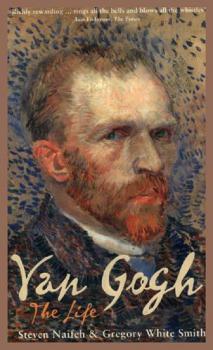
Van Gogh : the life
Vincent van Gogh created some of the best loved - and most expensive - works of art ever made, from the early The Potato Eaters to his late masterpieces Sunflowers and The Starry Night. Drawing on previously unseen primary materials, the authors shed new light on the artist's troubled romantic life and provide a startling new theory of his early death.
Book
The Jewish secOnd generation art & family Museum Amsterdam
Abstract The Jewish secOnd generation art & family Museum Amsterdam (JOMA) opened in 2022. It combines the artwork of Maarten van der Heijden with the stories of his Jewish family. This article presents the various stages of van der Heijden's work and elucidates his practice as a second-generation artist, drawing on the notions of postmemory and sublimation. The article concludes by discussing the JOMA as a highly personal as well as a collective memory project and its role in human rights education.
Journal Article

Vincent van Gogh : ever yours : the essential letters
In addition to his many remarkable paintings and drawings, Vincent van Gogh (1853-1890) left behind a fascinating and voluminous body of correspondence. This highly accessible book includes a broad selection of 265 letters, from a total of 820 in existence, that focus on Van Gogh's relentless quest to find his destiny, a search that led him to become an artist; the close bond with his brother Theo; his fraught relationship with his father; his innate yearning for recognition; and his great love of art and literature. The correspondence not only offers detailed insights into Van Gogh's complex inner life, but also re-creates the world in which he lived and the artistic avant-garde that was taking hold in Paris. The letters are accompanied by a general introduction, historic family photographs, and reproductions of 100 actual letters that contain sketches by Van Gogh. In sum, this book is the essential book on Van Gogh's letters, which every art and literature lover needs to own.
Book
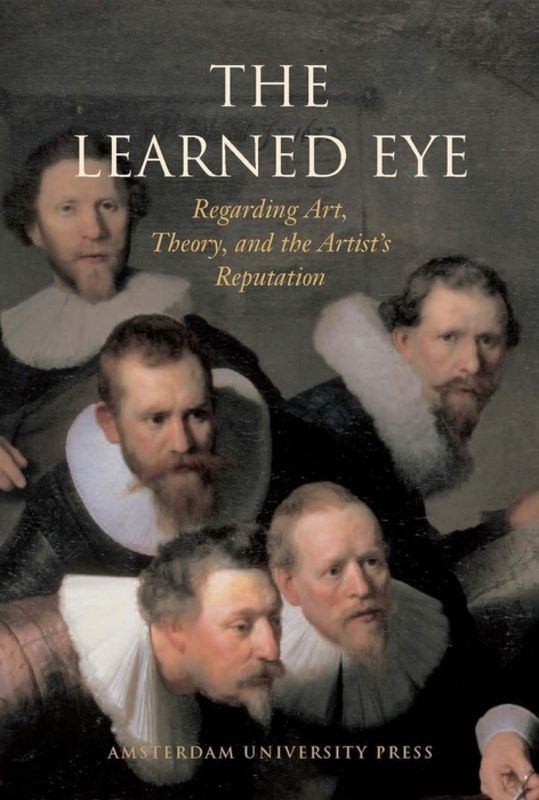
The learned eye
The 'learned eye' or oculus eruditus was a concept used by seventeenth-century writers on painting. It illustrated their view that the ideal artist was not only skilled in painting techniques, but also had knowledge of the history of art and an interest in poetry and literature. In this book, dedicated to Rembrandt scholar Ernst van de Wetering, the 'learned eye' refers to the experienced eye of the art historian, the curator, or the restorer. More specifically, the concept explains an issue central to understanding seventeenth-century art and its context: the artist's concern with the intellectual and social status of his profession. The book contains contributions on Rembrandt, Van Dyck, Frans Hals, Poussin and others, all linked by the theme of the 'learned eye', focusing on studio practice, theory of art, or the development of the artist's self-image. These themes reflect the scope of research and teaching of Ernst van de Wetering who first trained as an artist before becoming an art historian. Since 1987 he has been professor of art history at the University of Amsterdam, and, for more than ten years, the inspiring leader of the Rembrandt Research Project. The importance of starting with the art object itself is a familiar concept to anyone who has attended the lectures of Ernst van de Wetering, whose own familiarity with the painter's craft, with Rembrandt's studio practice, and the history of art has 'opened the eyes' of many. This book brings together essays by some of Van de Wetering's students, colleagues and friends, who were influenced in different ways by his approach to the art of painting. The contributors touch on four main issues. The first concerns material aspects of the work of art. Second, these findings are confronted with the rules of art that were recorded by contemporaries. Third, the 'learned eye' figures as part of the artists' desire to enhance the status of their profession. The fourth issue situates painting in its context of patrons and art lovers, who wanted to learn the basic principles of painting and obtain 'eruditos oculos' themselves.
eBook

