
Catalogue Search | MBRL


Are you sure you want to remove the book from the shelf?

{{itemTitle}}
71
result(s) for
"Artists Psychology Case studies."
Sort by:

The making of an artist : desire, courage, and commitment
What drives an artist to create? And are there common traits that successful artists possess? In 'The Making of an Artist', Kristin G. Congdon draws on her years of studying and teaching art at all levels - from universities to correctional settings - to identify three traits that are regularly found in successful artists: desire, courage and commitment. Congdon here presents essays exploring each of those traits, enriched by ethnographic case studies of six visual artists from diverse backgrounds and locations whose practices embody them. Marrying the work of biography, journalism, sociology and psychology, the book opens up the often mysterious process of making art, showing us how those characteristics play into it, as well as how other factors, such as trauma, madness, class and gender, affect the ways that people approach the creative process.
Book
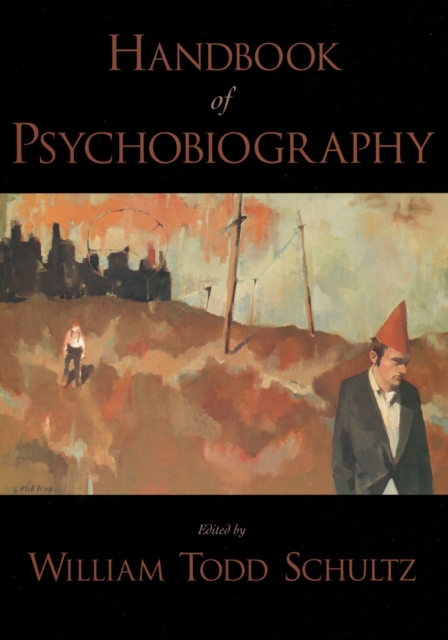
Handbook of psychobiography
This exceptionally readable and down-to-earth handbook is destined to become the definitive guide to psychobiological research, the application of psychological theory and research to individual lives of historical importance. It brings together for the first time the world’s leading psychobiographers, writing lucidly on many of the major figures of our age - from Osama Bin Laden to Elvis Presley. The first section of the book addresses the subject of how to construct an effective psychobiography. Editor William Todd Schultz introduces the field, provides valuable definitions of good and bad psychobiography, discusses an optimal structure for psychobiographical essays, and offers a blueprint for striking psychological paydirt in biographical data. Dan McAdams explores the question of what psychobiographers might learn from current research in personality psychology. Alan Elms delivers wise advice on the tricky subject of theory choice in psychobiography. William Runyan asks why Van Gogh cut off his ear, and in the process explains how one evaluates competing interpretations of the same event in a subject’s life. And Kate Isaacson describes a template for use in multiple-case psychobiography. Never before has method in psychobiography been so clearly and explicitly addressed. Those just getting started in the field will find in Section One a detailed roadmap for success. The remaining sections of the book are composed of richly engaging case studies of famous artists, psychologists and politicians. They address compelling questions such as: What are the subjective origins of photographer Diane Arbus’s obsession with freaks? In what ways did the early loss of Sylvia Plath’s father affect her poetry and presage her suicide? Why did Elvis experience such difficulty singing the song \"Are You Lonesome Tonight\"? What accounts for Bin Laden’ radicalism, Kim Jong II’s paranoia, George W Bush’s conflict with identity? Why did Freud go disasterously astray in his analysis of Leonardo? What made psychologist Gordon Allport’s meeting with Freud so pungently significant? How did the loss of his father determine major elements of Nietzsche’s philosophy? These questions and many more get answered, often in surprising and incisive fashion. Additional chapters take up the lives of Harvard operationist S.S. Stevens, Erik Erikson, Edith Wharton, Saddam Hussein, Truman Capote, Kathryn Harrison, Jack Kerouac, and others. Within each case study, tips are proffered along the way as to how psychobiography can be done more cogently, more intelligently, and more valuably. With its combination of telling about and showing how to practice psychobiography wisely, its inclusion of most of the field’s leading practitioners, and its diversity of subjects, the Handbook of Psychobiography represents the best the field has to offer. It will define the discipline, set a course for effective future developments, and quickly emerge as a must-read for any beginning or serious psychobiographer, narrative psychologist, personologist or personality researcher.
eBook


Envisioning the Dream Through Art and Science
This monograph is the product of an interdisciplinary experiment--an artistic experiment and a psychological experiment--focused on dreams. Inspired by the prevalence of dream imagery and \"dream logic\" in surrealist art, the authors asked 100 art students to create digital images representing critical scenes from one of their dreams, then to create a surrealist collage from the digital images. The resulting collages tend to capture the surreality envisioned in actual works of surrealist art, as two collages included in the book illustrate. Inspired also by the psychological problem of studying other minds, the authors asked the 100 art students to describe their dream in writing, to interpret their dream, and to complete two personality measures: the Short Form of the Boundary Questionnaire and the Brief Symptom Inventory. The art students' scores on particular personality scales were found to be statistically associated with particular dream aspects, many of which are visually observable in the digitized dream images created by art students with particular personalities but are not verbally discernible in the dream descriptions written by those same students. The appendix contains, for each art student, the digitally imaged dream, the written description and written interpretation of the dream, and scores on the Boundary Questionnaire and on the depression, anxiety, hostility, and somatization scales of the Brief Symptom Inventory. The book concludes with a bibliography and an index to some of the visual elements in the 100 digitized dream images.
An Interdisciplinary Experiment on Dream Imagery
Experimental Methods
Artistic Experiment: Surrealism and the Boundaries between Subconscious Dreaming and Reality
Penetration of the Boundaries between Dream and Reality
Quest for Archetypal Manifestations of Subconscious Impulses
Use of Collage to Make Incongruities Compatible
Conclusions from the Artistic Experiment
Psychological Experiment: The Problem of Other Minds and the Visual Content of Dreams
Connections between Emotions Underlying a Dream and Visual Aspects of the Dream
Connections between Symptoms of Psychopathology and Visual Aspects of the Dream
Conclusions from the Psychological Experiment
Appendix with 100 Artists’ Verbal Descriptions, Interpretations, and Digital Images of Their Own Dreams
References
Index to Dreams
eBook

Creativity and psychotic states in exceptional people : the work of Murray Jackson
\"Creativity and Psychotic States in Exceptional People tells the story of the lives of four exceptionally gifted individuals: Vincent van Gogh, Vaslav Nijinsky, Jose Saramago and John Nash. Previously unpublished chapters by Murray Jackson are set in a contextual framework by Jeanne Magagna, revealing the wellspring of creativity in the subjects' emotional experiences and delving into the nature of psychotic states which influence and impede the creative process. Jackson and Magagna aim to illustrate how psychoanalytic thinking can be relevant to people suffering from psychotic states of mind and provide understanding of the personalities of four exceptionally talented creative individuals. Present in the text are themes of loving and losing, mourning and manic states, creating as a process of repairing a sense of internal damage and the use of creativity to understand or run away from oneself. The book concludes with a glossary of useful psychoanalytic concepts. Creativity and Psychotic States in Exceptional People will be fascinating reading for psychiatrists, psychotherapists and psychoanalysts, other psychoanalytically informed professionals, students and anyone interested in the relationship between creativity and psychosis\"-- Provided by publisher.
Book


Embodied Learning Through Immersive Virtual Reality: Theoretical Perspectives for Art and Design Education
A significant development in pedagogical strategies which make use of the principles of embodied cognition can be found within the implementation of Immersive Virtual Reality (IVR) into art and design education. This theoretical study investigates how IVR-mediated embodiment enhances spatial thinking and creative problem-solving in art and design education by examining the taxonomy of embodied learning and principles of embodied cognition. The pedagogical affordances and limitations of IVR for creative learning are analyzed through a combination of empirical research and case studies, such as the Tangible and Embodied Spatial Cognition (TASC) system and Tilt Brush studies. Through gesture, spatial navigation, and environmental manipulation, IVR provides numerous possibilities for externalizing creative ideation; however, its implementation requires negotiating contradictions between virtual and physical materiality. IVR-based educational technologies have the potential to revolutionize teaching and learning. The goal of this paper is to provide educators with a theoretically grounded framework for applying embodied practices in IVR-based learning environments, while also acknowledging the current limitations of this technology.
Journal Article

Arts and cultural entrepreneurship
The topic of arts and culture in entrepreneurship holds great interest to scholars from many disciplines and to policymakers keen on “Creative Class” development and revitalizing local communities. Much research has explored the role of cultural amenities and milieu in fostering entrepreneurial activity. Having artists and cultural sector workers around provides fertile ground for entrepreneurship. Yet when one looks beyond the highly aggregated correlations and case studies of entrepreneurial artists, research on the roles played by arts workers and the creative sector as entrepreneurial agents remains underdeveloped. This special issue advances the entrepreneurship literature through a collection of articles that explore the entrepreneurial roles, natures, and practices of artists. These articles address fundamental questions about the roles of creativity, entrepreneurship, and psychology as well as more applied questions about the use and implications of online crowd funding platforms and how arts entrepreneurs adapt to their experiences and environments. The excellent work by the contributors to this special issue contributes to the literature with rigorous scholarship and set the stage for more to come.
Journal Article

Is Talent in Autism Spectrum Disorders Associated with a Specific Cognitive and Behavioural Phenotype?
Parents of 125 children, adolescents and young adults with autism spectrum disorders completed a newly developed questionnaire aimed at identifying cognitive and behavioural characteristics associated with savant skills in this group. Factors distinguishing skilled individuals were then further investigated in case studies of three individuals with exceptional skills for music, art and mathematics. The findings from the case studies largely confirmed the results from the questionnaire study in showing that special skills are associated with superior working memory and highly focused attention that is not associated with increased obsessesionality. Although intellectual impairment and a local bias have been widely associated with special skills in the savant literature, neither the screening nor case studies provided strong evidence for such associations.
Journal Article

Neuroanatomical correlates of aggressiveness: a case–control voxel- and surface-based morphometric study
Aggression occurs across the population ranging on a symptom continuum. Most previous studies have used magnetic resonance imaging in clinical/forensic samples, which is associated with several confounding factors. The present study examined structural brain characteristics in two healthy samples differing only in their propensity for aggressive behavior. Voxel- and surface-based morphometry (SBM) analyses were performed on 29 male martial artists and 32 age-matched male controls. Martial artists had significantly increased mean gray matter volume in two frontal (left superior frontal gyrus and bilateral anterior cingulate cortex) and one parietal (bilateral posterior cingulate gyrus and precuneus) brain clusters compared to controls (whole brain:
p
< 0.001, cluster level: family-wise error (FWE)-corrected). SBM analyses revealed a trend for greater gyrification indices in martial artists compared to controls in the left lateral orbital frontal cortex and the left pars orbitalis (whole brain:
p
< 0.001, cluster level: FWE-corrected). The results indicate brain structural differences between martial artists and controls in frontal and parietal brain areas critical for emotion processing/inhibition of emotions as well as empathic processes. The present study highlights the importance of studying healthy subjects with a propensity for aggressive behavior in future structural MRI research on aggression.
Journal Article