
Catalogue Search | MBRL


Are you sure you want to remove the book from the shelf?

{{itemTitle}}
4,615
result(s) for
"Arts -- Documentation"
Sort by:

Documenting Performance
Performance in the digital age has undergone a radical shift in which a once ephemeral art form can now be relived, replayed and repeated. Until now, much scholarship has been devoted to the nature of live performance in the digital age; Documenting Performance is the first book to provide a collection of key writings about the process of documenting performance, focused not on questions of liveness or the artistic qualities of documents, but rather on the professional approaches to recovering, preserving and disseminating knowledge of live performance. Through its four-part structure, the volume introduces readers to important writings by international practitioners and scholars on:
the contemporary context for documenting performanceprocesses of documenting performancedocumenting bodies in motiondocumenting to create In each, chapters examine the ways performance is documented and the issues arising out of the process of documenting performance. While theorists have argued that performance becomes something else whenever it is documented, the writings reveal how the documents themselves cannot be regarded simply as incomplete remains from live events. The methods for preserving and managing them over time, ensuring easy access of such materials in systematic archives and collections, requires professional attention in its own right. Through the process of documenting performance, artists acquire a different perspective on their own work, audiences can recall specific images and sounds for works they have witnessed in person, and others who did not see the original work can trace the memories of particular events, or use them to gain an understanding of something that would otherwise remain unknown to them and their peers.
eBook

Toward an extended metadata standard for digital art
PurposeThe interpretation of any emerging form or period in art history was never a trivial task. However, in the case of digital art, technology, becoming an integral part, multiplied the complexity of describing, systematizing and evaluating it. This article investigates the most common metadata standards for the documentation of art as a broad category and suggests possible next steps toward an extended metadata standard for digital art.Design/methodology/approachDescribing several techno-cultural phenomena formed in the last decade, manifesting the extendibility of digital art (its ability to be easily extended across multiple modalities), the article, at first, points to the long overdue need to re-evaluate the standards around it. Then it suggests a deeper analysis through a comparative study. In the scope of the study three artworks, The Arnolfini Portrait (Jan van Eyck), an iconic example of the early Renaissance, The World's First Collaborative Sentence (Douglas Davis), a classic example of early Internet art and Fake It Till You Make It (Maya Man), a prominent example of the blockchain art, are examined following the structure of the VRA Core 4.0 standard.FindingsThe comparative study demonstrates that digital art is more multi-semantic than traditional physical art, and requires new taxonomies as well as approaches for data acquisition.Originality/valueAcknowledging that digital art simply has not yet evolved to the stage of being systematically collected by cultural institutions for documentation, curation and preservation, but otherwise, in the past few years, it has been at the front-center of social, economic and technological trends, the article suggests looking for hints on the future-proof extended metadata standard in some of those trends.
Journal Article

Cataloging cultural objects : a guide to describing cultural works and their images / Murtha Baca and others
\"Now for the first time, under the leadership of the Visual Resources Association, five visual and cultural heritage experts, along with scores of reviewers from varied institutions, have created a new data content standard focused on cultural materials.\" \"This reference offers practical resources for cataloging and flexibility to meet the needs of a wide range of institutions - from libraries to museums to archives. These guidelines for selecting, ordering, and formatting data used to populate metadata elements in cultural materials' catalog records will, when followed consistently, promote good descriptive cataloging and reduce redundancy.\" \"This is a reference for museum professionals, visual resources curators, archivists, librarians, and anyone who documents cultural objects (including architecture, paintings, sculpture, prints, manuscripts, photographs, visual media, performance art, archaeological sites, and artifacts) and their images.\"--Jacket.
eBook

EVALUATION OF NERF 3D RECONSTRUCTION FOR ROCK ART DOCUMENTATION
Digital documentation of rock art traditionally relies on a point cloud captured by a terrestrial laser scanner (TLS) or derived from an oriented image obtained using photogrammetry. In modern photogrammetry, the dense point cloud is generated using multi-view stereo (MVS) and subsequently used to generate a photorealistic 3D model. A recent method to reconstruct 3D models from images is Neural Radiance Fields (NeRF), which uses volume density to render the scenes through neural networks. The advantage of NeRF is that it can construct 3D models faster without using high computer processors and memory. NeRF has been studied in various applications, including cultural heritage, but not specifically for rock art documentation. Therefore, this paper evaluates three-dimensional (3D) reconstruction techniques using NeRF on Nerfstudio platform on two rock art datasets and compares them with the point cloud and 3D mesh models obtained from TLS and photogrammetry/MVS. The results have shown that NeRF does not match MVS in achieving geometric precision and texture quality. However, its learning-based approach accelerates reconstruction and offers potential enhancements to complement photogrammetric workflow.
Journal Article
DOCUMENTING PAINTINGS USING GIGAPIXEL SFM PHOTOGRAMMETRY
Capturing paintings with gigapixel resolution (resolution around 1000 megapixels or greater) is an innovative technique that is starting to be used by some important international museums for documenting, analysing, and disseminating their masterpieces.This line of research is extremely interesting, not only for art curators and scholars, but also for the general public. The results can be disseminated through online virtual tours, offering a detailed interactive visualization. These virtual tours allow the viewer to delve into the artwork, in such a way, that it is possible to zoom in and observe those details, which would be negligible to the naked eye in a real visit. Therefore, this kind of virtual visualization using gigapixel images becomes an essential tool to enhance this cultural heritage and to make it accessible to everyone.This article will describe an affordable methodology, based on SfM photogrammetry techniques, with which it will be possible to achieve a very high level of detail and chromatic fidelity, when documenting and disseminating pictorial artworks. As a practical example, there will be shown a case study of the altarpiece, from the Museo de Bellas Artes de Valencia (Spain), entitled Virgen de las fiebres, painted around 1500 by Bernardino di Benedetto di Biagio, nicknamed ‘Il Pinturicchio' (Perugia, ca. 1454 – Siena, 1513).
Journal Article

Dominant Color Extraction with K-Means for Camera Characterization in Cultural Heritage Documentation
The camera characterization procedure has been recognized as a convenient methodology to correct color recordings in cultural heritage documentation and preservation tasks. Instead of using a whole color checker as a training sample set, in this paper, we introduce a novel framework named the Patch Adaptive Selection with K-Means (P-ASK) to extract a subset of dominant colors from a digital image and automatically identify their corresponding chips in the color chart used as characterizing colorimetric reference. We tested the methodology on a set of rock art painting images captured with a number of digital cameras. The characterization approach based on the P-ASK framework allows the reduction of the training sample size and a better color adjustment to the chromatic range of the input scene. In addition, the computing time required for model training is less than in the regular approach with all color chips, and obtained average color differences Δ E a b * lower than two CIELAB units. Furthermore, the graphic and numeric results obtained for the characterized images are encouraging and confirms that the P-ASK framework based on the K-means algorithm is suitable for automatic patch selection for camera characterization purposes.
Journal Article

Documenting Paintings with Gigapixel Photography
Digital photographic capture of pictorial artworks with gigapixel resolution (around 1000 megapixels or greater) is a novel technique that is beginning to be used by some important international museums as a means of documentation, analysis, and dissemination of their masterpieces. This line of research is extremely interesting, not only for art curators and scholars but also for the general public. The results can be disseminated through online virtual museum displays, offering a detailed interactive visualization. These virtual visualizations allow the viewer to delve into the artwork in such a way that it is possible to zoom in and observe those details, which would be negligible to the naked eye in a real visit. Therefore, this kind of virtual visualization using gigapixel images has become an essential tool to enhance cultural heritage and to make it accessible to everyone. Since today’s professional digital cameras provide images of around 40 megapixels, obtaining gigapixel images requires some special capture and editing techniques. This article describes a series of photographic methodologies and equipment, developed by the team of researchers, that have been put into practice to achieve a very high level of detail and chromatic fidelity, in the documentation and dissemination of pictorial artworks. The result of this research work consisted in the gigapixel documentation of several masterpieces of the Museo de Bellas Artes of Valencia, one of the main art galleries in Spain. The results will be disseminated through the Internet, as will be shown with some examples.
Journal Article
A critical comparison analysis between human and machine-generated tags for the Metropolitan Museum of Art's collection
PurposeBased on the highlights of The Metropolitan Museum of Art's collection, the purpose of this paper is to examine the similarities and differences between the subject keywords tags assigned by the museum and those produced by three computer vision systems.Design/methodology/approachThis paper uses computer vision tools to generate the data and the Getty Research Institute's Art and Architecture Thesaurus (AAT) to compare the subject keyword tags.FindingsThis paper finds that there are clear opportunities to use computer vision technologies to automatically generate tags that expand the terms used by the museum. This brings a new perspective to the collection that is different from the traditional art historical one. However, the study also surfaces challenges about the accuracy and lack of context within the computer vision results.Practical implicationsThis finding has important implications on how these machine-generated tags complement the current taxonomies and vocabularies inputted in the collection database. In consequence, the museum needs to consider the selection process for choosing which computer vision system to apply to their collection. Furthermore, they also need to think critically about the kind of tags they wish to use, such as colors, materials or objects.Originality/valueThe study results add to the rapidly evolving field of computer vision within the art information context and provide recommendations of aspects to consider before selecting and implementing these technologies.
Journal Article
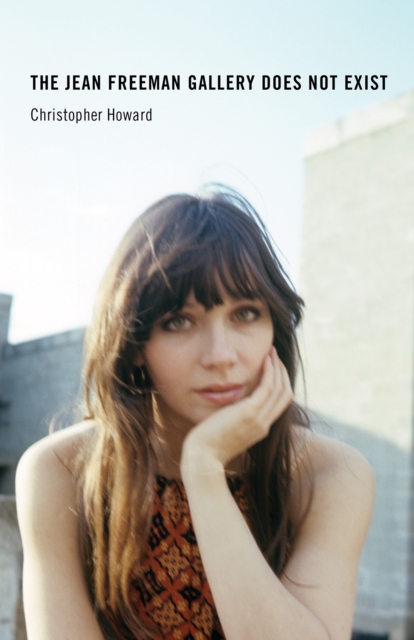
The Jean Freeman Gallery Does Not Exist
An examination of a 1970s Conceptual art project-advertisements for fictional shows by fictional artists in a fictional gallery-that hoodwinked the New York art world.From the summer of 1970 to March 1971, advertisements appeared in four leading art magazines-Artforum, Art in America, Arts Magazine, and ARTnews-for a group show and six solo exhibitions at the Jean Freeman Gallery at 26 West Fifty-Seventh Street, in the heart of Manhattan's gallery district. As gallery goers soon discovered, this address did not exist-the street numbers went from 16 to 20 to 24 to 28-and neither did the art supposedly exhibited there. The ads were promoting fictional shows by fictional artists in a fictional gallery. The scheme, eventually exposed by a New York Times reporter, was concocted by the artist Terry Fugate-Wilcox as both work of art and critique of the art world. In this book, Christopher Howard brings this forgotten Conceptual art project back into view. Howard demonstrates that Fugate-Wilcox's project was an exceptionally clever embodiment of many important aspects of Conceptualism, incisively synthesizing the major aesthetic issues of its time-documentation and dematerialization, serialism and process, text and image, publishing and publicity. He puts the Jean Freeman Gallery in the context of other magazine-based work by Mel Bochner, Judy Chicago, Yoko Ono, and Ed Ruscha, and compares the fictional artists' projects with actual Earthworks by Walter De Maria, Peter Hutchinson, Dennis Oppenheim, and more. Despite the deadpan perfection of the Jean Freeman Gallery project, the art establishment marginalized its creator, and the project itself was virtually erased from art history. Howard corrects these omissions, drawing on deep archival research, personal interviews, and investigation of fine-printed clues to shed new light on a New York art world mystery.
eBook

The Artist Initiative at San Francisco Museum of Modern Art
The Artist Initiative at the San Francisco Museum of Modern Art (SFMOMA) is piloting models for increased collaboration between conservators and curators through joint work with artists. We seek a more integrated, holistic approach to the care and research of our collection. The project, funded by the Andrew W. Mellon Foundation, comprises five robust research engagements that serve the curatorial collecting departments of the museum (Photography, Painting and Sculpture, Media Art, and Architecture and Design). Three of the projects are monographic studies, examining the work of Ellsworth Kelly, Vija Celmins, and Julia Scher in depth, while two more are thematic, exploring modes of displaying digitally-driven design objects, and developing strategies for addressing the problem of color shift common to photographic prints made with experimental materials during the 1970s and 1980s. The Artist Initiative is also charged with developing hybrid working spaces to advance collaborative approaches to collections research at the museum's new downtown campus and at SFMOMA's new Collections Center in South San Francisco. These spaces include the Collections Workroom, a 56 sq m (600 sq ft) space that functions as a studio for visiting artists, a conservation laboratory, an interview suite, and a classroom at SFMOMA's downtown campus. At the Collections Center, a 121 sq m (1300 sq ft) Mock-Up Gallery has been built as a working model of one of the museum's new galleries. A functional exhibition space, the Mock-Up Gallery is also a venue for interviewing artists, prototyping exhibition formats, and meeting with students, scholars, museum staff, and community members. With the goal of contributing to critical discourses in contemporary art history, art conservation, and public engagement, each of the Artist Initiative projects includes a colloquium that will bring experts from multiple fields together with the featured artists. Thereafter we aim to share our findings widely through public programs and a range of publications, both digitally and in print.
Journal Article