
Catalogue Search | MBRL


Are you sure you want to remove the book from the shelf?

{{itemTitle}}
23,624
result(s) for
"Arts -- Europe"
Sort by:

How to read European decorative arts
Spanning three decades of creativity, from the High Renaissance to the Industrial Revolution, this volume provides a peek into daily lives across Europe - from England, Spain, and France to Germany, Denmark, and Russia. Featuring 40 exemplary objects, including furniture, tableware, utilitarian items, articles of personal adornment, devotional objects, and display pieces, this publication covers many aspects of European society and lifestyles, from the modest to the fabulously wealthy.
Book
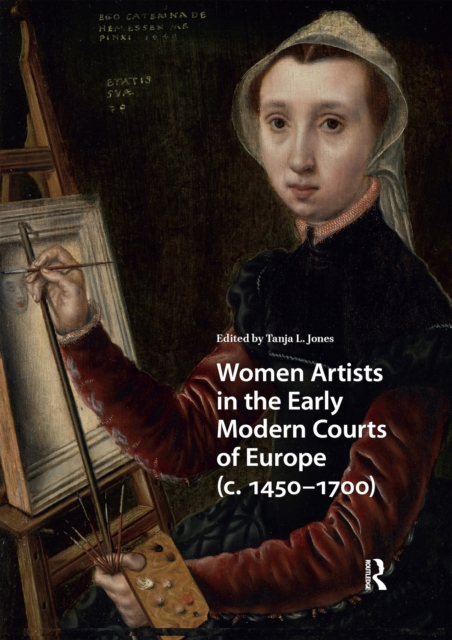
Women Artists in the Early Modern Courts of Europe
Women Artists in the Early Modern Courts of Europe, c. 1450.1700 presents the first collection of essays dedicated to women as producers of visual and material culture in the Early Modern European courts, offering fresh insights into the careers of, among others, Caterina van Hemessen, Sofonisba Anguissola, Luisa Roldán, and Diana Mantuana. Also considered are groups of female makers, such as ladies-in-waiting at the seventeenth-century Medici court. Chapters address works by women who occupied a range of social and economic positions within and around the courts and across media, including paintings, sculpture, prints, and textiles. Both individually and collectively, the texts deepen understanding of the individual artists and courts highlighted and, more broadly, consider the variety of experiences of female makers across traditional geographic and chronological distinctions. The book is also accompanied by the Global Makers: Women Artists in the Early Modern Courts digital humanities project (www.globalmakers.ua.edu), extending and expanding the work begun here.
eBook


The Green Bloc
Expanding the horizon of established accounts of Central European art under socialism, this book uncovers the neglected history of artistic engagement with the natural environment in the Eastern Bloc. The turbulent legacy of 1968, which saw the confluence of political upheaval, spread of counterculture, rise of ecological consciousness, and emergence of global conceptual art, provides the setting for Maja Fowkes's innovative reassessment of the environmental practice of the Central European neo-avant-garde. Focussing on artists and artist groups whose ecological dimension has rarely been considered, including the Pécs Workshop from Hungary, OHO in Slovenia, TOK in Croatia, Rudolf Sikora in Slovakia, and the Czech artist Petr Štembera, 'The Green Bloc: Neo-avant-garde Art and Ecology under Socialism' brings to light an array of distinctive approaches to nature, from attempts to raise environmental awareness among socialist citizens to the exploration of non-anthropocentric positions and the quest for cosmological existence in the midst of red ideology. Embedding artistic production in social, political, and environmental histories of the region, this book reveals the Central European artists' sophisticated relationship to nature, at the precise moment when ecological crisis was first apprehended on a planetary scale.
eBook

Europe : a cultural history
\"\"Discusses the cultural history of Europe from prehistory to the modern day. Includes illustrations, maps and case studies\"--Provided by publisher\"-- Provided by publisher.
Book
Cultural Industries and the Covid-19 Pandemic
Already dealing with disruptive market forces, the Cultural and Creative Industries (CCIs) faced fundamental challenges resulting from the global health crisis, wrought by the COVID-19 pandemic. With catastrophic changes to cultural consumption, cultural organizations are dealing with short-, medium-, and long-term threats to livelihoods under lockdown.
This book aims at filling the literature gap about the consequences of one of the hardest crises - COVID-19 - severely impacting all the fields of the CCIs. With a focus on European countries and taking into account the evolving and unstable context caused by the pandemic still in progress, this book investigates the first reactions and actual strategies of CCIs' actors, government bodies, and cultural institutions facing the COVID-19 crisis and the potential consequences of these emergency strategies for the future of the CCIs. Solutions adopted during the repeated lockdowns by CCIs' actors could originate new forms of cultural consumption and/or new innovative market strategies. This book brings together a constellation of contributors to analyze the cultural sector as it seeks to emerge from this existential challenge.
The global perspectives presented in this book provide research-based evidence to understand and reflect on an unprecedented period, allowing reflective practitioners to learn and develop from a range of real-world cases. The book will also be of interest to researchers, academics, and students with a particular interest in the management of cultural and creative organizations and crisis management.
eBook

Making marvels : science and splendor at the courts of Europe
Innovation, technology, and spectacle combine in wondrous works of decorative art and furniture that embody the splendor and luxury of the royal courts of Europe. At once beautiful works of art and technological wonders, the objects featured in Making Marvels demonstrate how European royalty from the Renaissance to the Enlightenment signaled their status through their collections of ingeniously crafted inventions. Featuring 150 exemplary objects ranging from mechanical toys to scientific instruments, timepieces to automata, this groundbreaking study brings to life a glorious period when luxury, a quest for knowledge, scientific invention, and political power combined to produce remarkable works of art. More than frivolous playthings, these works inspired technical innovations that influenced a broad spectrum of activities, including astronomy, engineering, and artisanal craftsmanship. This remarkable volume explores works in a wide range of materials, including precious metals, gemstones, pietra dura, marble, ivory, wood, bone, shell, glass, and paper. The book's compelling essays address the layered historical context in which these objects were fashioned and gathered into cabinets of wonder at courts throughout Europe; elucidate their complex blending of art and science; and provide fascinating details about the patrons who commissioned them and the specialists who made them. Exhibition: Metropolitan Museum of Art, New York, USA (25.11.2019-01.03.2020)
Book
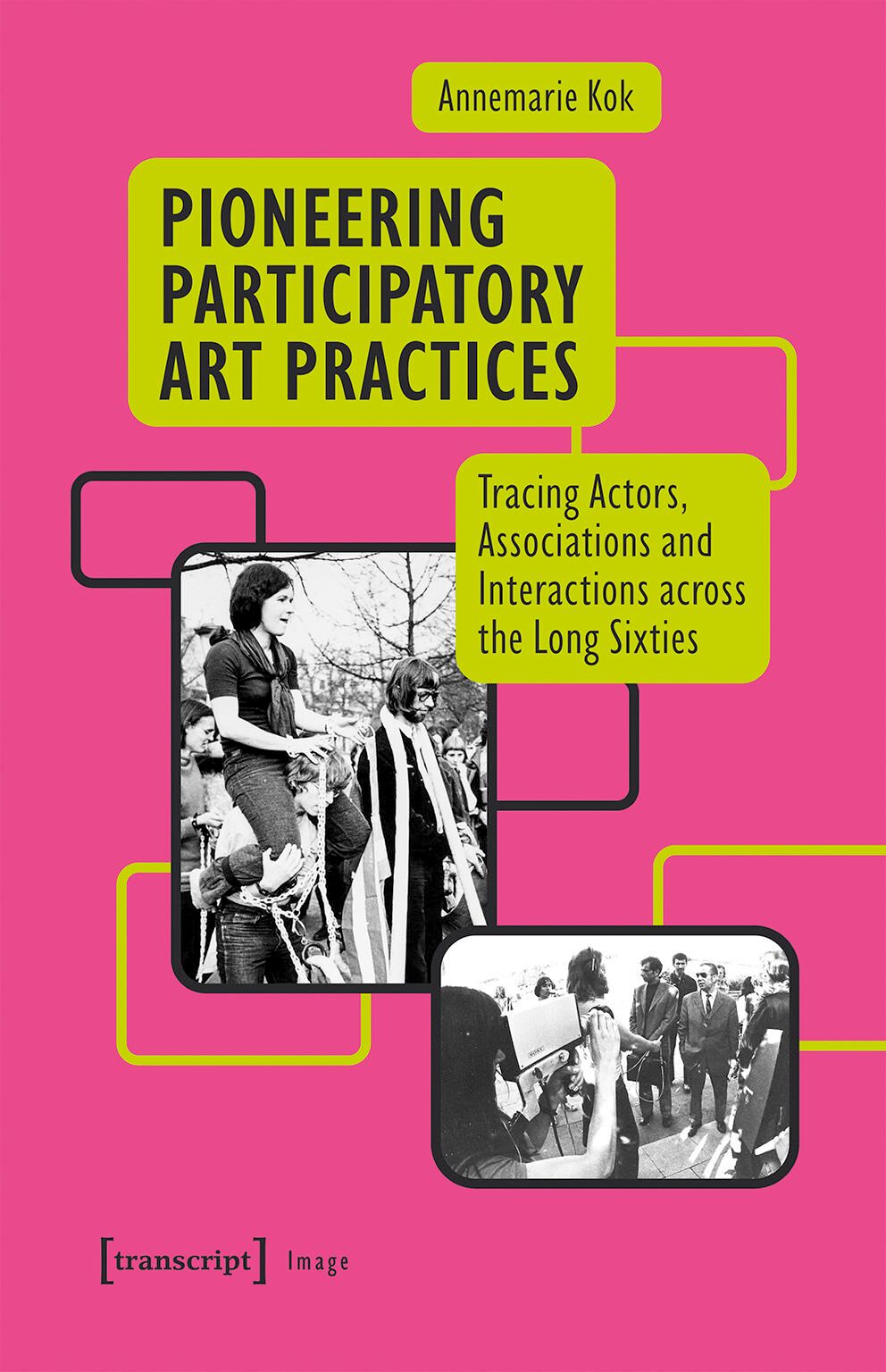
Pioneering Participatory Art Practices
Participatory art practices allow members of an audience to actively contribute to the creation of art.Annemarie Kok provides a detailed analysis and explanation of the use of participatory strategies in art in the so-called long sixties (starting around 1958 and ending around 1974) in Western Europe.
eBook

Socially Engaged Art after Socialism
Reclaiming public life from the ideologies of both communist regimes and neoliberalism, their projects have harnessed the politically subversive potential of social relations based on trust, reciprocity and solidarity. Drawing on archival material and exclusive interviews, in this book Izabel Galliera traces the development of socially engaged art from the early 1990s to the present in Bulgaria, Hungary and Romania. She demonstrates that, in the early 1990s, projects were primarily created for exhibitions organized and funded by the Soros Centers for Contemporary Art. In the early 2000s, prior to Bulgaria, Hungary and Romania entering into the European Union, EU institutions likewise funded socially-conscious public art in the region. Today, socially engaged art is characterised by the proliferation of independent and often self-funded artists' initiatives in cities such as Sofia, Bucharest and Budapest.Focusing on the relationships between art, social capital and civil society, Galliera employs sociological and political theories to reveal that, while social capital is generally considered a mechanism of exclusion in the West, in post-socialist contexts it has been leveraged by artists and curators as a vital means of communication and action.
eBook