
Catalogue Search | MBRL


Are you sure you want to remove the book from the shelf?

{{itemTitle}}
28,740
result(s) for
"Arts Administration"
Sort by:


The Audacity of Relevance
A manifesto on the state of the non-profit arts sector and the once-in-a-lifetime opportunity leaders have to redefine the business as an investment in our shared humanity.
eBook

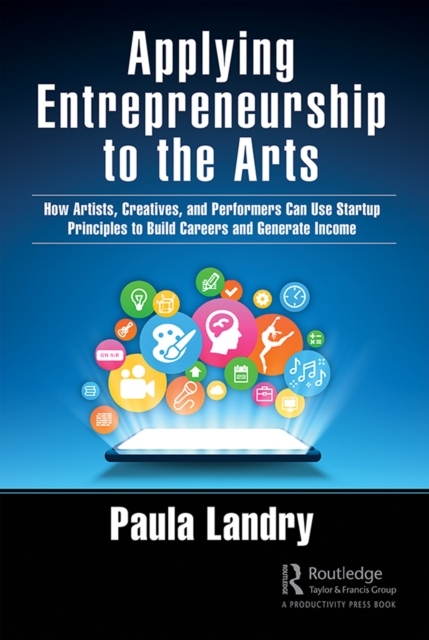
Applying Entrepreneurship to the Arts
This book puts successful startup tools in the hands of creators: performers, artists, entertainers, creatives, and media makers seeking to launch like a business and generate more income.
Readers will learn essential entrepreneurial principles taught to founders in the startup community. Creatives who read this book will learn:
How to launch your creative startup
Ways to run and market your venture efficiently
Effective methods to test new services, products, and experiences
To incorporate their entire skill set in an authentic way
That they can do this now, without business school or special training
With actionable information, real-world case studies as examples, and specific steps to build business acumen from an artistic perspective, this book puts entrepreneurial tools into the frameworks and mindset of those working in creative fields.
Paula Landry, MBA, is a creator, writer/filmmaker, and musician who has been teaching and coaching creatives for a decade, at colleges, non-profits and graduate programs in New York City and around the world.
eBook
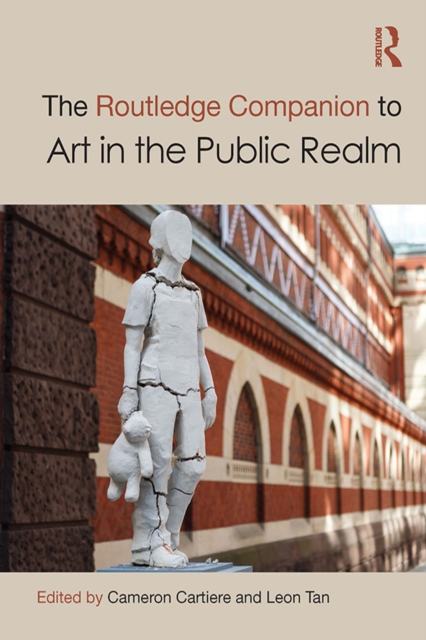
The Routledge Companion to Art in the Public Realm
This multidisciplinary companion offers a comprehensive overview of the global arena of public art.
It is organised around four distinct topics: activation, social justice, memory and identity, and ecology, with a final chapter mapping significant works of public and social practice art around the world between 2008 and 2018. The thematic approach brings into view similarities and differences in the recent globalisation of public art practices, while the multidisciplinary emphasis allows for a consideration of the complex outcomes and consequences of such practices, as they engage different disciplines and communities and affect a diversity of audiences beyond the existing 'art world'. The book will highlight an international selection of artist projects that illustrate the themes.
This book will be of interest to scholars in contemporary art, art history, urban studies, and museum studies.
eBook
The New Arts Entrepreneur
The New Arts Entrepreneur is the first uniquely designed pedagogy for arts entrepreneurship educators and students. Melding an arts-first approach with understandable entrepreneurial concepts and newly formulated tools, the text helps arts students to envision themselves as an entrepreneurial CEO, not simply another random entrepreneur flailing through a maze of well-worn entrepreneurial suggestions that do not fit.
At the core of the text is the Entrepreneurial Ecologies of the Arts. The Ecologies provide a framework to envision an entrepreneurial horizon for almost any arts-based business, included those ventures seeking to impact the production of art. In addition to this revolutionary framework, the text introduces tools designed to complement the Ecologies.
Designed with arts students in mind, this title accomplishes two critical tasks not found in other textbooks: venture sustainability and decision-making. This newly developed approach focuses on the decision-making required to sustain new arts ventures and will be of interest to arts students from all disciplines.
eBook

Strategic Planning in the Arts
Planning today is more important than ever. Both acquisition and allocation of resources are increasingly difficult for arts organizations as a result of emerging technologies, reduced arts education, aging donors, and the advent of new forms of entertainment. It is essential for arts organizations to take a coherent approach to these issues to remain vibrant over time. In fact, most arts organizations do periodically attempt some kind of planning exercise. But a review of hundreds of such plans suggests that most contain merely a wish list, rather than concrete plans for the future: \"We will increase ticket sales!\" is a common \"strategy\" expressed in too many arts plans. In the absence of details about how ticket sales will be increased, it's an empty promise. In Strategic Planning in the Arts, Michael M. Kaiser, the former head of the Kennedy Center in Washington, DC, and an arts management guru, has produced a clear, concise guide for staff or board members of not-for-profit arts organizations who are responsible for developing, evaluating, or implementing plans. Relying on real-world cases and examples, Kaiser shows how to conceive, assess, and act on every part of the strategic plan, from the mission statement to the financial statement; from managing the board to marketing. Praise for Michael Kaiser: \"A rich yet tidy cornucopia of solutions for the challenges facing the American arts scene.\"-Washington Post
eBook

The A to Z of Arts Management
The A to Z of Arts Management, Second Edition covers 97 topics about the management of arts and cultural organisations.
Each section offers a theoretical and conceptual introduction to the topic, as well as storytelling and reflections about the meaning and application of such theories in the real world. Drawing on the author's past as a manager running media and performing arts companies and her present as a consultant helping Boards and managers, this book covers a wide range of topics, from leadership, motivation and cultural policy to passion, coffee and laughter. This second edition includes even more coverage and stories about the challenges of arts management, and new topics such as harassment, philanthropy and venues.
Written for arts managers, students and Board members anywhere in the world, The A to Z of Arts Management provides information about research and academic best practice in arts management alongside stories about the reality of working in the arts and cultural industries.
eBook

African American Artists and the New Deal Art Programs
This bookexamines the involvement of African American artists in the New Deal art programs of the 1930s. Emphasizing broader issues informed by the uniqueness of Black experience rather than individual artists’ works, Mary Ann Calo makes the case that the revolutionary vision of these federal art projects is best understood in the context of access to opportunity, mediated by the reality of racial segregation. Focusing primarily on the Federal Art Project (FAP) of the Works Progress Administration (WPA), Calo documents African American artists’ participation in community art centers in Harlem, in St. Louis, and throughout the South. She examines the internal workings of the Harlem Artists’ Guild, the Guild’s activities during the 1930s, and its alliances with other groups, such as the Artists’ Union and the National Negro Congress. Calo also explores African American artists’ representation in the exhibitions sponsored by WPA administrators and the critical reception of their work. In doing so, she elucidates the evolving meanings of the terms race, culture, and community in the interwar era. The book concludes with an essay by Jacqueline Francis on Black artists in the early 1940s, after the end of the FAP program. Presenting essential new archival information and important insights into the experiences of Black New Deal artists, this study expands the factual record and positions the cumulative evidence within the landscape of critical race studies. It will be welcomed by art historians and American studies scholars specializing in early twentieth-century race relations.
eBook
Cultural Industries and the Covid-19 Pandemic
Already dealing with disruptive market forces, the Cultural and Creative Industries (CCIs) faced fundamental challenges resulting from the global health crisis, wrought by the COVID-19 pandemic. With catastrophic changes to cultural consumption, cultural organizations are dealing with short-, medium-, and long-term threats to livelihoods under lockdown.
This book aims at filling the literature gap about the consequences of one of the hardest crises - COVID-19 - severely impacting all the fields of the CCIs. With a focus on European countries and taking into account the evolving and unstable context caused by the pandemic still in progress, this book investigates the first reactions and actual strategies of CCIs' actors, government bodies, and cultural institutions facing the COVID-19 crisis and the potential consequences of these emergency strategies for the future of the CCIs. Solutions adopted during the repeated lockdowns by CCIs' actors could originate new forms of cultural consumption and/or new innovative market strategies. This book brings together a constellation of contributors to analyze the cultural sector as it seeks to emerge from this existential challenge.
The global perspectives presented in this book provide research-based evidence to understand and reflect on an unprecedented period, allowing reflective practitioners to learn and develop from a range of real-world cases. The book will also be of interest to researchers, academics, and students with a particular interest in the management of cultural and creative organizations and crisis management.
eBook