
Catalogue Search | MBRL


Are you sure you want to remove the book from the shelf?

{{itemTitle}}
9,283
result(s) for
"Arts Great Britain."
Sort by:

Muslims making British media : popular culture, performance and public religion
Drawing on original fieldwork, Carl Morris examines Muslim cultural production in Britain, with a focus on the performance-based entertainment industries: music, comedy, film, television and theatre. It is a seminal study that charts the growing agency and involvement of British Muslims in cultural production over the last two decades. Morris sets this discussion within the context of wider religious, social and cultural change, with important insights concerning the sociological profile, religious lives and public visibility of Muslims in contemporary Britain.
Book

The Edinburgh companion to the First World War and the arts
This authoritative reference work examines literary and artistic responses to the war's upheavals across a wide range of media and genres, from poetry to pamphlets, sculpture to television documentary, and requiems to war reporting.
eBook


Extraordinary Aesthetes
The fin de siècle not only designated the end of the Victorian epoch but also marked a significant turn towards modernism. Extraordinary Aesthetes critically examines literary and visual artists from England, Ireland, and Scotland whose careers in poetry, fiction, and illustration flourished during the concluding years of the nineteenth century.
This collection draws special attention to the exceptional contributions that artists, poets, and novelists made to the cultural world of the late 1880s and 1890s. The essays illuminate a range of established, increasingly acknowledged, and lesser-known figures whose contributions to this brief but remarkably intense cultural period warrant close attention. Such figures include the critically neglected Mabel Dearmer, whose stunning illustrations appear in Evelyn Sharp’s radical fairy tales for children. Equally noteworthy is the uncompromising short fiction of Ella D’Arcy, who played a pivotal role in editing the most famous journal of the 1890s, The Yellow Book . The discussion extends to a range of legendary writers, including Max Beerbohm, Oscar Wilde, and W.B. Yeats, whose works are placed in dialogue with authors who gained prominence during this period. Bringing women’s writing to the fore, Extraordinary Aesthetes rebalances the achievements of artists and writers during the rapidly transforming cultural world of the fin de siècle.
eBook


Antitheatricality and the Body Public
Situating the theater as a site of broad cultural movements and conflicts, Lisa A. Freeman asserts that antitheatrical incidents from the English Renaissance to present-day America provide us with occasions to trace major struggles over the nature and balance of power and political authority. In studies of William Prynne's Histrio-mastix (1633), Jeremy Collier's A Short View of the Immorality and Profaneness of the English Stage (1698), John Home's Douglas (1757), the burning of the theater at Richmond (1811), and the U.S. Supreme Court's decision in National Endowment for the Arts v. Finley (1998) Freeman engages in a careful examination of the political, religious, philosophical, literary, and dramatic contexts in which challenges to theatricality unfold. In so doing, she demonstrates that however differently \"the public\" might be defined in each epoch, what lies at the heart of antitheatrical disputes is a struggle over the character of the body politic that governs a nation and the bodies public that could be said to represent that nation.By situating antitheatrical incidents as rich and interpretable cultural performances, Freeman seeks to account fully for the significance of these particular historical conflicts. She delineates when, why, and how anxieties about representation manifest themselves, and traces the actual politics that govern such ostensibly aesthetic and moral debates even today.
eBook

A strange business : a revolution in art, culture, and commerce in 19th century London
\"A vivid excursion into London's nineteenth century art world, evoking the famed personalities, social changes, and technological advances that sparked a revolution in art commerce. Britain in the nineteenth century saw a series of technological and social changes which continue to influence and direct us today. Its reactants were human genius, money and influence, its crucibles the streets and institutions, its catalyst time, its control the market. In this rich and fascinating book, James Hamilton investigates the vibrant exchange between culture and business in nineteenth-century Britain, which became a center for world commerce following the industrial revolution. He explores how art was made and paid for, the turns of fashion, and the new demands of a growing middle-class, prominent among whom were the artists themselves. While leading figures such as Turner, Constable, Landseer, Coleridge, Wordsworth, and Dickens are players here, so too are the patrons, financiers, collectors and industrialists; publishers, entrepreneurs, and journalists; artists' suppliers, engravers, dealers and curators; hostesses, shopkeepers and brothel keepers; quacks, charlatans, and auctioneers. Hamilton brings them all vividly to life in this kaleidoscopic portrait of the business of culture in nineteenth-century Britain, and provides thrilling and original insights into the working lives of some of the era's most celebrated artists.\"--provided by publisher.
Book
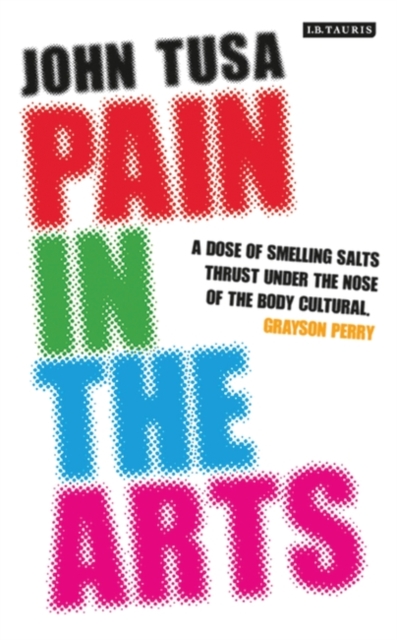
Pain in the Arts
Over a distinguished career in cultural leadership, management and journalism spanning almost 30 years, John Tusa has amassed a unique experience of the arts world, the political controversies it faces and the battles it continues to fight. His new book is a fearless and passionate defence of the performing and visual arts at a time of increasing ‘Pain in the Arts.’ Tusa explains how the arts are run and why they are worth speaking up for. He addresses the controversies in the arts that must be resolved today: should they be useful before they are excellent? Can they ever turn their backs on the past if they are to be creative in the present? He offers guidance on how the arts can survive in a downturn and why they should always make the case that they deserve special treatment. He also draws on his five years to date as Chair of the Clore Leadership Programme to discuss the increasingly complex questions- practical, personal, professional- that today’s and tomorrow’s cultural leaders must face, including the qualities of character needed to succeed and what a revolution in arts leadership might achieve. He also reveals the pitfalls of managerialist language. The backdrop throughout is John Tusa’s personal story of discovery and love of the culture he strives to defend in hard times.
eBook

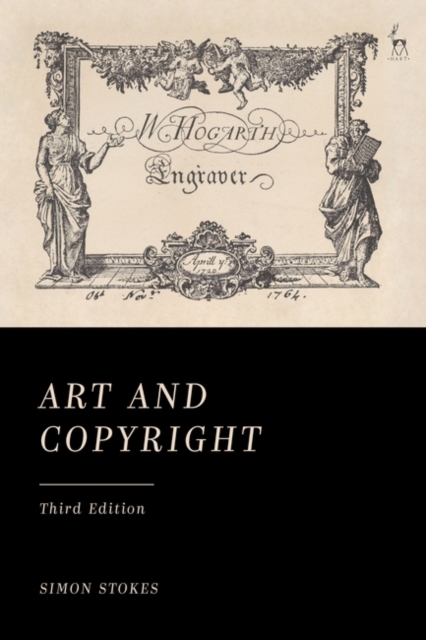
Art and Copyright
First published in 2001, Art and Copyright has established itself as a leading text in the field. Revised and updated, this third edition includes additional coverage of the following topics:
the relationship between designs law and artistic works;EU and Brexit developments;AI-created works;graffiti and other non-conventional works;blockchain and rights management;orphan works;new exceptions to copyright; anddigital copyright, art databases and online platforms. This book remains an invaluable work for all those involved in art law and for intellectual property lawyers involved with the exploitation and/or sale of artistic works, as well as for intellectual property academics, researchers, law students, curators, publishers, artists, gallery owners, auction houses, and those developing and running online art platforms, databases and technology to transact in art.
eBook