
Catalogue Search | MBRL


Are you sure you want to remove the book from the shelf?

{{itemTitle}}
696,110
result(s) for
"Arts History"
Sort by:

Graphic design : a history
For the third edition of Graphic Design Stephen Eskilson has, with the aid of 540 new and existing images, updated key parts of the book. Most notably he has expanded the introduction to begin with the origins of writing and added a new chapter 11 that investigates current trends in digital design. Organized chronologically, the book traces the impact of politics, economics, war, nationalism, colonialism, gender and art on graphic designers working in print and film and with the latest web, multimedia and emerging digital technologies.
Book

The Vienna School of Art History
Matthew Rampley’s The Vienna School of Art History is the first book in over seventy-five years to study in depth and in context the practices of art history from 1847, the year the first teaching position in the discipline was created, to 1918, the collapse of Austria-Hungary. It traces the emergence of art history as a discipline, the establishment of norms of scholarly enquiry, and the involvement of art historians in wider debates about the cultural and political identity of the monarchy. While Rampley also examines the formation of art history elsewhere in Austria-Hungary, the so-called Vienna School plays the central role in the study. Located in the Habsburg imperial capital, Vienna art historians frequently became entangled in debates that were of importance to art historians elsewhere in the Empire, and the book pays particular attention to these areas of overlapping interest. The Vienna School was well known for its methodological innovations and this book analyzes its contributions in this area. Rampley focuses most fully, however, on the larger political and ideological context of the practice of art history, in particular the way in which art historical debates served as proxies for wider arguments over the political, social, and cultural life of the Habsburg Empire.
eBook

East Central European Art Histories and Austria
The specific role of the Austro-Hungarian Empire and the later nation of Austria within the formation of regional art histories in East Central Europe has received little attention in art historical research so far. Taking into account the era of the Dual Monarchy as well as the period after 1989, the contributions analyze and critically scrutinize the imperial legacies, transnational transfer processes and cultural hierarchies in art historiographies, artistic practices and institutional histories. Consisting of 17 texts, with new commissions and one reprint, case studies, monographic essays and interviews grouped thematically into two sections, the anthology proposes a pluriversal narrative on regional, cultural and political contexts.
eBook

A history of Chinese martial arts
\"Chinese martial arts have a long, meaningful history and deep cultural roots. They blend the physical components of combat with strategy, philosophy and tradition, distinguishing them from Western sports. A History of Chinese Martial Arts is the most authoritative study ever written on this topic, featuring contributions from leading Chinese scholars and practitioners. The book provides a comprehensive overview of all types of Chinese martial arts, from the Pre-Qin Period (before 222 BC) right up to the present day in the People's Republic of China, with each chapter covering a different period in Chinese history. Including numerous illustrations of artefacts, weaponry and historical drawings and documents, this book offers unparalleled insight into the origins, development and contemporary significance of martial arts in China. This is a fascinating read for researchers and students working in sports history, Chinese sport and Chinese Studies\"-- Provided by publisher.
Book
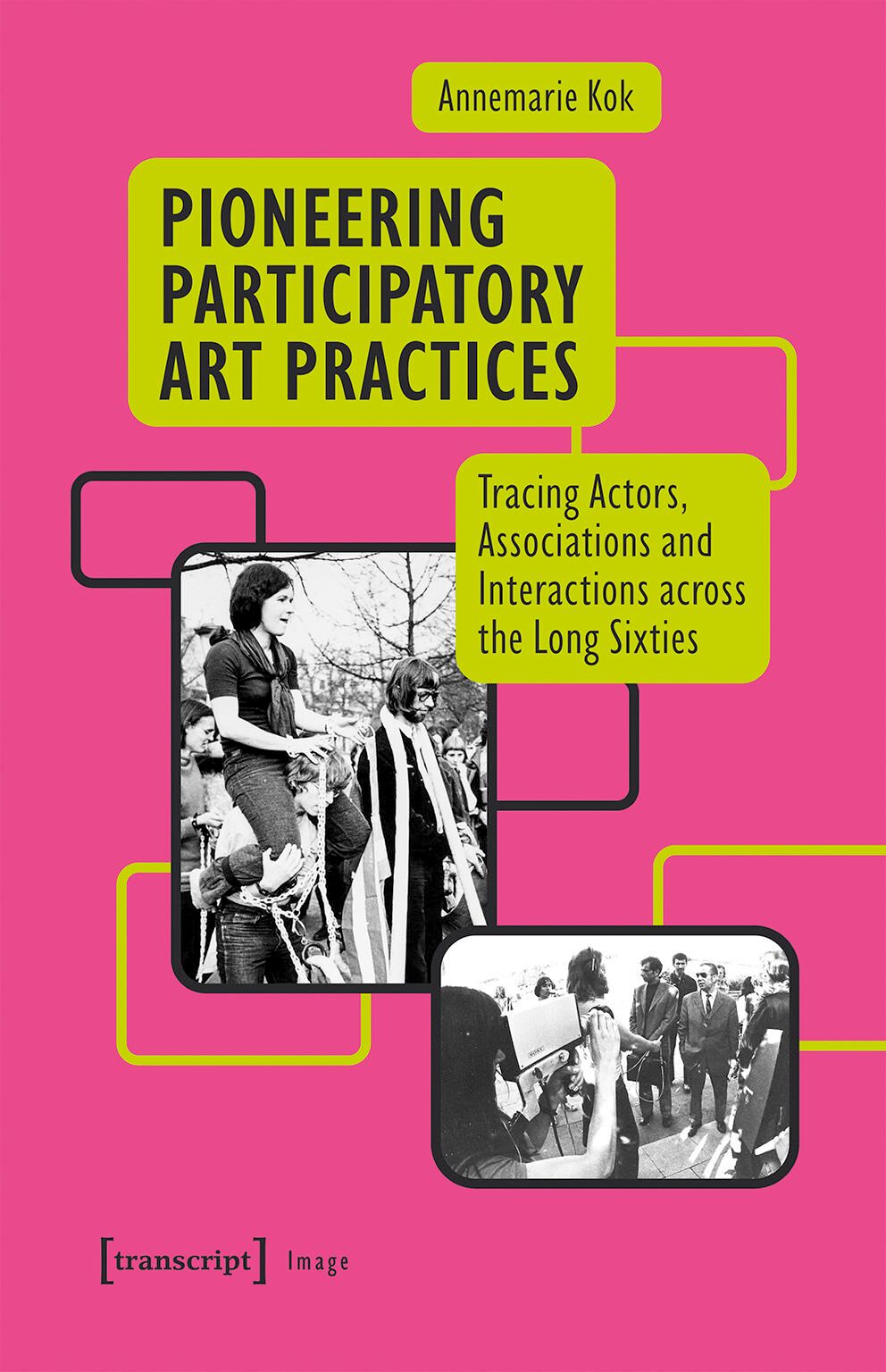
Pioneering Participatory Art Practices
Participatory art practices allow members of an audience to actively contribute to the creation of art.Annemarie Kok provides a detailed analysis and explanation of the use of participatory strategies in art in the so-called long sixties (starting around 1958 and ending around 1974) in Western Europe.
eBook

Art and politics : the history of the National Arts Centre
\"The year 2019 marks the fiftieth anniversary of the National Arts Centre. In this new and revised edition of Art and Politics, Sarah Jennings covers the highs and lows of Canada's most important national performing arts institution over the course of five decades, bringing the story up to the present. Art and Politics is a riveting tale of Canada's finest musicians, actors, and dancers and efforts to put their art at the forefront of both the national and international scene. Through over 150 interviews with artists, top officials, senior politicians, and others who affected the fate of the National Arts Centre, the book recounts the organization's early years; the impact of government monies first lavished and then withdrawn, which resulted in its near collapse in the late 1990s; and how in the past two decades, its CEO, Peter Herrndorf, a gifted leader, brought it back from the brink. The most recent transformations revealed by this new edition include the architectural makeover of the organization's Brutalist-style building in Ottawa, responses to the changing cultural milieu in Canada, and the launch of a national Indigenous Theatre Department in the fall of 2019. Told through the voices of those who created the organization, Art and Politics affirms that the National Arts Centre embodies its motto: \"Canada is our stage.\"\"-- Provided by publisher.
Book

Fleshing out surfaces
Fleshing out surfaces is the first English-language book on skin and flesh tones in art. It considers flesh and skin in art theory, image making and medical discourse in seventeenth to nineteenth-century France. Describing a gradual shift between the early modern and the modern period, it argues that what artists made when imitating human nakedness was not always the same. Initially understood in terms of the body's substance, of flesh tones and body colour, it became increasingly a matter of skin, skin colour and surfaces. Each chapter is dedicated to a different notion of skin and its colour, from flesh tones via a membrane imbued with nervous energy to hermetic borderline. Looking in particular at works by Fragonard, David, Girodet, Benoist and Ingres, the focus is on portraits, as facial skin is a special arena for testing painterly skills and a site where the body and the image become equally expressive.
eBook


The Portuguese Restoration of 1640 and Its Global Visualization
The Portuguese Restoration of 1640 ended the dynastic union of Portugal and Spain. This book pioneers in reconstructing the global image discourse related to the event by bringing together visualizations from three decades and four continents. These include paintings, engravings, a statue, coins, emblems, miniatures, a miraculous crosier and other regalia, buildings, textiles, a castrum doloris, drawings, and ivory statues. Situated within the academic field of visual studies, the book interrogates the role of images and depictions before, during, and after the overthrow and how they functioned within the intercontinental communication processes in the Portuguese Empire. The results challenge the conventional notion of center and periphery and reveal unforeseen entanglements as well as an unexpected agency of imagery from the remotest regions under Portuguese control. The book breaks new ground in linking the field of early modern political iconography with transcultural art history and visual studies.
eBook