
Catalogue Search | MBRL


Are you sure you want to remove the book from the shelf?

{{itemTitle}}
8
result(s) for
"Arts and society France Paris History 19th century."
Sort by:

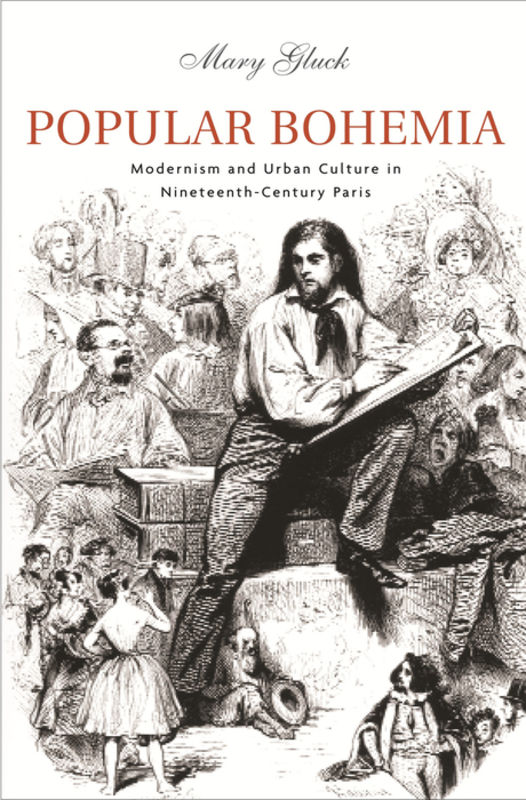
Popular Bohemia
This book revises dominant historical narratives about modernism from the perspective of a theoretically informed cultural history that spans the period between 1830 and 1914. In doing so, it reconnects the intellectual history of avant-garde art with the cultural history of bohemia and the social history of the urban experience to reveal the circumstances in which a truly modernist culture emerged.
eBook


Fashioning Spaces
InFashioning Spaces, Heidi Brevik-Zender argues that in the years between 1870 and 1900 the chroniclers of Parisian modernity depicted the urban landscape not just in public settings such as boulevards and parks but also in \"dislocations,\" spaces where the public and the intimate overlapped in provocative and subversive ways. Stairwells, theatre foyers, dressmakers' studios, and dressing rooms were in-between places that have long been overlooked but were actually marked as indisputably modern through their connections with high fashion.Fashioning Spacesengages with and thinks beyond the work of critics Charles Baudelaire and Walter Benjamin to arrive at new readings of the French capital.
Examining literature by Zola, Maupassant, Rachilde, and others, as well as paintings, architecture, and the fashionable garments worn by both men and women, Brevik-Zender crafts a compelling and innovative account of how fashion was appropriated as a way of writing about the complexities of modernity infin-de-siècleParis.
eBook

Music Drama at the Paris Odéon, 1824–1828
Parisian theatrical, artistic, social, and political life comes alive in Mark Everist's impressive institutional history of the Paris Odéon, an opera house that flourished during the Bourbon Restoration. Everist traces the complete arc of the Odéon's short but highly successful life from ascent to triumph, decline, and closure. He outlines the role it played in expanding operatic repertoire and in changing the face of musical life in Paris. Everist reconstructs the political power structures that controlled the world of Parisian music drama, the internal administration of the theater, and its relationship with composers and librettists, and with the city of Paris itself. His rich depiction of French cultural life and the artistic contexts that allowed the Odéon to flourish highlights the benefit of close and innovative examination of society's institutions.
eBook

The Leopard in the Garden
French naturalists at the Muséum Nationale d’Histoire Naturelle in Paris in the early nineteenth century recognized that their individual and collective successes were intimately linked to questions of power over specimens. France’s strength abroad affected the growth of the museum’s collections. At the museum, preserving, naming, classifying, displaying, interpreting, and otherwise deploying specimens went hand in hand with promoting scientific theories, advancing scientific careers, and instructing the public. The control of specimens, both literally and figuratively, was the museum’s ongoing concern. The leopard in this essay’s title, a live specimen confiscated from the streets of Paris in 1793, serves here to represent the tensions created in an existing order of things by the introduction of a potentially disruptive agent. The essay explores the life of the museum and the interrelations among its naturalists, the special challenges created by the establishment of a menagerie, and the histories of particular specimens and ideas.
Journal Article

How to Make an Anarchist-Terrorist: An Essay on the Political Imaginary in Fin-De-Siècle France
This essay centers on the debate that surrounded the anarchist-terrorists of France in the 1890s. As a wave of bombings washed over Paris, commentators argued over the source of terrorism. With an eye toward a handful of notorious French anarchists—Ravachol, Auguste Vaillant, Emile Henry—they asked: How do you make an anarchist-terrorist? The debate that followed offers a window on the political imaginary of the French Third Republic in the years before the Dreyfus Affair. At times, the response to the anarchist bombings took the shape of a proxy war over the issues that moved French politics in the 1890s. But it was more than just this. For all of its variety, the debate centered on the problem of intellectual responsibility and gave form to the specter of the dangerous, rootless intellectual. There is a larger lesson in this tale, for the debate over the anarchistterrorists of fin-de-siècle France makes for a revealing case study in the ways in which democratic societies respond to the threat of homegrown terrorism. It demonstrates the difficult challenge that terrorism poses to democratic societies and shows just how easily political-cultural interests can hijack discussions of terrorism.
Journal Article

The Priest, the Woman, and the Jewish Family: Gender and Conversion Fears in 1840s France
In 1844, the Jewish physician Lazard Terquem received a Catholic baptism on his deathbed in Paris. His Jewish relatives and various Jewish leaders challenged this conversion, claiming that the barely conscious man had been baptized against his will. While the affair began as a scandal about a man, the Jewish press quickly turned its attention to the earlier conversion of Terquem's wife and daughters. The ensuing controversy—which also extended to several other female conversions from Judaism—quickly turned into a general debate on the weakness of the Jewish woman and the threat of seduction by Catholicism and Catholic clergy. Jewish activists who warned against these threats were not just appealing to their coreligionists' fears about the survival of the Jewish collective, however. Inspired by the works of contemporary anticlerical writers such as historian Jules Michelet, they also invoked a secularist vision which depicted privatized religion practiced within family as the foundation of the nation. With this vision in mind, those Jews who drew upon Michelet's language asserted that the conversion of Jewish women was a threat not just to the Jewish collectivity but also to French society as a whole. As they did so, they clearly positioned themselves within the French liberal camp, while simultaneously employing anticlerical and gendered visions of domesticated religion in order to reinforce the boundaries between Judaism and Catholicism. At the same time, using anticlerical tropes in their campaigns against proselytism allowed Jewish men to champion their ideas about proper gender roles and female domesticity.
Journal Article