
Catalogue Search | MBRL


Are you sure you want to remove the book from the shelf?

{{itemTitle}}
39
result(s) for
"Asia, Central Economic conditions 1991-"
Sort by:


Development In Central Asia and the Caucasus
Michael Barr explores the complex and covert networks of power at work in one of the world's most prosperous countries – the city-state of Singapore. He argues that the contemporary networks of power are a deliberate project initiated and managed by Lee Kuan Yew – former prime minister and Singapore's 'founding father' – designed to empower himself and his family. Barr identifies the crucial institutions of power - including the country's sovereign wealth funds, and the government-linked companies – together with five critical features that form the key to understanding the nature of the networks. He provides an assessment of possible shifts of power within the elite in the wake of Lee Kuan Yew's son, Lee Hsien Loong, assuming power, and considers the possibility of a more fundamental democratic shift in Singapore's political system.
eBook
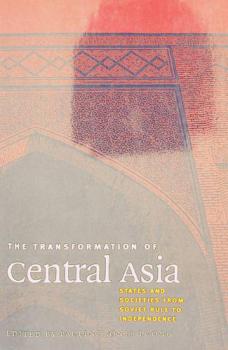
The transformation of central Asia : states and societies from Soviet rule to independence
With the fall of the Soviet Union in 1991, former Communist Party leaders in Central Asia were faced with the daunting task of building states where they previously had not existed. Experts on Central Asia here examine the emerging relationship between state actors and social forces in the region.
Book

Migration and Social Upheaval as the Face of Globalization in Central Asia
Since the start of the 1990s, Central Asia has been the main purveyor of migrants in the post-Soviet space. These massive migrations impact issues of governance; patterns of social adaptation; individual and collective identity transformations; and gender relation in Central Asia.
eBook


The New Continentalism
In this groundbreaking book Kent E. Calder argues that a new transnational configuration is emerging in Asia, driven by economic growth, rising energy demand, and the erosion of longstanding geopolitical divisions. What Calder calls the New Silk Road-with a strengthening multi-faceted relationship between East Asia and the Middle East at its core-could eventually emerge as one of the world's most important multilateral configurations. Straddling the border between comparative politics and international relations theory, this important book will stimulate debate and discussion in both fields.
eBook

The Caucasus and Central Asian Republics at the Turn of the Twenty-First Century
This book provides a unique level of coverage of economic and political events of global significance, including foreign trade, foreign direct investment, the impact of oil and natural gas finds, Islamic extremism, the 11 September 2001 terrorist attacks on the United States and the reaction of the CIS countries and the war on international terrorism. It will provide an invaluable source of reference for all those interested in transitional and developing countries.
eBook

Corruption as a Last Resort
Why do ordinary people engage in corruption? Kelly M. McMann contends that bureaucrats, poverty, and culture do not force individuals in Central Asia to pay bribes, use connections, or sell political support. Rather, corruption is a last resort when relatives, groups in society, the market, and formal government programs cannot provide essential goods and services. Using evidence from her long-term research in Kazakhstan and Kyrgyzstan, McMann shows that Islamic institutions, secular charities, entrepreneurs, and banks cannot provide the jobs and credit people need. This drives individuals to illicitly seek employment and loans from government officials.
A leading cause of this resource scarcity is market reform, as demonstrated by McMann's analysis of these countries as well as of Uzbekistan and global data. Market reform without supporting institutions, such as credit registries and antimonopoly measures, limits the resources available from the market and societal groups. McMann finds that in these circumstances only those individuals who have affluent relatives have an alternative to corruption.By focusing on ordinary people, McMann offers a new understanding of corruption. Previously, our knowledge was largely restricted to government officials' role in illicit exchanges. From her novel approach comes a useful policy insight: supplying ordinary people with alternatives to corruption is a fundamental and important anticorruption strategy.
eBook

Shared prosperity
The World Bank has recently defined two strategic goals: ending extreme poverty and boosting shared prosperity. Shared prosperity is measured as income growth among the bottom 40 percent of the income distribution in the population. The two goals should be achieved in a way that is sustainable from economic, social, and environmental perspectives. Shared Prosperity: Paving the Way in Europe and Central Asia focuses on the second goal and proposes a framework that integrates both macroeconomic and microeconomic elements. The macro variables, particularly changes in relative prices, affect income growth differentially along the income distribution; at the same time, the microeconomic distribution of assets at the bottom of the distribution determines the capacity of the bottom 40 to take advantage of the macroeconomic environment and contribute to overall growth. Growth and the incidence of growth are thus understood as jointly determined processes. Besides this integration, the main input of the framework is the finding that the trade-off between growth and equity may be an issue only in the short run. Over the long run, redistribution policies that increase the productive capacity of the bottom 40 percent enhance the overall growth potential of the economy. This report considers shared prosperity in Europe and Central Asia and concludes that the performance in sharing prosperity during the period 2000–10 was good, on average, but heterogeneous across countries and that sustainability is unclear. It also describes examples of the application of the framework to selected countries in the region. Finally, the report provides a tool to structure the policy discussion around the goal of shared prosperity and explains that specific policy links associated with the goal can be established only after a thorough analysis of the country-specific context.
eBook