
Catalogue Search | MBRL


Are you sure you want to remove the book from the shelf?

{{itemTitle}}
92
result(s) for
"Asia Civilization Study and teaching."
Sort by:

The great civilized conversation : education for a world community
\"Having spent decades teaching and researching the humanities, Wm. Theodore de Bary is well-positioned to speak on its merits and reform. Believing a classical liberal education is more necessary than ever, he outlines in these essays a plan to update existing core curricula, incorporating classics from both Eastern and Western traditions to bring the philosophy and moral values of Asian civilizations to American students, and vice versa. The author establishes a concrete link between teaching the classics of world civilizations and furthering global humanism. Selecting texts that share many of the same values and educational purposes, he joins Islamic, Indian, Chinese, Japanese, and Western sources into a revised curriculum that privileges humanity and civility. He also explores the tradition of education in China and its reflection of Confucian and Neo-Confucian beliefs. He reflects on history's great scholar-teachers and what their methods can teach us today, and he dedicates three essays to the power of The Analects of Confucius, The Tale of Genji, and The Pillow Book of Sei Shonagon in the classroom\"--Provided by publisher.
Book

The Birth of Orientalism
Modern Orientalism is not a brainchild of nineteenth-century European imperialists and colonialists, but, as Urs App demonstrates, was born in the eighteenth century after a very long gestation period defined less by economic or political motives than by religious ideology.
Based on sources from a dozen languages, many unavailable in English,The Birth of Orientalismpresents a completely new picture of this protracted genesis, its underlying dynamics, and the Western discovery of Asian religions from the sixteenth to the nineteenth century. App documents the immense influence of Japan and China and describes how the Near Eastern cradle of civilization moved toward mother India. Moreover, he shows that some of India's purportedly oldest texts were products of eighteenth-century European authors.
Though Western engagement with non-Abrahamic Asian religions reaches back to antiquity and can without exaggeration be called the largest-scale religiocultural encounter in history, it has so far received surprisingly little attention-which is why some of its major features and their role in the birth of modern Orientalism are described here for the first time. The study of Asian documents had a profound impact on Europe's intellectual makeup. Suddenly the Bible had much older competitors from China and India, Sanskrit threatened to replace Hebrew as the world's oldest language, and Judeo-Christianity appeared as a local phenomenon on a dramatically expanded, worldwide canvas of religions and mythologies. Orientalists were called upon as arbiters in a clash that involved neither gold and spices nor colonialism and imperialism but, rather, such fundamental questions as where we come from and who we are: questions of identity that demanded new answers as biblical authority dramatically waned.
eBook

Perspectives on the History of Ancient near Eastern Studies
No detailed description available for \"Perspectives on the History of Ancient Near Eastern Studies\".
eBook

Decolonizing the History Curriculum in Malaysia and Singapore
Decolonizing the History Curriculum in Malaysia and Singapore is a unique study in the history of education because it examines decolonization in terms of how it changed the subject of history in the school curriculum of two colonized countries - Malaysia and Singapore. Blackburn and Wu's book analyzes the transition of the subject of history from colonial education to postcolonial education, from the history syllabus upholding the colonial order to the period after independence when the history syllabus became a tool for nation-building. Malaysia and Singapore are excellent case studies of this process because they once shared a common imperial curriculum in the English language schools that was gradually 'decolonized' to form the basis of the early history syllabuses of the new nation-states (they were briefly one nation-state in the early to mid-1960s). The colonial English language history syllabus was 'decolonized' into a national curriculum that was translated for the Chinese, Malay, and Tamil schools of Malaysia and Singapore. By analyzing the causes and consequences of the dramatic changes made to the teaching of history in the schools of Malaya and Singapore as Britain ended her empire in Southeast Asia, Blackburn and Wu offer fascinating insights into educational reform, the effects of decolonization on curricula, and the history of Malaysian and Singaporean education.
eBook
Japanese Studies in Britain
This book takes an in-depth look at the study of Japan in contemporary Britain, highlighting the many strengths but also pointing out some weaknesses, while at the same time offering a valuable historical record of the origins and development of Japanese Studies in British universities and other institutions. It comprises essays written by scholars from universities all over Britain – from Edinburgh and Newcastle to Cardiff, SOAS and Oxbridge+, as well as contributions from various supporting foundations and organizations – from the British Association of Japanese Studies (BAJS) to the Sainsbury Institute for the Study of Japanese Arts and Cultures (SISJAC). It opens with an historical overview by Peter Kornicki, followed by chapters on the important role of missionaries in advancing Japanese language studies in pre-war Japan by Hamish Ion and the contribution of the British consular and military officers before 1941 by Jim Hoare. Japanese Studies in Britain gives a snapshot of the present state of Japanese Studies in Britain. It also provides an important new benchmark and point of reference regarding the present options for studying Japan at British universities. It offers in addition a wider perspective on the role, relevance and future direction of Japanese Studies for academia, business and government, students planning their future careers and more generally the world of education, as well as readers interested in the developing relationship between Britain and Japan.
eBook

Why China did not have a Renaissance - and why that matters
The series facilitates access to the fast-moving discussion about Global Intellectual History from the sixteenth to the twentieth centuries. It provides a forum for new methodological approaches and unconventional formats. Every volume engages in a critical reading of the state of research and explicitly reflects on its methodological toolkit.
eBook

Cultural Studies and Cultural Industries in Northeast Asia
What difference does a region make? Are the new regional cultures of Northeast Asia the product of individuals fighting to overcome national trade barriers, or are they driven by governments promoting national interests in new ways? Are they the result of
eBook

Reading Orientalism
The late Edward Said remains one of the most influential critics and public intellectuals of our time, with lasting contributions to many disciplines. Much of his reputation derives from the phenomenal multidisciplinary influence of his 1978 book Orientalism. Said's seminal polemic analyzes novels, travelogues, and academic texts to argue that a dominant discourse of West over East has warped virtually all past European and American representation of the Near East. But despite the book's wide acclaim, no systematic critical survey of the rhetoric in Said's representation of Orientalism and the resulting impact on intellectual culture has appeared until today.
Drawing on the extensive discussion of Said's work in more than 600 bibliographic entries, Daniel Martin Varisco has written an ambitious intellectual history of the debates that Said's work has sparked in several disciplines, highlighting in particular its reception among Arab and European scholars. While pointing out Said's tendency to essentialize and privilege certain texts at the expense of those that do not comfortably it his theoretical framework, Varisco analyzes the extensive commentary the book has engendered in Oriental studies, literary and cultural studies, feminist scholarship, history, political science, and anthropology. He employs \"critical satire\" to parody the exaggerated and pedantic aspects of post-colonial discourse, including Said's profound underappreciation of the role of irony and reform in many of the texts he cites. The end result is a companion volume to Orientalism and the vast research it inspired. Rather than contribute to dueling essentialisms, Varisco provides a path to move beyond the binary of East versus West and the polemics of blame.
Reading Orientalism is the most comprehensive survey of Said's writing and thinking to date. It will be of strong interest to scholars of Middle East studies, anthropology, history, cultural studies, post-colonial studies, and literary studies.
eBook
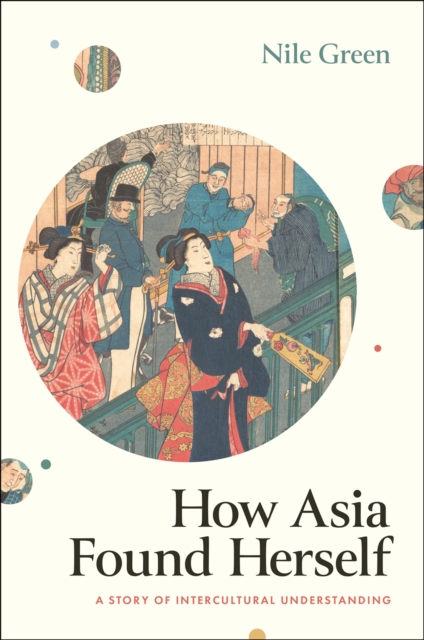
How Asia Found Herself
A pioneering history of cross-cultural knowledge that
exposes enduring fractures in unity across the world's largest
continent The nineteenth century saw European empires
build vast transport networks to maximize their profits from trade,
and it saw Christian missionaries spread printing across Asia to
bring Bibles to the colonized. The unintended consequence was an
Asian communications revolution: the maritime public sphere
expanded from Istanbul to Yokohama. From all corners of the
continent, curious individuals confronted the challenges of
studying each other's cultures by using the infrastructure of
empire for their own exploratory ends. Whether in Japanese or
Persian, Bengali or Arabic, they wrote travelogues, histories, and
phrasebooks to chart the vastly different regions that European
geographers labeled \"Asia.\" Yet comprehension does not always keep
pace with connection. Far from flowing smoothly, inter-Asian
understanding faced obstacles of many kinds, especially on a
landmass with so many scripts and languages. Here is the dramatic
story of cross-cultural knowledge on the world's largest continent,
exposing the roots of enduring fractures in Asian unity.
eBook