
Catalogue Search | MBRL


Are you sure you want to remove the book from the shelf?

{{itemTitle}}
583
result(s) for
"Asian Americans Cultural assimilation."
Sort by:


The Color of Success
The Color of Successtells of the astonishing transformation of Asians in the United States from the \"yellow peril\" to \"model minorities\"--peoples distinct from the white majority but lauded as well-assimilated, upwardly mobile, and exemplars of traditional family values--in the middle decades of the twentieth century. As Ellen Wu shows, liberals argued for the acceptance of these immigrant communities into the national fold, charging that the failure of America to live in accordance with its democratic ideals endangered the country's aspirations to world leadership.
Weaving together myriad perspectives, Wu provides an unprecedented view of racial reform and the contradictions of national belonging in the civil rights era. She highlights the contests for power and authority within Japanese and Chinese America alongside the designs of those external to these populations, including government officials, social scientists, journalists, and others. And she demonstrates that the invention of the model minority took place in multiple arenas, such as battles over zoot suiters leaving wartime internment camps, the juvenile delinquency panic of the 1950s, Hawaii statehood, and the African American freedom movement. Together, these illuminate the impact of foreign relations on the domestic racial order and how the nation accepted Asians as legitimate citizens while continuing to perceive them as indelible outsiders.
By charting the emergence of the model minority stereotype,The Color of Successreveals that this far-reaching, politically charged process continues to have profound implications for how Americans understand race, opportunity, and nationhood.
eBook

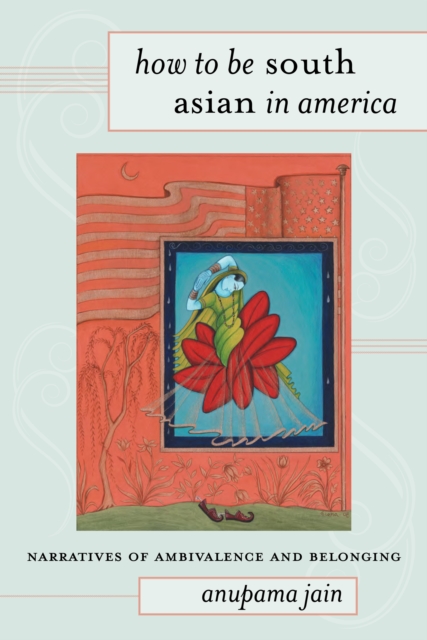
How to Be South Asian in America
Providing a useful analysis of and framework for understanding immigration and assimilation narratives, anupama jain'sHow to Be South Asian in Americaconsiders the myth of the American Dream in fiction (Meena Alexander'sManhattan Music), film (American Desi, American Chai), and personal testimonies. By interrogating familiar American stories in the context of more supposedly exotic narratives, jain illuminates complexities of belonging that also reveal South Asians' anxieties about belonging, (trans)nationalism, and processes of cultural interpenetration.jain argues that these stories transform as well as reflect cultural processes, and she shows just how aspects of identity-gender, sexual, class, ethnic, national-are shaped by South Asians' accommodation of and resistance to mainstream American culture.
eBook


Emerging Voices
Emerging Voicesfills a cultural gap in Asian American Studies with its unique and compelling discussion of underrepresented groups, including Burmese, Indonesian, Mong, Hmong, Nepalese, Romani, Tibetan, and Thai Americans. Bringing together eminent scholars from a variety of disciplines, this collection considers a wide range of themes, including assimilation and adaptation, immigration patterns, community, education, ethnicity, economics, family, gender, marriage, religion, sexuality, and work.
eBook


Bengali Harlem and the Lost Histories of South Asian America
Nineteenth-century Muslim peddlers arrived at Ellis Island, bags heavy with embroidered silks from their villages in Bengal. Demand for “Oriental goods\" took these migrants on a curious path, from New Jersey’s boardwalks into the segregated South. Bald’s history reveals cross-racial affinities below the surface of early twentieth-century America.
eBook

