
Catalogue Search | MBRL


Are you sure you want to remove the book from the shelf?

{{itemTitle}}
13
result(s) for
"Asian Americans History Juvenile literature."
Sort by:

Respecting the contributions of Asian Americans
\"Asian Americans come from a wide range of cultures and countries, including the Indian subcontinent, southeast Asia, and east Asia. This book explains the different forms of discrimination Asian Americans have faced, outlines the history of Asian immigration to America, and offers profiles of accomplished Asian Americans\"--Provided by publisher.
Book

Collateral Narratives: Neoliberal Citizenship, Juvenile Delinquency, and Cambodian American Refugee Youth in a.k.a. Don Bonus
A.k.a. Don Bonus is a 1995 autobiographical documentary that has garnered critical acclaim for its candid representation of the lives of Cambodian American youth in San Francisco, California. This essay situates the film at the intersection of post-1976 Southeast Asian migrations to the US, the rising influence of neoliberalism on domestic welfare policy, and the transformation of juvenile delinquency into a state technology of social abandonment. Produced through a community-based program for at-risk youth, a.k.a. Don Bonus, a collaboration between Sokly Ny, a Cambodian American refugee teen, and Spencer Nakasako, an Asian American filmmaker and community activist, participates in neoliberal techniques of youth empowerment. However, the film also critiques the humanitarian guise of liberal citizenship that, at once, purports to incorporate refugee subjects produced from US imperialism and subversively abandons these subjects through welfare reform and incarceration. This essay argues that the contradictions of liberal humanitarianism are underscored through the collateral narratives of Ny and his brothers who bear the brunt of liberal cultural values that privilege individuals who subscribe to the values of liberal individualism (in this case, Ny’s older brother, Chandara) but at the expense of those who require more familial support (suggested by the juvenile delinquency of Ny’s younger brother, Touch, and Ny’s loneliness). Ultimately, the film’s collateral narratives not only disrupt readings of Southeast Asian refugee subjectively as solely an effect of US humanitarianism but also raise questions about the coherency of reading Cambodian American refugee subjectivity through a framework of liberal individualism.
Journal Article

Made in Asian America : a history for young people
\"This book is a stirring account of the ordinary people and extraordinary acts that made Asian America and the young people who are remaking America today\"--Amazon.
Book
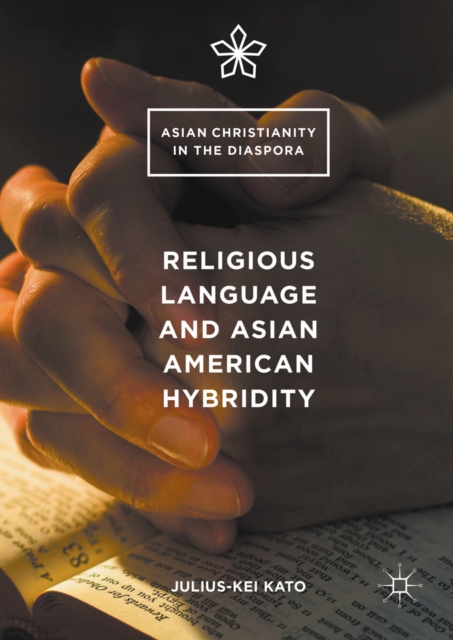
Religious language and Asian American hybridity
In this book, Julius-Kei Kato lets the theories and experiences of Asian American hybridity converse with and bear upon some aspects of Christian biblical and theological language. Hybridity has become a key feature of today's globalized world and is, of course, a key concept in postcolonial thought. However, despite its crucial importance, hybridity is rarely used as a paradigm through which to analyze and evaluate the influential concepts and teachings that make up religious language. This book fills a lacuna by discussing what the concept of hybridity challenges and resists, what over-simplifications it has the power to complicate, and what forgotten or overlooked strands in religious tradition it endeavors to recover and reemphasize. Shifting seamlessly between biblical, theological, and modern, real-world case studies, Kato shows how hybridity permeates and can illuminate religious phenomena as lived and believed. The ultimate goal of the move toward an embrace of hybridity is afurther dissolution of the thick wall separating ideas of \"us\" and \"them.\" In this book, Kato suggests the possibility of a world in which what one typically considers the \"other\" is increasingly recognized within oneself.
eBook

CHILD PRISONER IN AMERICAN CONCENTRATION CAMPS
Nakagawa (Camp Child, 2007) recounts the experiences of her family following the forced relocation of Japanese Americans by Executive Order 9066.
Book Review