
Catalogue Search | MBRL


Are you sure you want to remove the book from the shelf?

{{itemTitle}}
6,615
result(s) for
"Asian Americans Languages."
Sort by:


The Accidental Sign Linguist
My involvement in sign linguistics began in 1969 and is still ongoing, with affiliations and collegial relationships at a number of institutions. Interestingly, all of these affiliations began with chance meetings or serendipity. Along the way, my research focus and emphasis has shifted, depending on funding, institutional priorities, or my own choices.
Journal Article


After “The China Virus” Went Viral: Racially Charged Coronavirus Coverage and Trends in Bias Against Asian Americans
On March 8, 2020, there was a 650% increase in Twitter retweets using the term “Chinese virus” and related terms. On March 9, there was an 800% increase in the use of these terms in conservative news media articles. Using data from non-Asian respondents of the Project Implicit “Asian Implicit Association Test” from 2007–2020 (n = 339,063), we sought to ascertain if this change in media tone increased bias against Asian Americans. Local polynomial regression and interrupted time-series analyses revealed that Implicit Americanness Bias—or the subconscious belief that European American individuals are more “American” than Asian American individuals—declined steadily from 2007 through early 2020 but reversed trend and began to increase on March 8, following the increase in stigmatizing language in conservative media outlets. The trend reversal in bias was more pronounced among conservative individuals. This research provides evidence that the use of stigmatizing language increased subconscious beliefs that Asian Americans are “perpetual foreigners.” Given research that perpetual foreigner bias can beget discriminatory behavior and that experiencing discrimination is associated with adverse mental and physical health outcomes, this research sounds an alarm about the effects of stigmatizing media on the health and welfare of Asian Americans.
Journal Article

The Politics of the Visible in Asian North American Narratives
Examining nine Asian Canadian and Asian American narratives, Eleanor Ty explores how authors empower themselves, represent differences, and re-script their identities as 'visible minorities' within the ideological, imaginative, and discursive space given to them by dominant culture. In various ways, Asian North Americans negotiate daily with 'birthmarks,' their shared physical features marking them legally, socially, and culturally as visible outsiders, and paradoxically, as invisible to mainstream history and culture.
Ty argues that writers such as Denise Chong, Shirley Geok-lin Lim, and Wayson Choy recast the marks of their bodies and challenge common perceptions of difference based on the sights, smells, dress, and other characteristics of their hyphenated lives. Others, like filmmaker Mina Shum and writers Bienvenido Santos and Hiromi Goto, challenge the means by which Asian North American subjects are represented and constructed in the media and in everyday language. Through close readings grounded in the socio-historical context of each work, Ty studies the techniques of various authors and filmmakers in their meeting of the gaze of dominant culture and their response to the assumptions and meanings commonly associated with Orientalized, visible bodies.
eBook
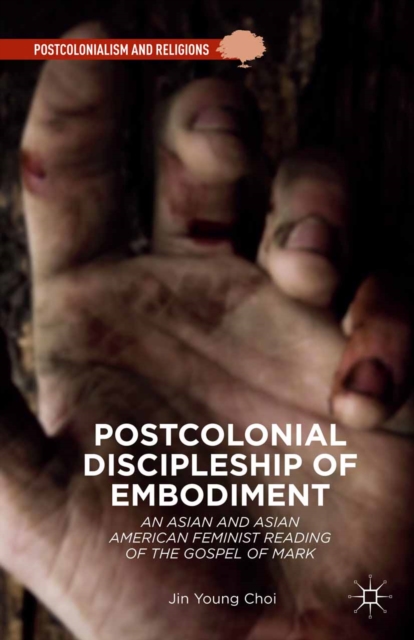
Postcolonial discipleship of embodiment : an Asian and Asian American feminist reading of the gospel of Mark
Jin Young Choi rereads discipleship in the Gospel of Mark from a postcolonial feminist perspective, developing an Asian and Asian American hermeneutics of phronesis. Colonized subjects perceive Jesus' body as phantasmic. Discipleship means embodying the mystery of this body while engaging with invisible, placeless and voiceless others.
eBook

English Language Learners' Nonword Repetition Performance: The Influence of Age, L2 Vocabulary Size, Length of L2 Exposure, and L1 Phonology
Purpose: This study examined individual differences in English language learners' (ELLs) nonword repetition (NWR) accuracy, focusing on the effects of age, English vocabulary size, length of exposure to English, and first-language (L1) phonology. Method: Participants were 75 typically developing ELLs (mean age 5;8 [years;months]) whose exposure to English began on average at age 4;4. Children spoke either a Chinese language or South Asian language as an L1 and were given English standardized tests for NWR and receptive vocabulary. Results: Although the majority of ELLs scored within or above the monolingual normal range (71%), 29% scored below. Mixed logistic regression modeling revealed that a larger English vocabulary, longer English exposure, South Asian L1, and older age all had significant and positive effects on ELLs' NWR accuracy. Error analyses revealed the following L1 effect: onset consonants were produced more accurately than codas overall, but this effect was stronger for the Chinese group whose L1s have a more limited coda inventory compared with English. Conclusion: ELLs' NWR performance is influenced by a number of factors. Consideration of these factors is important in deciding whether monolingual norm referencing is appropriate for ELL children.
Journal Article

Exploring the Challenges of Learning and Teaching Chinese/Mandarin Language at Higher Education Institutes: Voices from Non-Chinese Speaker Teachers and Learners
Chinese/Mandarin language teaching to undergraduate students from non-Chinese speaker countries has garnered significant attention due to China's pivotal role in global political and economic transformations. Mandarin, spoken by 70% of the Chinese population, is not only taught within China but also in several other countries. However, similar to teaching any second or foreign language, instructing Mandarin comes with its share of challenges, which, to the best of our knowledge, have not been thoroughly explored. To delve into these issues, we employed a qualitative (phenomenological) research approach. Data were gathered through semi-structured interviews with 15 teachers and 20 Mandarin language learners, selected using theoretical sampling. Subsequently, the interviews were transcribed into text files and analyzed utilizing qualitative data analysis software, MAXQDA. The challenges and problems identified were categorized into four primary themes: linguistic, educational, psychological, and social/political. The findings hold potential implications for Chinese/Mandarin language policymakers, educators, curriculum developers, and learners.
Journal Article

Discrimination and Mental Health–Related Service Use in a National Study of Asian Americans
Objectives. We examined the association between perceived discrimination and use of mental health services among a national sample of Asian Americans. Methods. Our data came from the National Latino and Asian American Study, the first national survey of Asian Americans. Our sample included 600 Chinese, 508 Filipinos, 520 Vietnamese, and 467 other Asians (n=2095). We used logistic regression to examine the association between discrimination and formal and informal service use and the interactive effect of discrimination and English language proficiency. Results. Perceived discrimination was associated with more use of informal services, but not with less use of formal services. Additionally, higher levels of perceived discrimination combined with lower English proficiency were associated with more use of informal services. Conclusions. The effect of perceived discrimination and language proficiency on service use indicates a need for more bilingual services and more collaborations between formal service systems and community resources.
Journal Article

Burdened or Efficacious? Subgroups of Chinese American Language Brokers, Predictors, and Long-Term Outcomes
Despite growing research on youth language brokering in immigrant families, evidence regarding its developmental outcomes remains mixed. This study took a person-centered approach, exploring subgroups of language brokers and identifying predictors and long-term outcomes of the subgroup membership. Participants were Chinese American adolescents (N = 350 at Time 1; Mage = 17.04; SD = 0.72; 59% female) followed over two waves spaced four years apart (longitudinal N = 291). Two distinct subgroups of adolescent language brokers were identified using latent profile analyses on language brokering feelings: efficacious and burdened brokers. Adolescents proficient in both English and Chinese were more likely to be efficacious brokers. Furthermore, burdened brokers reported higher parent–child alienation, and in turn, more depressive symptoms in emerging adulthood, compared to efficacious brokers and non-language-brokers. The current findings inform future interventions that burdened language brokers may be most at risk and that improving parent–child relationships may be one way to promote the well-being of young brokers.
Journal Article