
Catalogue Search | MBRL


Are you sure you want to remove the book from the shelf?

{{itemTitle}}
180
result(s) for
"Asian Development Bank History."
Sort by:


The Global City
This classic work chronicles how New York, London, and Tokyo became command centers for the global economy and in the process underwent a series of massive and parallel changes. What distinguishes Sassen's theoretical framework is the emphasis on the formation of cross-border dynamics through which these cities and the growing number of other global cities begin to form strategic transnational networks. All the core data in this new edition have been updated, while the preface and epilogue discuss the relevant trends in globalization since the book originally came out in 1991.
eBook

Prosper or perish
The official banking institutions for rural China are Rural Credit Cooperatives (RCCs). Although these co-ops are mandated to support agricultural development among farm households, since 1980 half of RCC loans have gone to small and medium-sized industrial enterprises located in, and managed by, townships and villages. These township and village enterprises have experienced highly uneven levels of success, and by the end of the 1990s, half of all RCC loans were in or close to default, forcing China's central bank to bail out RCCs. InProsper or Perish, Lynette H. Ong examines the bias in RCC lending patterns, focusing on why the mobilization of rural savings has contributed to successful industrial development in some locales but not in others.
Interweaving insightful and theoretically informed discussions of rural credit, development, governance, and bank bailouts, Ong identifies various sources for China's uneven development. In the highly decentralized fiscal environment of the People's Republic, successful industrialization has significant implications for rural governance. Local governments depend on revenue from industrial output to provide public goods and services; unsuccessful enterprises starve local governments of revenue and result in radical cutbacks in services. High peasant burdens, land takings without adequate compensation by local governments, and other poor governance practices tend to be associated with unsuccessful industrialization. In light of the recent liberalization of the rural credit sector in China,Prosper or Perishmakes a significant contribution to debates within political science, economic development, and international banking.
eBook

The Latecomer's Rise
In The Latecomer's
Rise , Muyang Chen reveals the nature and
impact of a rapidly growing form of international lending: Chinese
development finance.
Over the past few decades, China has become the world's largest
provider of bilateral development finance. Through its two national
policy banks, the China Development Bank (CDB) and the
Export-Import Bank of China (China Exim), it has funded
infrastructure and industrial projects in numerous emerging markets
and developing countries. Yet this very surge and magnitude of
capital has raised questions about the characteristics of Chinese
bilateral lending and its repercussions on the international
order.
Drawing on a variety of novel Chinese primary sources, including
interviews and official bank documents, Chen pinpoints the
distinctiveness of Chinese bilateral development finance, explains
its origins, and analyzes its effects. She compares Chinese policy
banks with their foreign counterparts to show that the CDB and
China Exim, while state-supported, are in fact also
market-oriented-they are as much government organs as they are
profit-driven financial agencies that serve both state and firms'
interests. This approach, which emerged out of China's particular
economic history, suggests that Chinese overseas lending is not
merely a tool of economic statecraft that challenges Western-led
economic regimes. Instead, China's responses to extant rules,
norms, and practices across given issue areas have varied between
contestation and convergence.
Rich with empirical detail and penetrating insights, The
Latecomer's Rise demystifies the little-known workings of
Chinese development finance to revise our conceptions of China's
role in the international financial system.
eBook

Banking on Women: The Shanghai Women’s Commercial and Savings Bank, 1924–1955
The formation of the Shanghai Women’s Commercial and Savings Bank (1924–1955) uncovers the legacy of an institution founded by a group of elite women. Although the women’s bank had limited capital and a small business scope, it reflected the contributions of enterprising women to the financial field when Chinese women’s roles were evolving and feminist rhetoric appealed to women’s economic independence. This article brings the achievements of such Chinese women to the forefront, as key figures in the development and direction of the Shanghai Women’s Bank. By exploring the anxieties and endeavors of the Shanghai Women’s Bank and shifting the focus to the female figures involved in shaping the bank, this article argues that they, alongside their elite social network, contributed to the bank’s longevity and portrayal in the media landscape. Although emphasizing gender in its initial creation, the bank ultimately pursued similar business strategies to other banks with both men and women working behind-the-scenes to uphold the institution. Moreover, this article contributes to a more inclusive history of women and finance in order to illuminate the endeavors of Chinese women in Shanghai banking amongst its global counterparts.
Journal Article

The socio-colonial history of Surinamese surnames applied to a validated surname list to identify ancestry in health research
Around half of the population of Suriname, who are mainly of African and South Asian descent, migrated to the Netherlands at the end of the previous century, where they face higher perinatal and maternal mortality and up to 5 years lower life expectancy than European-Dutch. Analyses by ancestry are needed to address these inequalities, but the law prohibits registration by ancestry. Therefore, a list of Surinamese surnames was compiled and validated to identify the largest groups, African-Surinamese or South Asian-Surinamese ancestry in health research. A complete database of Surinamese surnames was provided by the National Population Registry of Suriname. Surname recognition by researchers of Surinamese ancestry was used. Disagreement was resolved using historical registers and through discussion. The list was further validated against contemporary lists of Surinamese surnames with self-defined ancestry, obtained during population and clinical studies in Suriname and the Netherlands. All 71,529 Surinamese surnames were encoded, as African-Surinamese (34%), South Asian-Surinamese (18%), Brazilian or other Iberian (17%), Indonesian-Surinamese (13%), Chinese-Surinamese (5%), First Nation (2%), and other (10%). Compared to self-defined ancestry, South Asian-Surinamese surname coding had 100% sensitivity, 99.8% specificity, and 99.9% accuracy. For African-Surinamese, who may have Dutch surnames, these values depended on geocoding. With a known Surinamese origin, sensitivity, specificity, and accuracy were, respectively, 97.3%, 100%, and 98.6%, but without this information, there was interference of African-Surinamese with European-Dutch surnames in the Dutch validation sample. In conclusion, the Surinamese Surname List has a high accuracy in identifying persons of Surinamese ancestry. This quick, inexpensive, and nonintrusive method, which is unaffected by response bias, might be a valuable tool in public health research to help address the profound health disparities by ancestry.
Journal Article

The state of well-being of older people: a comparative study across developing Asia
Rapid aging of populations in developing Asia calls for an in-depth understanding of the factors that determine the well-being of older people beyond the classic metrics such as income and poverty. We use a novel dataset of older individuals in nine countries across East Asia (the People’s Republic of China and the Republic of Korea); Southeast Asia (Indonesia, Malaysia, the Philippines, Thailand, and Viet Nam); and South Asia (Bangladesh and India), to examine the correlates of well-being in old age, as measured by life satisfaction and mental health screening test scores. Consistent with the prevailing literature across multiple disciplines, our findings emphasize that age is positively associated with well-being, while it negatively predicts ill-being in most countries. Other demographic characteristics such as gender, marital status, education level, residential area, and living arrangement do not show consistent patterns of association with well-being or ill-being in old age across countries. Beyond demographic characteristics, the findings from the existing literature point to four dimensions of well-being in old age: being productive through work, maintaining physical health and mobility, achieving retirement financial preparedness, and engaging actively in family and social life. Our results are aligned with this literature in that they predict higher life satisfaction and a reduction of depressive symptoms. However, the sign and magnitude of the associations vary substantially between countries, which are at different stages of population aging with heterogeneous cultural and institutional settings. Overall, we observe a relatively high incidence of depression and loneliness among older people in the region, which dampens indicators of well-being in later life, particularly among older women.
Journal Article

Developmental Mindset
The Asian financial crisis of 1997-1998 was supposed to be the death knell for the developmental state. The International Monetary Fund supplied emergency funds for shattered economies but demanded that states liberalize financial markets and withdraw from direct involvement in the economy. Financial liberalization was meant to spell the end of strategic industry policy and the state-directed \"policy lending\" it involved. Yet, largely unremarked by analysts, South Korea has since seen a striking revival of financial activism. Policy lending by state-owned development banks has returned the state to the core of the financial system. Korean development banks now account for one quarter of all loans and take the lead in providing low-cost finance to local manufacturing firms in strategic industries.
Elizabeth Thurbon argues that an ideational analysis can help explain this renewed financial activism. She demonstrates the presence of a \"developmental mindset\" on the part of political leaders and policy elites in Korea. This mindset involves shared ways of thinking about the purpose of finance and its relationship to the productive economy. The developmental mindset has a long history in Korea but is subject to the vicissitudes of political and economic circumstances. Thurbon traces the structural, institutional, political, and ideational factors that have strengthened and at times weakened the developmental consensus, culminating in the revival of financial activism in Korea. In doing so, Thurbon offers a novel defense of the developmental state idea and a new framework for investigating the emergence and evolution of developmental states. She also canvasses the implications of the Korean experience for wider debates concerning the future of financial activism in an era of financialization, energy insecurity, and climate change.
eBook
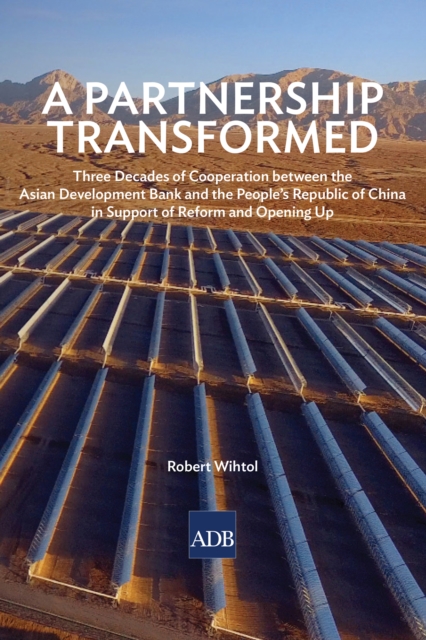
A Partnership Transformed
This publication explores three decades of cooperation between the Asian Development Bank and the People's Republic of China in support of reform and opening up.This book is a history of the partnership between the Asian Development Bank (ADB) and the People's Republic of China (PRC) spanning three decades. Since joining ADB in 1986, the PRC has evolved from being a poor and predominantly agrarian economy to an upper-middle income manufacturing and services powerhouse that has become a leading international source of financial, technical, and knowledge cooperation. This historically unprecedented transformation has shaped every aspect of the ADB-PRC relationship. The successful partnership owes much to the PRC's unique approach to developing its economy, and offers valuable lessons for other countries and development partners.
eBook