
Catalogue Search | MBRL


Are you sure you want to remove the book from the shelf?

{{itemTitle}}
34,135
result(s) for
"Asian Economics"
Sort by:

The political economy of South Asian diaspora: patterns of socio-economic influence
\"The South Asian diaspora is a diverse group who settled in different parts of the world, often concentrated in developed countries. There is an emerging trend of re-engagement of the diaspora in the South Asian region. Entrepreneurs in Japan and Singapore as well as the Malaysian Indian diaspora are involved in South India making the region a lucrative space for capital, talent and ideas. This volume expands into diasporic communities such as the Nepali community in Singapore and their contribution to their home economy through remittances. Beyond economics, the contributors explore how transnational politics overlap with religious ideologies amongst Pakistanis in United Kingdom and the Sathya Sai Baba movement which contributes to diasporic identity building in host countries. They also explore media and culture: in the last decade Bollywood films have portrayed life in the diaspora, and have featured the diaspora and Non Resident Indians (NRI) as fully formed stock characters and protagonists. The process of diaspora re-engagement has tremendous development implications for South Asian countries, both individually and for their regional integration\"-- Provided by publisher.
Book

Ecological Migrants
Reindeer-herding Ewenki hunters have lived in the forests of China's Greater Khingan Range for over three hundred years. They have sustained their livelihoods by collecting plants and herbs, hunting animals and herding reindeer. This ethnography details changing Ewenki ways of life brought first by China's modernization and development policies and more recently by ecological policies that aim to preserve and restore the badly damaged ecologies of western China. Xie reflects on modernization and urbanization in China through this study of ecological migration policies and their effects on relocated Aoluguya Ewenki hunters.
eBook

Does ESG really matter to the bank’s stability in ASEAN countries?
On the rising interest in the sustainability and stability of commercial banks in ASEAN, we set out to examine the impacts of Environmental, Social, and Governance (ESG) activities on bank stability in this region. We build models based on signal theory, stakeholder theory, and overinvestment theory. Upon data collected from banks in the ASEAN from 2015 to 2022, we perform various econometric analyses, including system GMM (Generalized Method of Moments), to demonstrate that attending to ESG imposes an inverse effect on bank stability. It can be seen that the implementation of ESG in banks in ASEAN countries is at the expense of current sustainability. However, in the future, this relationship may be different. The findings support several implications for research and practice in the ASEAN banking environment. While vast evidence has been accumulated in developed countries on the positive contribution of ESG to the stability of the bank, little is found in developing countries. We find significant evidence to support that banks in developing countries should be cautious with spending on ESG activities since it consistently and significantly suppresses the overall stability of the bank.
Journal Article
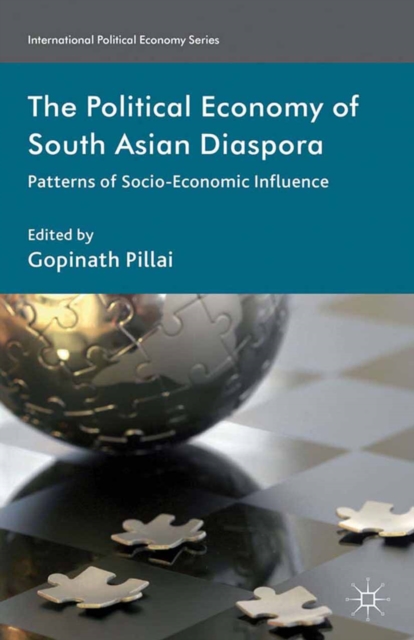
The Political Economy of South Asian Diaspora
01
02
The South Asian diaspora is a diverse group who settled in different parts of the world, often concentrated in developed countries. There is an emerging trend of re-engagement of the diaspora in the South Asian region. Entrepreneurs in Japan and Singapore as well as the Malaysian Indian diaspora are involved in South India making the region a lucrative space for capital, talent and ideas. This volume expands into diasporic communities such as the Nepali community in Singapore and their contribution to their home economy through remittances. Beyond economics, the contributors explore how transnational politics overlap with religious ideologies amongst Pakistanis in United Kingdom and the Sathya Sai Baba movement which contributes to diasporic identity building in host countries. They also explore media and culture: in the last decade Bollywood films have portrayed life in the diaspora, and have featured the diaspora and Non Resident Indians (NRI) as fully formed stock characters and protagonists. The process of diaspora re-engagement has tremendous development implications for South Asian countries, both individually and for their regional integration.
02
02
The South Asian diaspora is a diverse group who settled in different parts of the world, often concentrated in developed countries. This volume explores how transnational politics overlap with religious ideologies, media and culture amongst the disapora, contributing to diasporic identity building in host countries.
13
02
Gopinath Pillai has been Ambassador-at-Large since August 2008. He was Singapore's Non-Resident Ambassador to Iran between 1990 and 2008. He has also served as Singapore's High Commissioner to Pakistan. Ambassador Pillai has been Chairman of the Management Board of the Institute of South Asian Studies, National University of Singapore, since its inception in 2004. As Chairman, he spearheaded the first South Asian Diaspora Conference in 2011 and chairs the second diaspora conference to be held in November 2013.
04
02
Introduction; Gopinath Pillai PART I: ECONOMICS 1. Looking East and Beyond: Indian IT Diaspora in Japan; Anthony P. D'Costa 2. Bangladeshi Diaspora Entrepreneurs in Japan; Md Mizanur Rahman and Lian Kwen Fee 3. From Sentries to Skilled Migrants: the transitory residence of the Nepali community in Singapore; Hema Kiruppalini 4. Migrant Remittance Supported Micro Enterprises in South Asia; Shahadat Khan 5. Diaspora Route to Professional Success in the Indian Context: A Perspective; Ravi Mantha and Meng Weng Wong PART II: RELIGION 6. Religion, Politics and Islam in the South Asian Diaspora; Pnina Werbner 7. Social Movements in the Diasporic Context: the Sathya Sai Baba Movement; Ajaya K. Sahoo and Melissa Kelly PART III: MEDIA 8. Transnational Subject/Transnational Audience: the NRI trope and Diasporic Aesthetic in Diasporic Romance Films; Sarah Joshi 9. Transnational Collaboration and Media Industry in South India: Case of Malaysian-Indian Diaspora; Shanthini Pillai Conclusion; Gopinath Pillai
eBook

Hard Interests, Soft Illusions
In Hard Interests, Soft Illusions, Natasha Hamilton-Hart
explores the belief held by foreign policy elites in much of
Southeast Asia-Indonesia, Malaysia, the Philippines, Thailand,
Singapore, and Vietnam-that the United States is a relatively
benign power. She argues that this belief is an important factor
underpinning U.S. preeminence in the region, because beliefs inform
specific foreign policy decisions and form the basis for broad
orientations of alignment, opposition, or nonalignment. Such
foundational beliefs, however, do not simply reflect objective
facts and reasoning processes. Hamilton-Hart argues that they are
driven by both interests-in this case the political and economic
interests of ruling groups in Southeast Asia-and illusions.
Hamilton-Hart shows how the information landscape and standards
of professional expertise within the foreign policy communities of
Southeast Asia shape beliefs about the United States. These
opinions frequently rest on deeply biased understandings of
national history that dominate perceptions of the past and underlie
strategic assessments of the present and future. Members of the
foreign policy community rarely engage in probabilistic reasoning
or effortful knowledge-testing strategies. This does not mean, she
emphasizes, that the beliefs are insincere or merely instrumental
rationalizations. Rather, cognitive and affective biases in the
ways humans access and use information mean that interests
influence beliefs; how they do so depends on available information,
the social organization and practices of a professional sphere, and
prevailing standards for generating knowledge.
In Hard Interests, Soft Illusions , Natasha
Hamilton-Hart explores the belief held by foreign policy elites in
much of Southeast Asia-Indonesia, Malaysia, the Philippines,
Thailand, Singapore, and Vietnam-that the United States is a
relatively benign power. She argues that this belief is an
important factor underpinning U.S. preeminence in the region,
because beliefs inform specific foreign policy decisions and form
the basis for broad orientations of alignment, opposition, or
nonalignment. Such foundational beliefs, however, do not simply
reflect objective facts and reasoning processes. Hamilton-Hart
argues that they are driven by both interests-in this case the
political and economic interests of ruling groups in Southeast
Asia-and illusions.
Hamilton-Hart shows how the information landscape and standards
of professional expertise within the foreign policy communities of
Southeast Asia shape beliefs about the United States. These
opinions frequently rest on deeply biased understandings of
national history that dominate perceptions of the past and underlie
strategic assessments of the present and future. Members of the
foreign policy community rarely engage in probabilistic reasoning
or effortful knowledge-testing strategies. This does not mean, she
emphasizes, that the beliefs are insincere or merely instrumental
rationalizations. Rather, cognitive and affective biases in the
ways humans access and use information mean that interests
influence beliefs; how they do so depends on available information,
the social organization and practices of a professional sphere, and
prevailing standards for generating knowledge.
eBook

Performance of omnichannel warehouse of Muslim fashion company in Indonesia based on workforce, equipment, space, and information system aspects
The objective of this study is to determine the overall effectiveness of omnichannel warehouses, with a focus on the fashion industry, which has demonstrated resilience during the pandemic by utilizing both offline and online sales techniques. This study essentially develops a generic technique for evaluating omnichannel warehouse productivity based on the design of Karim et al., adjusting some of its indicators to suit Indonesia's medium-sized fashion industry. The observational study's results indicate that the workforce and space categories' Key Performance Indicators (KPIs) for the fashion sector are still deficient. Based on discussions with various management entities, it is suggested that KPIs be extended into four categories by including measures related to space and information systems. Moreover, four indicators-product receiving, identification, and picking (offline) in the labor category, and transportation utilization in the space category-are highlighted using the Traffic Light System (TLS) method as the highest priority areas for improvement. The fundamental reasons for these issues are found through fishbone diagram analysis, and they include a deficient fleet of vehicles, imprecise transportation plans, inaccurate demand projections, insufficient employee training about new products, and inadequate mechanisms for communication between the sales, warehouse, and vendors. The limitation of this study is that it solely looked at the fashion industry's productivity. It is recommended that future studies use omnichannel principles across many businesses to measure other industry variables like time, cost, and quality.
The coronavirus disease (Covid-19) pandemic has caused significant changes in several industries, including the fashion sector. New habits are entering the market as a result of people's trends changing quickly and dynamically. One such habit is the move to online apparel buying, which provides a range of practical features at reasonably low costs. Since many of them would rather spend their time doing other things than shopping in real stores, the younger generation prefers to use internet programs to make apparel purchases. Fashion has adopted a new way of life as a result of the pandemic. This study essentially uses the research of Karim et al., who created a generic technique to gauge warehouse productivity and modified a few variables to make them relevant to the fashion sector in Indonesia. The measurement results indicate that there is a need to enhance the following areas: employee awareness of new items, accuracy of demand projections, appropriate transport vehicles, and reliable, timely transportation planning.
Journal Article

Decoding innovation configurations for agribusiness performance: Indonesian evidence
Literature on agribusiness innovation in the Global South still examines product, process, marketing, and organizational innovations as isolated domains, thereby overlooking how their complementarities shape agribusiness performance within resource-constrained and institutionally fragmented socio-technical environments. Addressing this gap, this study advances Configurational Innovation Synergy as a theoretical extension of Innovation Configuration Theory by integrating Dynamic Capabilities to explain how firms orchestrate multi-domain innovations to generate complementarities that enhance performance. Using stratified survey data from 866 Indonesian agribusiness firms across input, production, and marketing sectors, this research models innovation configuration as a higher-order multidimensional construct through PLS-SEM and empirically tests the simultaneous role of explorative–exploitative alignment. The results demonstrate that integrative innovation configurations significantly improve agribusiness performance, with stronger effects when firms balance exploratory and exploitative activities. Theoretically, this study contributes a context-sensitive configurational lens for understanding innovation under Global South constraints; methodologically, it demonstrates the suitability of PLS-SEM for modeling complex higher-order innovation structures; and empirically, it offers large-scale, cross-sector evidence that supports collaborative and frugal innovation practices as pathways for strengthening agribusiness competitiveness in emerging economies.
Journal Article

The impact of remittance inflows on economic growth, unemployment and income inequality: An international evidence
This study explores the impact of remittance inflows on economic growth, unemployment, and income inequality for high-, low-, and middle-income countries from 1991 to 2020 using fixed effects, random effects, and fully modified ordinary least square estimates. The outcomes confirm that remittance inflows spur the economic growth not only in low- and middle-income countries, but also in high-income countries. However, the remittance inflows increase the unemployment in high-income countries while reducing it in low- and middle-income countries. The income inequality model validated the income inequality mitigating role of remittance inflows across all countries. Based on the estimated outcomes, the study proposes possible policy measures in concluding section.
Journal Article
To hoard or not to hoard? Political uncertainty and corporate cash holdings in emerging Asian economies
This study aims to examine the impact of political uncertainty on corporate cash holdings across eight Asian emerging economies from 1990 to 2023, using data on national elections and corporate financial data. We focus on two distinct electoral systems: a presidential or legislative electoral system (in Indonesia, South Korea, Malaysia, the Philippines, Singapore, Taiwan, and Thailand) and an assembly-elected presidential system (in the People's Republic of China), to explore how these systems influence corporate cash holdings. Using fixed effects regressions, the study estimates the sensitivity of cash holdings to cash flows during election periods, showing that cash holdings vary not only by electoral system but also by firm size. The results show that firms in presidential or legislative systems exhibit higher cash flow sensitivity during elections, while firms in the assembly-elected system (China) show negative sensitivity. In addition, this study presents an in-depth examination of close election results and coup d'état events, studying their impacts on corporate cash-holding strategies. These findings show how elections shape corporate financial strategies, contributing to the literature on political uncertainty and its differential impacts on corporate behaviour across different political contexts.
This study has an impact in demonstrating how political uncertainty affects the cash flow sensitivity of cash holdings in emerging Asian economies. The findings show that election cycles, electoral systems, and firm size play an important role in driving precautionary or policy-driven cash strategies. The study supports managers, investors, and policymakers in strengthening financial resilience under political risk.
Journal Article

Economic Performance of Forest Plantations in Asian Countries
In Asian countries, forest plantations increased dramatically during the 1990s. Most earlier studies mainly focused on how forest plantations influenced certain aspects of rural livelihoods. The macroeconomic effects of forest plantations on Asia’s GDP per capita are the main focus of this study. The impact of forest plantation on GDP per capita was estimated using data from 1990 to 2019 using the augmented mean group (AMG) and common correlated effects mean group (CCEMG) estimators. The study’s findings demonstrate that a variety of factors, including total exports (TEXP), agricultural growth (AGR), foreign direct investment (FDI), and forest plantations (FP), all have a positive and significant impact on the GDP per capita of Asian countries. The causality test results also show a bidirectional association between forest plantations and FDI and a unidirectional relationship between forest plantations and GDP per capita. According to this study, Asian countries can raise their GDP per capita by promoting forest plantations, which have considerable environmental benefits for the region’s economies’ long-term development.
Journal Article