
Catalogue Search | MBRL


Are you sure you want to remove the book from the shelf?

{{itemTitle}}
72,922
result(s) for
"Asian art"
Sort by:
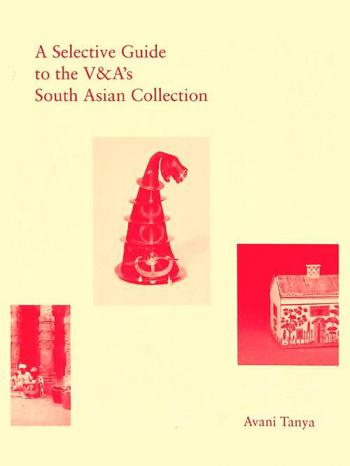

Islamic Aesthetics
It is often argued that a very special sort of consciousness
went into creating Islamic art, that Islamic art is very different
from other forms of art, that Muslims are not allowed to portray
human beings in their art, and that calligraphy is the supreme
Islamic art form. Oliver Leaman challenges all of these ideas, and
argues that they are misguided. Instead, he suggests that the
criteria we should apply to Islamic art are identical to the
criteria applicable to art in general, and that the attempt to put
Islamic art into a special category is a result of orientalism.
Leaman criticizes the influence of Sufism on Islamic aesthetics
and contends that it is generally misleading regarding both the
nature of Islam and artistic expression. He discusses issues
arising in painting, calligraphy, architecture, gardens,
literature, films, and music and pays close attention to the
teachings of the Qur'an. In particular he asks what it would mean
for the Qur'an to be a miraculous literary creation, and he
analyzes two passages in the Qur'an-those of Yusuf and Zulaykha
(Joseph and Zuleika) and King Sullayman (Solomon) and the Queen of
Sheba. His arguments draw on examples from history, art,
philosophy, theology, and the artefacts of the Islamic world, and
raise a large number of difficulties in the accepted paradigms for
analyzing Islamic art.
eBook

East Asia beyond the Archives
For a long time, silk, tea, sinocentrism, and eurocentrism made up a big patch of East Asian history. Simultaneously deviating from and complicating these tags, this edited volume reconstructs narratives from the periphery and considers marginal voices located beyond official archives as the centre of East Asian history. The lives of the Japanese Buddhist monks, Eastern Han local governors, Confucian scholars, Chinese coolies, Shanghainese tailors, Macau joss-stick makers, Hong Long locals, and Cantonese working-class musicians featured in this collection provide us with a glimpse of how East Asia’s inhabitants braved, with versatility, the ripples of political centralization, cross-border movement, foreign imperialism, nationalism, and globalism that sprouted locally and universally. Demonstrating the rich texture of sources discovered through non-official pathways, the ten essays in this volume ultimately reveal the timeless interconnectedness of East Asia and the complex, non-uniform worldviews of its inhabitants.
eBook
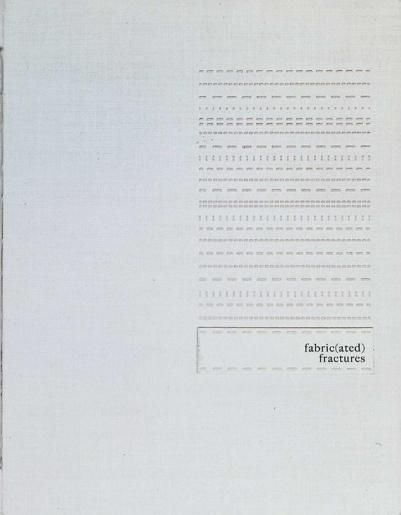
Fabric(ated) fractures
\"Fabric(ated) Fractures\" is an exhibition catalogue that explores the complex intersections of identity, border politics, and communal trauma within the context of South and Southeast Asia. Curated by Diana Campbell Betancourt (Artistic Director of the Samdani Art Foundation), the volume documents a collaborative project that brought together artists from Bangladesh, India, and Pakistan to challenge the \"fabricated\" nature of national borders and the \"fractures\" they create in the collective consciousness. The work functions as a visual and critical discourse on how shared heritage is often severed by political cartography.
BOOK
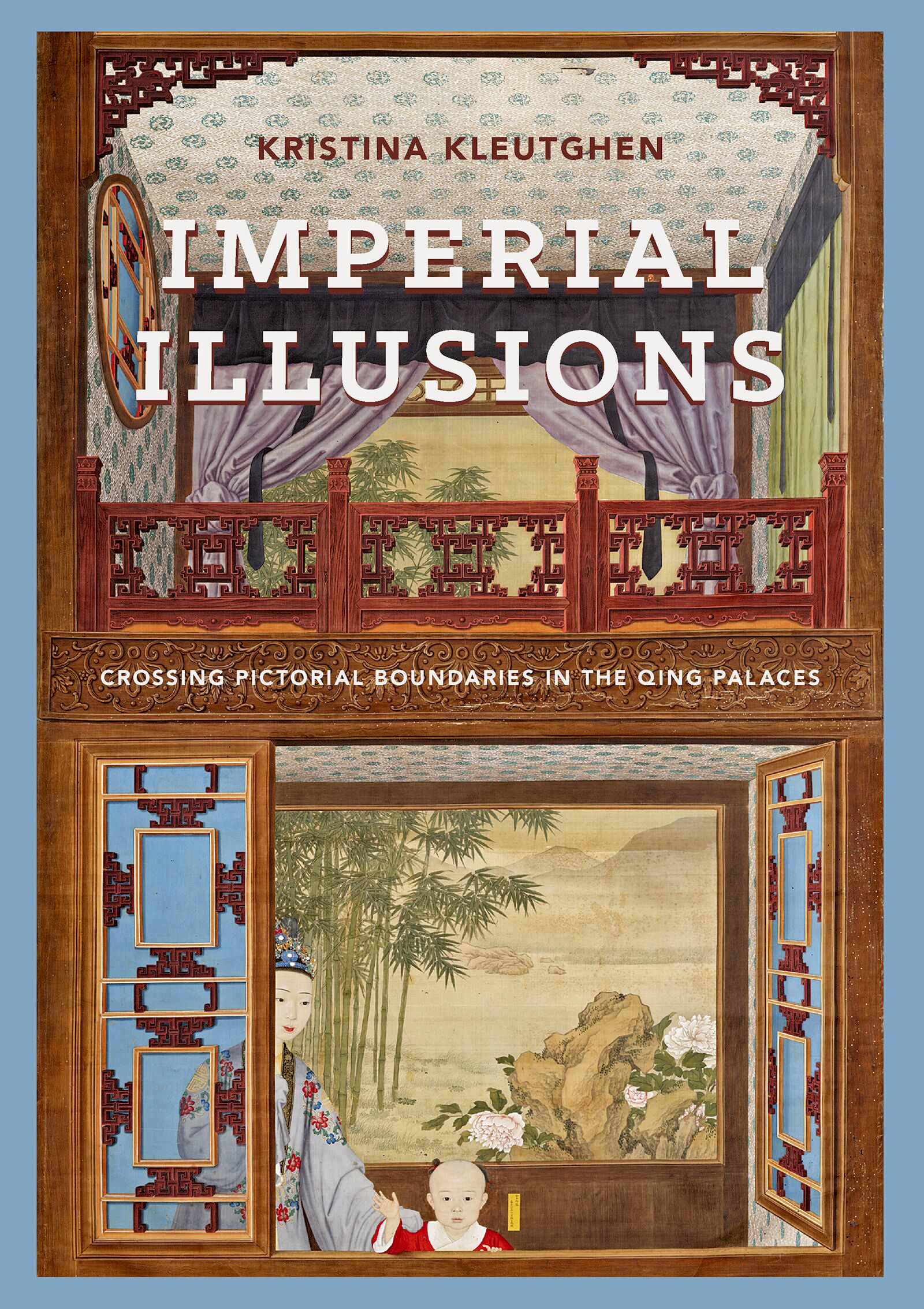
Imperial Illusions
In the Forbidden City and other palaces around Beijing, Emperor Qianlong (r. 1736-1795) surrounded himself with monumental paintings of architecture, gardens, people, and faraway places. The best artists of the imperial painting academy, including a number of European missionary painters, used Western perspectival illusionism to transform walls and ceilings with visually striking images that were also deeply meaningful to Qianlong. These unprecedented works not only offer new insights into late imperial China's most influential emperor, but also reflect one way in which Chinese art integrated and domesticated foreign ideas.In Imperial Illusions, Kristina Kleutghen examines all known surviving examples of the Qing court phenomenon of \"scenic illusion paintings\" (tongjinghua), which today remain inaccessible inside the Forbidden City. Produced at the height of early modern cultural exchange between China and Europe, these works have received little scholarly attention. Richly illustrated, Imperial Illusions offers the first comprehensive investigation of the aesthetic, cultural, perceptual, and political importance of these illusionistic paintings essential to Qianlong's world.Art History Publication Initiative. For more information, visit http://arthistorypi.org/books/imperial-illusions
eBook

Photo-Attractions
In Spring 1938, an Indian dancer named Ram Gopal and an American writer-photographer named Carl Van Vechten came together for a photoshoot in New York City. Ram Gopal was a pioneer of classical Indian dance and Van Vechten was reputed as a prominent white patron of the African-American movement called the Harlem Renaissance. Photo-Attractions describes the interpersonal desires and expectations of the two men that took shape when the dancer took pose in exotic costumes in front of Van Vechten's Leica camera. The spectacular images provide a rare and compelling record of an underrepresented history of transcultural exchanges during the interwar years of early-20th century, made briefly visible through photography.
Art historian Ajay Sinha uses these hitherto unpublished photographs and archival research to raise provocative and important questions about photographic technology, colonial histories, race, sexuality and transcultural desires. Challenging the assumption that Gopal was merely objectified by Van Vechten's Orientalist gaze, he explores the ways in which the Indian dancer co-authored the photos. In Sinha's reading, Van Vechten's New York studio becomes a promiscuous contact zone between world cultures, where a \"photo-erotic\" triangle is formed between the American photographer, Indian dancer, and German camera.
A groundbreaking study of global modernity, Photo-Attractions brings scholarship on American photography, literature, race and sexual economies into conversation with work on South Asian visual culture, dance, and gender. In these remarkable historical documents, it locates the pleasure taken in cultural difference that still resonates today.
eBook
The international spread of Asian and Islamic art histories: an intersectional approach to trajectories of the Vienna School (c. 1920 – 1970)
In early 20th century, the art historical institute in Vienna led by Josef Strzygowski (1862-1941) offered the unique opportunity to study the arts of Asia and the Middle East at university level (fig. I).· 1 The rich material repository for the study of 'Oriental' art - consisting of ca. 4000 books, 52.000 photographs and images, and 20.000 lantern slides - was unparalleled in Europe.2 It attracked a large number of students and turned the institute into a hub for Asian and Islamic art. Numerous guest auditors from all over Europe and abroad further enriched the lively community.3 Between 1910 and 1933, more than one hundred students supervised by Strzygowski completed their dissertations on Northern European, Austrian, Persian, Islamic, Chinese, Japanese and Indian art.4 Suzanne Marchand has directed attention to the strikingly Targe number of female students' at Strzygowski's institute, 'who would make careers outside Central Europe and remain relatively free from racist ideologies' The article pursues the twofold aim of combining a historical intersectional study of the Vienna school with a critique of patriarchal patterns of historiography. This study aims to contribute to research of the co-constitutive relation of art and identity markers such as gender and race.The article consists of three parts: two historical studies (part I and III) embrace a theoretical section on patriarchal patterns in historiography (part II). In the first part, Melanie Stiassny's presidency of the Society of Friends of Asian Art and Culture is the centerpiece of the historical investigation. The society was one of the liveliest in inter war Vienna, and Stiassny, as its managing vice-president, organized exhibitions, broadcasts and adult education, edited the journal of the society, and published articles on Chinese art. Knowledge about Stiassny and the infrastructure of the society sheds light on the processes of valorizing Asian art. It furthermore gives insights into how Strzygowskian graduates built networks and professionalized.23 The second part, the theoretical section, draws on feminist, gender and intersectional studies to analyse patterns and conventions of historiography. A close reading of several articles on Viennese art history reveals how androcentric criteria shape historiography to date. The third part adopts some of the androcentric historiographical criteria such as 'success' to comparatively trace careers of 'successful' women and men art historians.24 Interestingly, their migratory trajectories reveal a gendered and raced pattern of migration: Women and non-European men art historians often found their first academic positions at universities in the Middle East or Asia, whereas European men began their careers at museums in Vienna and Berlin. Eventually, most worked in area studies departments at US-American universities.
Journal Article