
Catalogue Search | MBRL


Are you sure you want to remove the book from the shelf?

{{itemTitle}}
46
result(s) for
"Assam (India) History"
Sort by:

Coolies of Capitalism
Coolie labour was often proclaimed as a deliberate compromise straddling the regimes of the past (slave labour) and the future (free labour). In the late 1850s, the locals were replaced by labourers imported from outside the province who were designated coolies. Qualifying this framework of transition and introduction, this study makes a case for the production of coolie labour in the history of the colonial-capitalist plantations in Assam.
eBook

The black hole of empire
When Siraj, the ruler of Bengal, overran the British settlement of Calcutta in 1756, he allegedly jailed 146 European prisoners overnight in a cramped prison. Of the group, 123 died of suffocation. While this episode was never independently confirmed, the story of \"the black hole of Calcutta\" was widely circulated and seen by the British public as an atrocity committed by savage colonial subjects.The Black Hole of Empirefollows the ever-changing representations of this historical event and founding myth of the British Empire in India, from the eighteenth century to the present. Partha Chatterjee explores how a supposed tragedy paved the ideological foundations for the \"civilizing\" force of British imperial rule and territorial control in India.
Chatterjee takes a close look at the justifications of modern empire by liberal thinkers, international lawyers, and conservative traditionalists, and examines the intellectual and political responses of the colonized, including those of Bengali nationalists. The two sides of empire's entwined history are brought together in the story of the Black Hole memorial: set up in Calcutta in 1760, demolished in 1821, restored by Lord Curzon in 1902, and removed in 1940 to a neglected churchyard. Challenging conventional truisms of imperial history, nationalist scholarship, and liberal visions of globalization, Chatterjee argues that empire is a necessary and continuing part of the history of the modern state.
Some images inside the book are unavailable due to digital copyright restrictions.
eBook

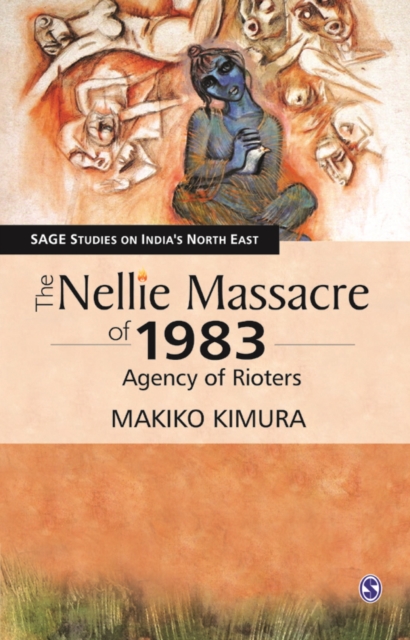
The Nellie massacre of 1983 : agency of rioters
The Nellie incident, involving the massacre of about 2,000 Muslim villagers, took place during the antiforeigner movement in Assam, in order to drive out illegal Bangladeshi and Nepali immigrants. Unlike the communal \"riots\" in the other parts of India from the 1980s to 2000s, this was an incident which took place in rural areas. The attackers were part of the indigenous tribal population, and Assamese Hindus of lower strata. The Nellie Massacre of 1983 is an attempt to search for clues from the narratives of attackers and survivors of the incident, which are fragmented and sometimes contradictory to each other. The key focus of the book is on the local decision-making processes of the riot agents in deciding to use collective violence against another group/community/ethnicity especially in the context of rural India. By using the case study of the Nellie massacre, the author attempts to argue that rioters have their own agency and decision-making power, and were not mere puppets of ideology and structural causes. Instead, they interpreted the circumstances in their own way and decided to riot.
eBook


Bengal Industries and the British Industrial Revolution (1757-1857)
This book seeks to enlighten two grey areas of industrial historiography. Although Bengal industries were globally dominant on the eve of the industrial revolution, no detailed literature is available about their later course of development. A series of questions are involved in it. Did those industries decline during the spells of British industrial revolution? If yes, what were their reasons? If not, the general curiosity is: On which merits could those industries survive against the odds of the technological revolution? A thorough discussion on these issues also clears up another area of dispute relating to the occurrence of deindustrialization in Bengal, and the validity of two competing hypotheses on it, viz. i) the mainstream hypothesis of market failures, and ii) the neo-marxian hypothesis of imperialistic state interventions
eBook


Periodicals, readers and the making of a modern literary culture : Bengal at the turn of the twentieth century
In Periodicals, Readers and the Making of a Modern Literary Culture: Bengal at the Turn of the Twentieth Century Samarpita Mitra studies literary periodicals as a particular print form, and reveals how their production and circulation were critical to the formation of a Bengali public sphere during the turn of the twentieth century. Given its polyphonic nature, capacity for sustaining debates and adaptability by readers with diverse reading competencies, periodicals became the preferred means for dispensing modern education and entertainment through the vernacular. The book interrogates some of the defining debates that shaped readers' perspectives on critical social issues and explains how literary culture was envisioned as an indicator of the emergent nation. Finally it looks at the Bengali-Muslim and women's periodicals and their readerships and argues that the presence of multiple literary voices make it impossible to speak of Bengali literary culture in any singular terms.
eBook