
Catalogue Search | MBRL


Are you sure you want to remove the book from the shelf?

{{itemTitle}}
188
result(s) for
"Assassins Fiction."
Sort by:

Kodiak sky
For decades, the top-secret Red Cell Seven unit has operated beyond the reach of the law--defending the United States by any means necessary, with absolute impunity. But the tables have turned, and the untouchable anti-terror squad is under attack. Determined to end Red Cell Seven's ruthless, lawless existence, the U.S. president has tapped military assassin extraordinaire Skylar McCoy to lead a covert search and destroy mission. But McCoy isn't the only one gunning for Red Cell Seven. A vengeful drug lord has dispatched his own hired killers to eliminate the elite commandos as the first step in the ultimate terrorist plot: exterminating the highest echelons of American government. Caught in the middle, the agents of RC7 must fight their dirtiest, most devastating battle--and dare to decide who will be saved or sacrificed for the greater good.
Book
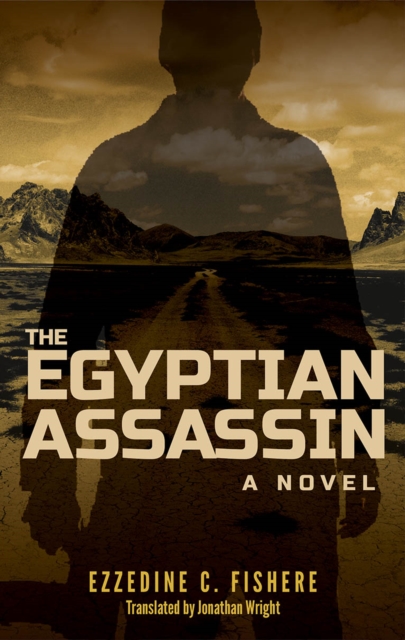
The Egyptian Assassin
A lawyer-turned-terrorist is catapulted on a mission traversing Cairo, Sudan, Paris and Afghanistan in this revenge thriller deftly-written by a Middle East political insider A lifetime ago, Fakhreddin had been an idealistic young lawyer, seeking to fight corruption from his modest quarter of Cairo.
eBook

The assassin's blade : the Throne of glass novellas
In these five prequel novellas to Throne of glass, feared assassin Celaena embarks on daring missions that take her from remote islands to hostile deserts, where she fights to liberate slaves and avenge tyranny.
BOOK

Narrative Empathy in Margaret Atwood’s The Blind Assassin
Empathy plays a key role in Margaret Atwood’s The Blind Assassin (2000), a complex novel consisting primarily of the fictional memoir of Iris Chase, its eighty-two-year-old protagonist and first-person narrator. Working within the theoretical framework of Suzanne Keen’s research on narrative empathy, the aim of this article is twofold: to examine the representation of empathy in The Blind Assassin and to explore the capacity of the novel to encourage readerly empathy towards a character who is frank enough to acknowledge that she has not provided the emotional support expected from her, and bitterly regrets her destructive lack of affective empathy. La empatía ejerce un papel crucial en The Blind Assassin (2000), una compleja novela de Margaret Atwood constituida principalmente por unas memorias de ficción cuya protagonista y narradora es la octogenaria Iris Chase. Este artículo, elaborado dentro del marco teórico de Suzanne Keen sobre la empatía narrativa, tiene un doble objetivo: estudiar la representación de la empatía en The Blind Assassin y analizar la capacidad de la novela para promover la empatía lectora con un personaje que reconoce con franqueza no haber aportado el apoyo emocional que se esperaba de ella y lamenta amargamente su falta de empatía afectiva.
Journal Article


Black Egyptians and White Greeks?: Historical Speculation and Racecraft in the Video Game Assassin’s Creed: Origins
Recent portrayals of ancient Egypt in popular culture have renewed attention concerning the historical accuracy of how race and racism appear in representations of antiquity. Historians of the antiquity have robustly dismissed racist claims of whitewashing or blackwashing historical and cultural material in both scholarship and in popular culture. The 2017 video game Assassin’s Creed: Origins is a noteworthy site to examine this debate, as the game was designed with the assistance of historians and cultural experts, presenting players with an “historically accurate” ancient Egypt. Yet, if race is a fantasy, as Karen Fields and Barbara Fields’ “racecraft” articulates, then what historians have speculated in their study of race and racism are presentations of a proto-racecraft, borrowing from historian Benjamin Isaac. This essay argues that Assassin’s Creed: Origins racecrafts through the paradigm of historical speculation. As historians have speculated on meanings and operations of “race” and racism in ancient Egypt, Origins has made those speculations visible through its depiction of a racially diverse Ptolemaic Egypt. Yet, this racecraft is paradoxically good, as the game does so to push back against the hegemony of whiteness and whitewashing in contemporary popular culture.
Journal Article

Re-Calibrating Steampunk London: Heterotopia and Spatial Imaginaries in Assassins Creed: Syndicate and The Order 1886
Video games have become important but understudied narrative media, which link into as well as perpetuate popular forms of cultural memory. They evoke and mediate space (or the illusion thereof) in unique ways, literally putting into play Doreen Massey’s theory of space as being produced through a multiplicity of trajectories. I examine how Assassins Creed: Syndicate and The Order 1886 (both 2015) configure a neo-Victorian London as a simulated, spatio-temporal imaginary in which urban texture becomes a readable storytelling device in and of itself, and interrogate how their neo-Victorian heterotopias are mediated through a spatial experience. Both games conjure up imaginaries of steampunk London as a counter-site sourced from and commenting on the Victorian city of memory. Through retro-speculation, they re-calibrate neo-Victorian London as a playground offering alternative forms of agency and adventure or as cyberpunk-infused hyper-city. In so doing, they invite the player to re-evaluate, through their spatial experience in such a heterotopic steampunk London, shared imaginaries of ‘the city’ and ‘the Victorian’.
Journal Article

The night angel trilogy
This special 10th anniversary edition celebrates the blockbuster assassin fantasy series that launched New York Times bestselling author Brent Weeks' career. For Durzo Blint, assassination is an art - and he is the city's most accomplished artist. For Azoth, survival is just the beginning. He was raised on the streets and knows an opportunity when he sees one - even when the risks are as high as working for someone like Durzo Blint. Azoth must learn to navigate the assassins' world of dangerous politics and strange magics - and become the perfect killer.
Book

Unusable Pasts: Life-Writing, Literary Nonfiction, and the Case of Demetrios Tsafendas
On September 6, 1966, a parliamentary messenger named Demitrios Tsafendas stabbed to death Prime Minister Hendrik Verwoerd in full view of South Africa's all-white House of Assembly. Tsafendas, the apartheid judiciary soon declared, was insane and without political motive: “a meaningless creature” who had acted on instructions from a tapeworm inside him. Often written off as a “freakish footnote” within the liberation story, his unsettled and complex life has nonetheless compelled a wide range of literary and artistic treatments: from memoir and microhistory to avant-garde fiction and filmic montage. Concentrating on Henk Van Woerden's (auto) biography A Mouthful of Glass (1998, trans. 2000) and Penny Siopis's short film Obscure White Messenger (2010), I hope to explore what valence one can give to avowedly speculative or formally experimental encounters with the archive and to trace how such a “useless life” (in the words of a presiding judge) might disclose the uncanny remains of South African history.
Journal Article