
Catalogue Search | MBRL


Are you sure you want to remove the book from the shelf?

{{itemTitle}}
19
result(s) for
"Astana (Kazakhstan)-Civilization"
Sort by:


Philosophy of Urbanization and Socio-Cultural Dynamics Issues of a High-Tech Capital
The research aims to identify the impact of urbanization and technological change on the socio-cultural structure of the city. The applied methodology was based on two data sources: 1) interviews with 18 specialists from six fields; 2) a survey of 250 residents using the PREQ scale (“Perception of Residential Environment Quality”). Experts invited to participate in the research represented diverse spheres: urban planning, architecture, information technology, sociology, economics, and ecology (n = 18). The findings confirmed that technological changes in the city of Astana (Kazakhstan) contribute to its harmonious development. Experts in urban planning, architecture, and information technology noted positive changes in urban infrastructure, visual appearance, and digital services. The results confirm that the working-age population and more vulnerable groups have different evaluations of urban environmental aspects, emphasizing the need to consider multiple perspectives in urban planning and management. The research findings are crucial for informed urban planning and the development of more inclusive and equitable urban strategies.
Journal Article

Bordering on the modern: power, practice and exclusion in Astana
State-led urban development projects, especially in non-democratic settings, are conducive to a top–down analytic that focuses on state planners and architects. The goal of this article is to explore how we might decentre this narrative and jointly consider elite and non-elite narratives, through an analysis of discourses of modernity as enacted in and through these statist urban projects. Deploying a practice-based analytic, I explore how notions of 'modernity' are performed and enacted through the exclusionary practices of elites and non-elites alike. Taking the case of Kazakhstan's new capital city, Astana, I examine how the state-led urban modernisation agenda simultaneously draws upon and re-inscribes a set of interlocking popular geographic imaginaries (Soviet/modern, urban/rural, north/south), and demonstrate how ordinary citizens are not just passive spectators, but active participants in the political drama of state- and city-building.
Journal Article

An Air Quality Modeling and Disability-Adjusted Life Years (DALY) Risk Assessment Case Study: Comparing Statistical and Machine Learning Approaches for PM2.5 Forecasting
Despite Central and Northern Asia having several cities sharing a similar harsh climate and grave air quality concerns, studies on air pollution modeling in these regions are limited. For the first time, the present study uses multiple linear regression (MLR) and a random forest (RF) algorithm to predict PM2.5 concentrations in Astana, Kazakhstan during heating and non-heating periods (predictive variables: air pollutant concentrations, meteorological parameters). Estimated PM2.5 was then used for Disability-Adjusted Life Years (DALY) risk assessment. The RF model showed higher accuracy than the MLR model (R2 from 0.79 to 0.98 in RF). MLR yielded more conservative predictions, making it more suitable for use with a lower number of predictor variables. PM10 and carbon monoxide concentrations contributed most to the PM2.5 prediction (both models), whereas meteorological parameters showed lower association. Estimated DALY for Astana’s population (2019) ranged from 2160 to 7531 years. The developed methodology is applicable to locations with comparable air pollution and climate characteristics. Its output would be helpful to policymakers and health professionals in developing effective air pollution mitigation strategies aiming to mitigate human exposure to ambient air pollutants.
Journal Article
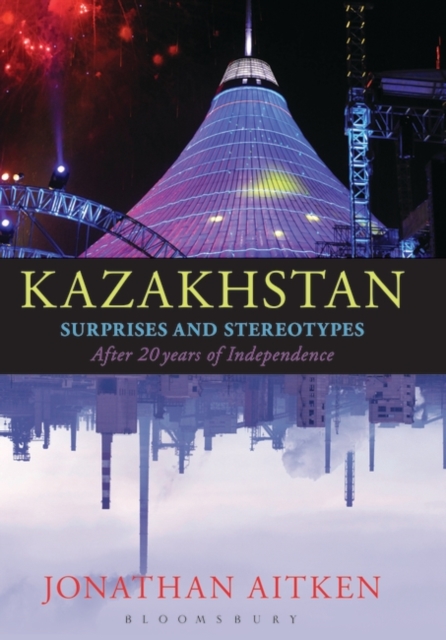
Kazakhstan : surprises and stereotypes after 20 years of independence
Jonathan Aitken has written an insightful and illuminating portrait of 21st Century Kazakhstan as it approaches its 20th Anniversary of independence from the former Soviet Union.Surprises abound in Aitken's lively pages as he captures the creative tensions between Old and New Kazakhstan.
eBook

Current municipal solid waste management in the cities of Astana and Almaty of Kazakhstan and evaluation of alternative management scenarios
The present paper provides a detailed analysis of the current situation on municipal solid waste (MSW) management in Kazakhstan with focus on the two major cities, Astana and Almaty, the current and former capital of the country. Untill recently, ninety-seven percent of the MSW was disposed in open dumps and substandard authorized landfills. Ninety-three percent of the 4530 municipal waste disposal landfills were not permitted, while from the 307 authorized waste disposal facilities, only the one in the city of Astana was designed in accordance with international standards (2015). Core legislation, current management policy, existing and planned facilities and infrastructure, as well as solid waste quantity and composition are discussed. The analysis is complemented by the implementation of a decision support software tool, which provides insights in waste management needs and evaluates the alternative waste management plans. Six alternative scenarios were evaluated, and the results obtained demonstrate that the optimum scenario is separation at source for both biowaste, which is composted and packaging waste processed via the materials recovery facility. Regarding the residual waste, the optimum scenario for Astana is mechanical biological treatment (MBT)-composting-recyclables and waste-to-energy for the refuse-derived fuel (RDF). For Almaty, 80% of the waste should be processed through MBT-composting-recyclables, and 20% via incineration and RDF. The results obtained can contribute to solid waste management planning in Kazakhstan and other Central Asian countries.
Journal Article

Ageing in Asia: Beyond the Astana Declaration Towards Financing Long-term Care for All Comment on \Financing Long-term Care: Lessons From Japan\
The Astana Declaration on primary healthcare in 2018 was the attempt to revive the ideals of the World Health Organization (WHO) Alma-Ata Declaration 40 years later, together with a call for the political will to provide adequate financing at acceptable quality of care. This approach is taken to achieve the past ideals of Health for All, given the new challenges of universal health coverage. The economic case for primary healthcare is justified against the growing demand due in part to the growing costs of chronic conditions and the rise of ageing population, other than the supply-side factors of the healthcare industry. Past healthcare systems have evolved greater roles of the state versus the market, but few have involved the Third Sector or civil society in more integrated ways to provide and finance long-term care (LTC) with population ageing. From the extremes of the communist state to capitalist free markets, an optimal public-private system has to reach a balance in access, cost and quality for health and LTC. Recent studies of health and LTC have distilled newer developments in public-private mixes of provision, financing and regulation, in response to the needs of fast-ageing Asian societies. While Japan was the oldest country in the world, other countries in Asia have caught up and are now acknowledged where innovative models of integrated eldercare under economic limits, hold great promise of their transferability to the rest of ageing societies. Besides other forms of integrated LTC delivery with traditional systems, newer forms of financing like savings funds and superannuation have been developed, with participation from government, industry and civil society. There is much to learn from the new Asian models of financing, using appropriate technology and social innovations, and integrating health and social systems for LTC.
Journal Article

The incidence and body site of skin cancers in the population groups of Astana, Kazakhstan
Background and aims Data on cutaneous malignant melanoma (CMM), squamous cell carcinoma of the skin (SCC), and basal cell carcinoma (BCC) in populations consisting of multi‐racial groups in the Commonwealth of Independent States are limited. Here, the main aim was to analyse the incidence and body site of these cancers in the population groups of Astana, Kazakhstan (2007‐2016). Methods Annual age standardised incidences and body sites of BCC, SCC, and CMM in Astana's population, divided into “Kazakhs and other Turkic/Asian” and “Russian and other European/Caucasian” groups, were calculated from histologically confirmed cases reported to Astana Oncology Centre. Results During the period January 2007 to October 2016, 647 skin cancers were diagnosed. The age and sex standardised incidence of BCC, SCC, and CMM increased significantly between 2007 to 2011 and 2012 to 2016. Higher incidences occurred in the Russian and other European/Caucasian group compared with the Kazakh and other Turkic/Asian group for the 3 skin cancers. BCC was the most common type of skin tumour, followed by SCC, and then CMM, in both population groups and sexes. The head/neck was the commonest site for BCC and SCC in all groups. For CMM, the most frequent site was the trunk in the Russian group and the head/neck in the Kazakh group. Conclusion The incidence of skin tumours in Astana rose over the past 10 years. Differences in skin phototypes and sun exposure/ protection behaviours may account for the more frequent occurrence of skin tumours in the Russian population group compared with the Kazakh population group. Background and aims: Data on cutaneous malignant melanoma (CMM), squamous cell carcinoma of the skin (SCC), and basal cell carcinoma (BCC) in populations consisting of multi‐racial groups in the Commonwealth of Independent States are limited. Here, the main aim was to analyse the incidence and body site of these cancers in the population groups of Astana, Kazakhstan (2007‐2016). Methods: Annual age standardised incidences and body sites of BCC, SCC, and CMM in Astana's population, divided into “Kazakhs and other Turkic/Asian” and “Russian and other European/Caucasian” groups, were calculated from histologically confirmed cases reported to Astana Oncology Centre. Results: During the period January 2007 to October 2016, 647 skin cancers were diagnosed. The age and sex standardised incidence of BCC, SCC, and CMM increased significantly between 2007 to 2011 and 2012 to 2016. Higher incidences occurred in the Russian and other European/Caucasian group compared with the Kazakh and other Turkic/Asian group for the 3 skin cancers. BCC was the most common type of skin tumour, followed by SCC, and then CMM, in both population groups and sexes. The head/neck was the commonest site for BCC and SCC in all groups. For CMM, the most frequent site was the trunk in the Russian group and the head/neck in the Kazakh group. Conclusion: The incidence of skin tumours in Astana rose over the past 10 years. Differences in skin phototypes and sun exposure/ protection behaviours may account for the more frequent occurrence of skin tumours in the Russian population group compared with the Kazakh population group.
Journal Article

The production of a new Eurasian capital on the Kazakh steppe: Architecture, urban design, and identity in Astana
In December 1997, the Republic of Kazakhstan officially proclaimed that the city of Astana would be its new capital. The decision to transfer the seat of government from the city of Almaty in the south to the more centrally located Astana was connected to the process of nation building in a multi-ethnic society where the titular nation represents little more than half of the population. Efforts to transform the rather remote regional center, Akmola (later renamed Astana) into a modern capital city have been underway since the late 1990s. One important component of this transformation is the idea of building a “metabolic” and sustainable “Eurasian” city. As the symbolic center of the whole country, this new capital would function as a showpiece of Kazakh culture and identity. The city would also become a symbol of economic prosperity and the regime's geopolitical vision. While the government's intensions are expressed rather openly, it remains unclear to what extent these politically verbalized leitmotivs are actually being realized through contemporary architecture and structure. This article offers a critical assessment of what has been achieved to date and argues that the production of the new Kazakhstani capital has often failed to translate rhetoric into reality.
Journal Article

Development of Production Capacities in Agricultural Product Processing in the Urbanized Agglomeration Areas of the Astana by 2030
The relevance of the research problem is caused by the modern discourse of the production potential usage in the framework of food security. Thus, the aim of this study is to examine the production capacity of agricultural and food products processing within the Astana agglomeration. Data for analyzes were taken from the Agency on Statistics of the Republic of Kazakhstan, Department of the statistics on Astana city, statistical yearbooks on economic development of Kazakhstan regions, and 'Kazakhstan-2050' Strategy. The structure of the production capacities in the meat, dairy, milling and bakery industries of the selected region is presented. Appropriate proposals for the creation of new production capacities in the food industry were formed. The practical value is that the authors forecast food industry development up to 2030.
Journal Article