
Catalogue Search | MBRL


Are you sure you want to remove the book from the shelf?

{{itemTitle}}
2,646
result(s) for
"Asthma - history"
Sort by:

Impact of air pollution control measures and weather conditions on asthma during the 2008 Summer Olympic Games in Beijing
The alternative transportation strategy implemented during the 2008 Summer Olympic Games in Beijing provided an opportunity to study the impact of the control measures and weather conditions on air quality and asthma morbidity. An ecological study compared the 41 days of the Olympic Games (8 August–17 September 2008) to a baseline period (1–30 June). Also, in order to emphasize the impact of weather conditions on air quality, a pollution linking meteorological index (Plam) was introduced to represent the air pollution meteorological condition. Our study showed that the average number of outpatient visits for asthma was 12.5 per day at baseline and 7.3 per day during the Olympics—a 41.6% overall decrease. Compared with the baseline, the Games were associated with a significant reduction in asthma visits (RR 0.58, 95%CI: 0.52–0.65). At 16.5 visits per day, asthma visits were also significantly higher, during the pre-Olympic period (RR 1.32, 95% CI: 1.15–1.52). The study also showed that the RR of asthma events on a given day, as well as the average daily peak ozone concentration during the preceding 48–72 h, increased at cumulative ozone concentrations of 70 to 100 ppb and 100 ppb or more compared with ozone concentrations of less than 70 ppb (
P
< 0.05). We concluded that along with “good” weather conditions, efforts to reduce traffic congestion in Beijing during the Olympic Games were associated with a prolonged reduction in air pollution and significantly lower rates of adult asthma events. These data provide support for efforts to reduce air pollution and improve health via reductions in motor vehicle traffic.
Journal Article

Impact of Physician Asthma Care Education on Patient Outcomes
Objective. We evaluated the effectiveness of a continuing medical education program, Physician Asthma Care Education, in improving pediatricians' asthma therapeutic and communication skills and patients' health care utilization for asthma. Methods. We conducted a randomized trial in 10 regions in the United States. Primary care providers were recruited and randomly assigned by site to receive the program provided by local faculty. The program included 2 interactive seminar sessions (2.5 hours each) that reviewed national asthma guidelines, communication skills, and key educational messages. Format included short lectures, case discussions, and a video modeling communication techniques. We collected information on parent perceptions of physicians' communication, the child's asthma symptoms, and patients' asthma health care utilization. We used multivariate regression models to determine differences between control and intervention groups. Results. A total of 101 primary care providers and a random sample of 870 of their asthma patients participated. After 1 year, we completed follow-up telephone interviews with the parents of 731 of the 870 patients. Compared to control subjects, parents reported that physicians in the intervention group were more likely to inquire about patients' concerns about asthma, encourage patients to be physically active, and set goals for successful treatment Patients of physicians that attended the program had a greater decrease in days limited by asthma symptoms (8.5 vs 15.6 days), as well as decreased emergency department asthma visits (0.30 vs 0.55 visits per year). Conclusions. The Physician Asthma Car Education program was used in a range of locations and was effective in improving parent-reported provider communication skills, the number of days affected by asthma symptoms, and asthma health care use. Patients with more frequent asthma symptoms and higher health care utilization at baseline were more likely to benefit from their physician's participation in the program.
Journal Article

Asthma
Asthma is a familiar and growing disease today, but its story goes back to the ancient world, as we know from accounts in ancient texts from China, India, Greece and Rome. It was treated with acupuncture and Ayurveda. As Western medicine developed, the nature of asthma became clearer, and its basis in the lungs recognized. But cultural perceptions of the disease shifted too. By the 18th century, with recognition that the disease was centred on the lungs, the idea of environmental triggers such as dust and smoke first became recognized. And with that, asthma also became identified as a disease of artisans. Things changed again in the 19th century, as medical understanding grew with the advent of the stethoscope and new techniques such as percussion of the chest. New treatments included the promotion of mountain spas, for asthma now rose in social status, and became associated with the upper classes and the literati. For Marcel Proust and Charles Dickens, asthma shaped their lives and their creativity. From early in the 20th century, the idea of asthma as an allergic disease became established, and the search for environmental causes was on. Hay fever was closely linked, and pharmaceutical companies began to make antihistamines, anti-inflammatories and bronchodilators. Asthma sufferers were warned to beware of pets, simplify their furnishings, and take holidays by the sea far from pollens. But a newly emerging concept was that attacks could be triggered by stress and psychological factors. With musicians such as Schoenberg and Berg as celebrity sufferers, the idea of asthma as an élite disease persisted. In recent years, attitudes have changed again, as incidences of asthma grew dramatically across the world, especially among the young. The disease has now become closely linked to modern lifestyles and the many products of civilization. The battle against house-dust mites began, and whole new lines of anti-allergenic products and foods were launched - asthma has proved highly lucrative over the years. But the disease has remained fashionable, even becoming the theme of several pop songs. Asthma: the biography is part of the Oxford series, Biographies of Diseases, edited by William and Helen Bynum. In each individual volume an expert historian of medicine tells the story of a particular disease or condition throughout history - not only in terms of growing medical understanding of its nature and cure, but also shifting social and cultural attitudes, and changes in the meaning of the name of the disease itself.
eBook

A Patient with Asthma Seeks Medical Advice in 1828, 1928, and 2012
People have suffered from asthma for millennia. To illustrate the changes in our understanding and treatment of asthma over the past 200 years, the authors provide three fictional reports of consultations performed for essentially the same patient, who has what we now call asthma.
People have suffered from asthma for millennia.
1
Although the clinical presentation of asthma has probably changed little, there are many more people who now bear its consequences than there were 200 years ago. As a result of an intense interest in the condition, our understanding of its pathobiology, how to diagnose it, and — most important — how to treat it has evolved dramatically over the past two centuries. To illustrate this change, we provide three fictional reports of consultations performed for essentially the same patient, who has what we in 2012 would refer to as asthma. (A timeline of . . .
Journal Article

The Biologistical Construction of Race: 'Admixture' Technology and the New Genetic Medicine
This paper presents an ethnographic case study of the use of race in two interconnected laboratories of medical genetics. Specifically, it examines how researchers committed to reducing health disparities in Latinos with asthma advance hypotheses and structure research to show that relative frequencies of genetic markers characterize commonly understood groupings of race. They do this first by unapologetically advancing the idea that peoples whom they take to be of the 'Old World', or 'Africans', 'Europeans', 'East Asians', and 'Native Americans', can serve as putatively pure reference populations against which genetic risk for common diseases such as asthma can be calculated for those in the 'New World'. Technologically, they deploy a tool called ancestry informative markers (AIMs), which are a collection of genetic sequence variants said to differ in present-day West Africans, East Asians, Europeans, and (ideally Pre-Columbian) Native Americans. I argue that this technology, compelling as it may be to a range of actors who span the political spectrum, is, at base, designed to bring about a correspondence of familiar ideas of race and supposed socially neutral DNA. This correspondence happens, in part, as the scientists in question often bracket the environment while privileging racialized genetic variance as the primary source of health disparities for common disease, in this case between Mexicans and Puerto Ricans with asthma. With their various collaborators, these scientists represent a growing movement within medical genetics to re-consider race and 'racial admixture' as biogenetically valid points of departure. Furthermore, many actors at the center of this ethnography focus on race as a function of their personal identity politics as scientists of color. This to say, they are driven not by racist notions of human difference, but by a commitment to reduce health disparities and to include 'their' communities in what they describe as the 'genetic revolution'.
Journal Article

Want to Work on Asthma Genetics?
Twins, data and emails. Some of the words that first come to mind when I think of Nick. Lots of twins. With lots of data. And short single-finger-typed emails. And great wine. Well, it works, there is no doubt. That’s how I ended up in Australia, working on asthma genetics.
Journal Article

The Use of X Rays in the Treatment of Bronchial Asthma: A Historical Assessment
This article provides a historical assessment of the role of X-ray therapy in the treatment of bronchial asthma. This analysis revealed that X-ray therapy in the treatment of bronchial asthma spanned the first six decades of the 20th century, and involved nearly 6,000 patients in published clinical case studies. Patients selected typically had at least moderate to severe asthma and were refractory to other commonly employed treatments. The results of more than 60 studies indicated that about 70% of patients had rapid and marked reductions in clinical symptoms with about half of these patients showing complete symptom relief. The duration of the beneficial responses was variable but was approximately 1–6 months for about 50% of the benefited patients, and between 1 to 4 years for the upper 25% of benefited patients. The use of X rays to treat such patients fell into disfavor during the 1950s due to mounting concerns over possible enhanced risks of cancer that coincided with the discoveries and use of antihistamine medications, antibiotics and the methyl xanthine bronchodilators aminophylline and theophylline.
Journal Article

A Model of Self-Regulation for Control of Chronic Disease
Chronic disease poses increasing threat to individual and community health. The day-to-day manager of disease is the patient who undertakes actions with the guidance of a clinician. The ability of the patient to control the illness through an effective therapeutic plan is significantly influenced by social and behavioral factors. This article presents a model of patient management of chronic disease that accounts for intrapersonal and external influences on management and emphasizes the central role of self-regulatory processes in disease control. Asthma serves as a case for exploration of the model. Findings from a 5-year study of 637 children with asthma and their care-taking parents supported that the self-regulation elements of the model were reasonably stable over time and baseline values were predictive of important disease management outcomes.
Journal Article
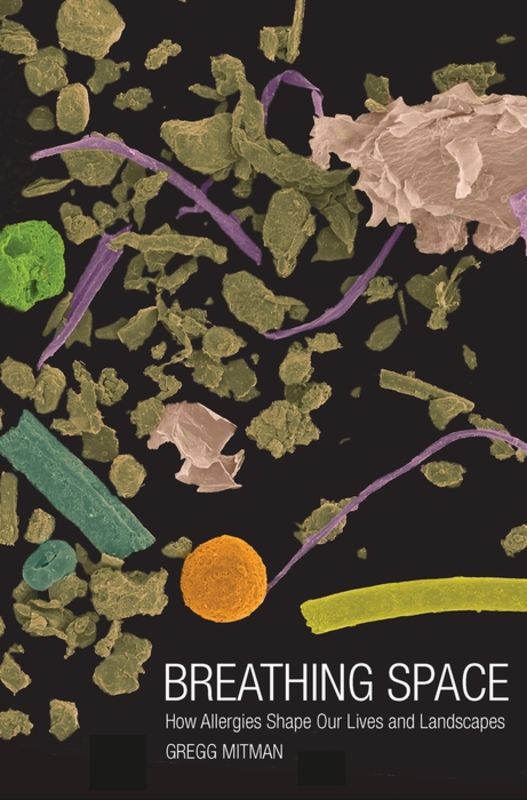
Breathing Space
Allergy is the sixth leading cause of chronic illness in the United States. More than fifty million Americans suffer from allergies, and they spend an estimated $18 billion coping with them. Yet despite advances in biomedicine and enormous investment in research over the past fifty years, the burden of allergic disease continues to grow. Why have we failed to reverse this trend?
Breathing Spaceoffers an intimate portrait of how allergic disease has shaped American culture, landscape, and life. Drawing on environmental, medical, and cultural history and the life stories of people, plants, and insects, Mitman traces how America's changing environment from the late 1800s to the present day has led to the epidemic growth of allergic disease. We have seen a never-ending stream of solutions to combat allergies, from hay fever resorts, herbicides, and air-conditioned homes to numerous potions and pills. But, as Mitman shows, despite the quest for a magic bullet, none of the attempted solutions has succeeded. Until we address how our changing environment-physical, biological, social, and economic-has helped to create America's allergic landscape, that hoped-for success will continue to elude us.
eBook