
Catalogue Search | MBRL


Are you sure you want to remove the book from the shelf?

{{itemTitle}}
111
result(s) for
"Astrologie."
Sort by:

Melothesia in Babylonia
This book examines the Babylonian backgroundof melothesia, the science of charting zodiac influences on the human body, which transformed older divination by connecting astrology with medical techniques. Special attention is given to a text from late-5th-century Uruk, which is argued to be an important representative of this new approach to the healing arts, previously only known from Greek and medieval astrology.
eBook

Medicine, Religion, and Magic in Early Stuart England
The astrologer-physician Richard Napier (1559-1634) was not only a man of practical science and medicine but also a master of occult arts and a devout parish rector who purportedly held conversations with angels. This new interpretation of Napier reveals him to be a coherent and methodical man whose burning desire for certain, true knowledge contributed to the contemporary venture of putting existing knowledge to useful ends. Originally trained in theology and ordained as an Anglican priest, Napier later studied astrological medicine and combined astrology, religious thought, and image and ritual magic in his medical work. Ofer Hadass draws on a remarkable archive of Napier's medical cases and religious writings—including the interviews he claimed to have held with angels—to show how Napier's seemingly inconsistent approaches were rooted in an inclusive and coherent worldview, combining equal respect for ancient authority and for experientially derived knowledge. Napier's endeavors exemplify the fruitful relationship between religion and science that offered a well-founded alternative to the rising mechanistic explanation of nature at the time. Carefully researched and compellingly told, Medicine, Religion, and Magic in Early Stuart England is an insightful exploration of one of the most fascinating figures at the intersection of medicine, magic, and theology in early modern England and of the healing methods employed by physicians of the era.
eBook
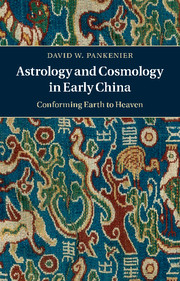
Astrology and Cosmology in Early China
The ancient Chinese were profoundly influenced by the Sun, Moon and stars, making persistent efforts to mirror astral phenomena in shaping their civilization. In this pioneering text, David W. Pankenier introduces readers to a seriously understudied field, illustrating how astronomy shaped the culture of China from the very beginning and how it influenced areas as disparate as art, architecture, calendrical science, myth, technology, and political and military decision-making. As elsewhere in the ancient world, there was no positive distinction between astronomy and astrology in ancient China, and so astrology, or more precisely, astral omenology, is a principal focus of the book. Drawing on a broad range of sources, including archaeological discoveries, classical texts, inscriptions and paleography, this thought-provoking book documents the role of astronomical phenomena in the development of the 'Celestial Empire' from the late Neolithic through the late imperial period.
eBook

Die Entkanonisierung der Astrologie im 17. Jahrhundert und das Beharren der Astrologia naturalis im 18. Jahrhundert
Mehrere Jahrtausende warfen die Menschen einen wissenschaftlichen Blick in die Zukunft, indem sie die Himmelspositionen der Planeten, des Mondes und der Sonne ermittelten und aus ihrer Lage zueinander und mit Blick auf die Stellungen im Tierkreis die Wirkungen auf das irdische Geschehen voraussagten, prophezeiten, prognostizierten. Bis in die zweite Hälfte des 17. Jahrhunderts galten astrologische Prophezeiungen als wissenschaftliche Praxis und noch bis weit in das 18. Jahrhundert hinein glaubten viele Menschen an die aus den Gestirnen abgeleiteten Prophezeiungen, die dann aber nicht mehr als Ausdruck von Wissenschaft angesehen wurden. Seit dem 15. Jahrhundert gab es nicht nur Befürworter der Astrologie, sondern auch Gegner. Nach der Skizzierung dieses Spannungsfeldes werden die drei Pfeiler, auf denen der wissenschaftliche Charakter der Astrologie ruhte, beschrieben. Anschließend werden die Ursachen für den schleichenden Niedergang der Astrologie und ihre Verbannung aus dem Kanon der Wissenschaften benannt. Dabei wird der Frage nachgegangen, welche Gelehrten in Mitteleuropa Mitte des 17. Jahrhunderts erstmals öffentlich in einem Schreibkalender Kritik an den astrologischen Vorhersagen und damit Zweifel an der Astrologie als einer Wissenschaft übten. Schließlich wird begründet, warum bei der Untersuchung des Prozesses des Niedergangs der Astrologie deren beide Teilgebiete ‚Judizial-Astrologie‘ und ‚natürliche Astrologie‘ differenziert zu betrachten und zu beurteilen sind. Die Astrologia judiciaria verlor bereits bis zum Ende des 17. Jahrunderts ihren wissenschaftlichen Charakter, wohingegen das bei der Astrologia naturalis erst im dritten Jahrzehnt des 18. Jahrhunderts geschah.
For thousands of years, people cast a scientific glance into the future by ascertaining the heavenly positions of the planets, the moon, and the sun, and predicting their effects on earthly events from their position relative to each other and their positions in the zodiac. Until the second half of the 17th century, such astrological predictions were considered an expression of scientific practice. Until well into the 18th century many people believed in the prophecies derived from the stars, which were then no longer considered scientific. Since the 15th century there have not only been supporters of astrology, but also opponents. After outlining this field of tension, the paper describes the three pillars on which the scientific character of astrology rested. It then names the reasons for the gradual decline of astrology and its banishment from the canon of sciences, before pursuing the question of which scholars in Central Europe in the middle of the 17th century where the first to publicly criticize astrological predictions and thus to express doubts about astrology as a science in an almanac (“Schreibkalender” – writing calendar). Finally, it explains why, when examining the process of astrology’s decline, its two subfields, ‘judicial astrology’ and ‘natural astrology’, must be viewed and assessed differently. Astrologia judiciaria had already lost its scientific character by the end of the 17th century, whereas for Astrologia naturalis this only took place in the third decade of the eighteenth century.
Pendant des millénaires, les hommes ont jeté un regard scientifique sur l’avenir en déterminant les positions célestes des planètes, de la lune et du soleil et en prédisant, prophétisant et prévoyant les effets sur les événements terrestres à partir de leurs positions relatives et en vue des positions dans le zodiaque. Jusqu’à la seconde moitié du XVIIe siècle, les prophéties astrologiques étaient considérées comme une pratique scientifique et jusqu’au XVIIIe siècle, de nombreuses personnes croyaient encore aux prophéties dérivées des étoiles, qui n’étaient alors plus considérees comme une expression de la science. Depuis le XVe siècle, in n’y a pas seulement eu des partisans de l’astrologie, mais aussi des opposants. Après avoir esquissé ce champ de tension, les trois piliers sur lesquels reposait le caractère scientifique de l’astrologie sont décrits. Ensuite, les raisons du déclin progressif de l’astrologie et de son bannissement du canon de la science sont nommées. La question de savoir quels érudits d’Europe centrale ont d’abord critiqué publiquement les prédictions astrologiques dans un calendrier écrit au milieu du XVIIe siècle et ont ainsi exprimé des doutes sur l’astrologie en tant que science est poursuivie. Enfin, il est expliqué pourquoi, lors de l’examen du processus de déclin de l’astrologie, ses deux sous-domaines, ‹l’astrologie judiciaire› et ‹l’astrologie naturelle›, doivent être considérés et évalués différemment. L’Astrologia judiciaria avait déjà perdu son caractère scientifique à la fin du XVIIe siècle, alors que dans l’Astrologia naturalis, cela ne s’est produit que dans la troisième décennie du XVIIIe siècle.
Journal Article

Die Entkanonisierung der Astrologie im 17. Jahrhundert und das Beharren der Astrologia naturalis im 18. Jahrhundert
Mehrere Jahrtausende warfen die Menschen einen wissenschaftlichen Blick in die Zukunft, indem sie die Himmelspositionen der Planeten, des Mondes und der Sonne ermittelten und aus ihrer Lage zueinander und mit Blick auf die Stellungen im Tierkreis die Wirkungen auf das irdische Geschehen voraussagten, prophezeiten, prognostizierten. Bis in die zweite Hälfte des 17. Jahrhunderts galten astrologische Prophezeiungen als wissenschaftliche Praxis und noch bis weit in das 18. Jahrhundert hinein glaubten viele Menschen an die aus den Gestirnen abgeleiteten Prophezeiungen, die dann aber nicht mehr als Ausdruck von Wissenschaft angesehen wurden. Seit dem 15. Jahrhundert gab es nicht nur Befürworter der Astrologie, sondern auch Gegner. Nach der Skizzierung dieses Spannungsfeldes werden die drei Pfeiler, auf denen der wissenschaftliche Charakter der Astrologie ruhte, beschrieben. Anschließend werden die Ursachen für den schleichenden Niedergang der Astrologie und ihre Verbannung aus dem Kanon der Wissenschaften benannt. Dabei wird der Frage nachgegangen, welche Gelehrten in Mitteleuropa Mitte des 17. Jahrhunderts erstmals öffentlich in einem Schreibkalender Kritik an den astrologischen Vorhersagen und damit Zweifel an der Astrologie als einer Wissenschaft übten. Schließlich wird begründet, warum bei der Untersuchung des Prozesses des Niedergangs der Astrologie deren beide Teilgebiete ‚Judizial-Astrologie‘ und ‚natürliche Astrologie‘ differenziert zu betrachten und zu beurteilen sind. Die Astrologia judiciaria verlor bereits bis zum Ende des 17. Jahrunderts ihren wissenschaftlichen Charakter, wohingegen das bei der Astrologia naturalis erst im dritten Jahrzehnt des 18. Jahrhunderts geschah.
For thousands of years, people cast a scientific glance into the future by ascertaining the heavenly positions of the planets, the moon, and the sun, and predicting their effects on earthly events from their position relative to each other and their positions in the zodiac. Until the second half of the 17th century, such astrological predictions were considered an expression of scientific practice. Until well into the 18th century many people believed in the prophecies derived from the stars, which were then no longer considered scientific. Since the 15th century there have not only been supporters of astrology, but also opponents. After outlining this field of tension, the paper describes the three pillars on which the scientific character of astrology rested. It then names the reasons for the gradual decline of astrology and its banishment from the canon of sciences, before pursuing the question of which scholars in Central Europe in the middle of the 17th century where the first to publicly criticize astrological predictions and thus to express doubts about astrology as a science in an almanac (“Schreibkalender” – writing calendar). Finally, it explains why, when examining the process of astrology’s decline, its two subfields, ‘judicial astrology’ and ‘natural astrology’, must be viewed and assessed differently. Astrologia judiciaria had already lost its scientific character by the end of the 17th century, whereas for Astrologia naturalis this only took place in the third decade of the eighteenth century.
Pendant des millénaires, les hommes ont jeté un regard scientifique sur l’avenir en déterminant les positions célestes des planètes, de la lune et du soleil et en prédisant, prophétisant et prévoyant les effets sur les événements terrestres à partir de leurs positions relatives et en vue des positions dans le zodiaque. Jusqu’à la seconde moitié du XVIIe siècle, les prophéties astrologiques étaient considérées comme une pratique scientifique et jusqu’au XVIIIe siècle, de nombreuses personnes croyaient encore aux prophéties dérivées des étoiles, qui n’étaient alors plus considérees comme une expression de la science. Depuis le XVe siècle, in n’y a pas seulement eu des partisans de l’astrologie, mais aussi des opposants. Après avoir esquissé ce champ de tension, les trois piliers sur lesquels reposait le caractère scientifique de l’astrologie sont décrits. Ensuite, les raisons du déclin progressif de l’astrologie et de son bannissement du canon de la science sont nommées. La question de savoir quels érudits d’Europe centrale ont d’abord critiqué publiquement les prédictions astrologiques dans un calendrier écrit au milieu du XVIIe siècle et ont ainsi exprimé des doutes sur l’astrologie en tant que science est poursuivie. Enfin, il est expliqué pourquoi, lors de l’examen du processus de déclin de l’astrologie, ses deux sous-domaines, ‹l’astrologie judiciaire› et ‹l’astrologie naturelle›, doivent être considérés et évalués différemment. L’Astrologia judiciaria avait déjà perdu son caractère scientifique à la fin du XVIIe siècle, alors que dans l’Astrologia naturalis, cela ne s’est produit que dans la troisième décennie du XVIIIe siècle.
Journal Article

The Crown and the Cosmos
Despite its popular association today with magic, astrology was once a complex and sophisticated practice, grounded in technical training provided by a university education.The Crown and the Cosmosexamines the complex ways that political practice and astrological discourse interacted at the Habsburg court, a key center of political and cultural power in early modern Europe. Like other monarchs, Maximilian I used astrology to help guide political actions, turning to astrologers and their predictions to find the most propitious times to sign treaties or arrange marriage contracts. Perhaps more significantly, the emperor employed astrology as a political tool to gain support for his reforms and to reinforce his own legitimacy as well as that of the Habsburg dynasty. Darin Hayton analyzes the various rhetorical tools astrologers used to argue for the nobility, antiquity, and utility of their discipline, and how they strove to justify their \"science\" on the grounds that through its rigorous interpretation of the natural world, astrology could offer more reliable predictions. This book draws on extensive printed and manuscript sources from archives across northern and central Europe, including Poland, Germany, France, and England.
eBook

An Astrologer at Work in Late Medieval France
This book offers an internalist view on the history of astrology by studying the case of S. Belle, an astrologer who lived in late fifteenth-century France. It addresses his methods of work, his process of learning, and his practice.
eBook
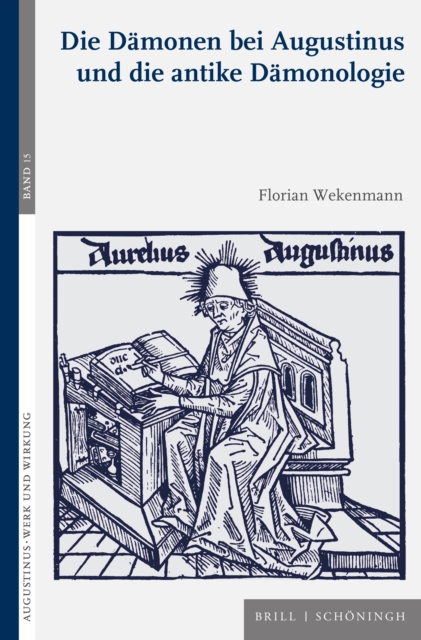
Die dämonen Bei Augustinus und Die Antike Dämonologie
Die erste monographische Darstellung der Dämonologie Augustins und ihrer Hintergründe.Die Existenz von Dämonen galt sowohl für Pagane als auch für Christen, für Gebildete wie Ungebildete in der Antike als Realität.Zur Verbreitung der christlichen Dämonenvorstellungen hat Augustinus einen (auch wirkungsgeschichtlich) bedeutsamen Beitrag geleistet.
eBook