
Catalogue Search | MBRL


Are you sure you want to remove the book from the shelf?

{{itemTitle}}
2,002
result(s) for
"Astronomie"
Sort by:
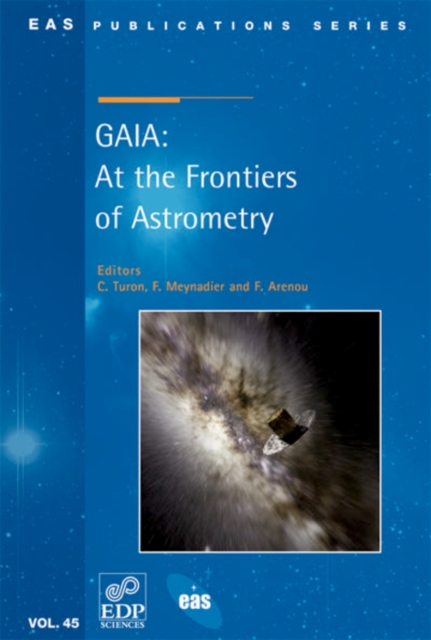
Gaia, a European space project summer school, Les Houches, France, May 14-18, 2001 electronic resource
No detailed description available for GAIA: At the Frontiers of Astrometry .
eBook

Near-Sun observations of an F-corona decrease and K-corona fine structure
Remote observations of the solar photospheric light scattered by electrons (the K-corona) and dust (the F-corona or zodiacal light) have been made from the ground during eclipses
1
and from space at distances as small as 0.3 astronomical units
2
–
5
to the Sun. Previous observations
6
–
8
of dust scattering have not confirmed the existence of the theoretically predicted dust-free zone near the Sun
9
–
11
. The transient nature of the corona has been well characterized for large events, but questions still remain (for example, about the initiation of the corona
12
and the production of solar energetic particles
13
) and for small events even its structure is uncertain
14
. Here we report imaging of the solar corona
15
during the first two perihelion passes (0.16–0.25 astronomical units) of the Parker Solar Probe spacecraft
13
, each lasting ten days. The view from these distances is qualitatively similar to the historical views from ground and space, but there are some notable differences. At short elongations, we observe a decrease in the intensity of the F-coronal intensity, which is suggestive of the long-sought dust free zone
9
–
11
. We also resolve the fine-scale plasma structure of very small eruptions, which are frequently ejected from the Sun. These take two forms: the frequently observed magnetic flux ropes
12
,
16
and the predicted, but not yet observed, magnetic islands
17
,
18
arising from the tearing-mode instability in the current sheet. Our observations of the coronal streamer evolution confirm the large-scale topology of the solar corona, but also reveal that, as recently predicted
19
, streamers are composed of yet smaller substreamers channelling continual density fluctuations at all visible scales.
Observations of the solar corona by the Parker Solar Probe reveal evidence for the predicted dust-free zone and confirm that streamers comprise smaller substreamers that channel continuous multiscale density fluctuations.
Journal Article

Array programming with NumPy
Array programming provides a powerful, compact and expressive syntax for accessing, manipulating and operating on data in vectors, matrices and higher-dimensional arrays. NumPy is the primary array programming library for the Python language. It has an essential role in research analysis pipelines in fields as diverse as physics, chemistry, astronomy, geoscience, biology, psychology, materials science, engineering, finance and economics. For example, in astronomy, NumPy was an important part of the software stack used in the discovery of gravitational waves
1
and in the first imaging of a black hole
2
. Here we review how a few fundamental array concepts lead to a simple and powerful programming paradigm for organizing, exploring and analysing scientific data. NumPy is the foundation upon which the scientific Python ecosystem is constructed. It is so pervasive that several projects, targeting audiences with specialized needs, have developed their own NumPy-like interfaces and array objects. Owing to its central position in the ecosystem, NumPy increasingly acts as an interoperability layer between such array computation libraries and, together with its application programming interface (API), provides a flexible framework to support the next decade of scientific and industrial analysis.
NumPy is the primary array programming library for Python; here its fundamental concepts are reviewed and its evolution into a flexible interoperability layer between increasingly specialized computational libraries is discussed.
Journal Article


The status of DECIGO
DECIGO (DECi-hertz Interferometer Gravitational wave Observatory) is the planned Japanese space gravitational wave antenna, aiming to detect gravitational waves from astrophysically and cosmologically significant sources mainly between 0.1 Hz and 10 Hz and thus to open a new window for gravitational wave astronomy and for the universe. DECIGO will consists of three drag-free spacecraft arranged in an equilateral triangle with 1000 km arm lengths whose relative displacements are measured by a differential Fabry-Perot interferometer, and four units of triangular Fabry-Perot interferometers are arranged on heliocentric orbit around the sun. DECIGO is vary ambitious mission, we plan to launch DECIGO in era of 2030s after precursor satellite mission, B-DECIGO. B-DECIGO is essentially smaller version of DECIGO: B-DECIGO consists of three spacecraft arranged in an triangle with 100 km arm lengths orbiting 2000 km above the surface of the earth. It is hoped that the launch date will be late 2020s for the present..
Journal Article

Deep space : beyond the solar system to the edge of the universe and the beginning of time
A photographic exploration of the solar system and beyond.
Book
The physical mechanisms of fast radio bursts
Fast radio bursts are mysterious millisecond-duration transients prevalent in the radio sky. Rapid accumulation of data in recent years has facilitated an understanding of the underlying physical mechanisms of these events. Knowledge gained from the neighbouring fields of gamma-ray bursts and radio pulsars has also offered insights. Here I review developments in this fast-moving field. Two generic categories of radiation model invoking either magnetospheres of compact objects (neutron stars or black holes) or relativistic shocks launched from such objects have been much debated. The recent detection of a Galactic fast radio burst in association with a soft gamma-ray repeater suggests that magnetar engines can produce at least some, and probably all, fast radio bursts. Other engines that could produce fast radio bursts are not required, but are also not impossible.
The mechanisms and origins of fast radio bursts are reviewed in connection with data and insights from the neighbouring fields of gamma-ray bursts and radio pulsars.
Journal Article