
Catalogue Search | MBRL


Are you sure you want to remove the book from the shelf?

{{itemTitle}}
351
result(s) for
"Astronomy Dictionaries."
Sort by:
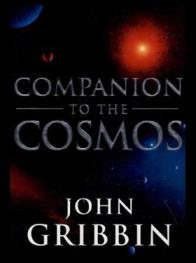
Companion to the cosmos
This is a comprehensive guide to everything mankind knows about the universe, written by one of our most noted science popularisers. The book takes the form of an A-Z, and ends with a timeline of key dates in scientific history.

Cambridge Illustrated Dictionary of Astronomy
This lavishly illustrated new dictionary written by an experienced writer and consultant on astronomy provides an essential guide to the universe for amateur astronomers of all ages. Around 1300 carefully selected and cross-referenced entries are complemented by hundreds of beautiful colour illustrations, taken from space missions, the Hubble Space Telescope, and other major observatories on Earth and in space. Distinguished stellar illustrator Wil Tirion has drawn 20 new star maps especially for inclusion here. A myriad of named astronomical objects, constellations, observatories and space missions are described in detail, as well as biographical sketches for 70 of the most luminous individuals in the history of astronomy and space science. Acronyms and specialist terms are clearly explained, making for the most thorough and carefully assembled reference resource that teachers and enthusiasts of astronomy will ever need.
eBook


Lectures on celestial amplitudes
Lecture notes prepared for the 2021 SAGEX PhD School in Amplitudes hosted by the University of Copenhagen August 10th through 13th. Topics covered include: the manifestation of asymptotic symmetries via soft theorems, their organization into currents in a celestial CFT, aspects of the holographic dictionary, a literature guide, and accompanying exercises.
Journal Article

A stereoscopic look into the bulk
A
bstract
We present the foundation for a holographic dictionary with depth perception. The dictionary consists of natural CFT operators whose duals are simple, diffeomorphisminvariant bulk operators. The CFT operators of interest are the “OPE blocks,” contributions to the OPE from a single conformal family. In holographic theories, we show that the OPE blocks are dual at leading order in 1
/N
to integrals of effective bulk fields along geodesics or homogeneous minimal surfaces in anti-de Sitter space. One widely studied example of an OPE block is the modular Hamiltonian, which is dual to the fluctuation in the area of a minimal surface. Thus, our operators pave the way for generalizing the Ryu-Takayanagi relation to other bulk fields.
Although the OPE blocks are non-local operators in the CFT, they admit a simple geometric description as fields in kinematic space — the space of pairs of CFT points. We develop the tools for constructing local bulk operators in terms of these non-local objects. The OPE blocks also allow for conceptually clean and technically simple derivations of many results known in the literature, including linearized Einstein’s equations and the relation between conformal blocks and geodesic Witten diagrams.
Journal Article

Irregular Liouville Correlators and Connection Formulae for Heun Functions
We perform a detailed study of a class of irregular correlators in Liouville Conformal Field Theory, of the related Virasoro conformal blocks with irregular singularities and of their connection formulae. Upon considering their semi-classical limit, we provide explicit expressions of the connection matrices for the Heun function and a class of its confluences. Their calculation is reduced to concrete combinatorial formulae from conformal block expansions.
Journal Article
Post-Minkowskian effective field theory for conservative binary dynamics
A
bstract
We develop an Effective Field Theory (EFT) formalism to solve for the conservative dynamics of binary systems in gravity via Post-Minkowskian (PM) scattering data. Our framework combines a systematic EFT approach to compute the deflection angle in the PM expansion, together with the ‘Boundary-to-Bound’ (B2B) dictionary introduced in [1, 2]. Due to the nature of scattering processes, a remarkable reduction of complexity occurs both in the number of Feynman diagrams and type of integrals, compared to a direct EFT computation of the potential in a PM scheme. We provide two illustrative examples. Firstly, we compute all the conservative gravitational observables for bound orbits to 2PM, which follow from only one topology beyond leading order. The results agree with those in [1, 2], obtained through the ‘impetus formula’ applied to the classical limit of the one loop amplitude in Cheung et al. [3]. For the sake of comparison we reconstruct the conservative Hamiltonian to 2PM order, which is equivalent to the one derived in [3] from a matching calculation. Secondly, we compute the scattering angle due to tidal effects from the electric- and magnetic-type Love numbers at leading PM order. Using the B2B dictionary we then obtain the tidal contribution to the periastron advance. We also construct a Hamiltonian including tidal effects at leading PM order. Although relying on (relativistic) Feynman diagrams, the EFT formalism developed here does not involve taking the classical limit of a quantum amplitude, neither integrals with internal massive fields, nor additional matching calculations, nor spurious (‘super-classical’) infrared singularities. By construction, the EFT approach can be automatized to all PM orders.
Journal Article
From boundary data to bound states. Part II. Scattering angle to dynamical invariants (with twist)
A
bstract
We recently introduced in [
9
] a
boundary-to-bound
dictionary between gravitational scattering data and observables for bound states of non-spinning bodies. In this paper, we elaborate further on this
holographic
map. We start by deriving the following — remarkably simple — formula relating the periastron advance to the scattering angle:
ΔΦ
J
E
=
χ
J
E
+
χ
−
J
E
, via analytic continuation in angular momentum and binding energy. Using explicit expressions from [
9
], we confirm its validity to all orders in the Post-Minkowskian (PM) expansion. Furthermore, we reconstruct the radial action for the bound state directly from the knowledge of the scattering angle. The radial action enables us to write compact expressions for dynamical invariants in terms of the deflection angle to all PM orders, which can also be written as a function of the PM-expanded amplitude. As an example, we reproduce our result in [
9
] for the periastron advance, and compute the radial and azimuthal frequencies and redshift variable to two-loops. Agreement is found in the overlap between PM and Post-Newtonian (PN) schemes. Last but not least, we initiate the study of our dictionary including spin. We demonstrate that the same relation between deflection angle and periastron advance applies for aligned-spin contributions, with
J
the (canonical)
total
angular momentum. Explicit checks are performed to display perfect agreement using state-of-the-art PN results in the literature. Using the map between test- and two-body dynamics, we also compute the periastron advance up to quadratic order in spin, to one-loop and to all orders in velocity. We conclude with a discussion on the generalized ‘impetus formula’ for spinning bodies and black holes as ‘elementary particles’. Our findings here and in [
9
] imply that the deflection angle already encodes vast amount of physical information for bound orbits, encouraging independent derivations using numerical and/or self-force methodologies.
Journal Article
AdS bulk locality from sharp CFT bounds
A
bstract
It is a long-standing conjecture that any CFT with a large central charge and a large gap ∆
gap
in the spectrum of higher-spin single-trace operators must be dual to a local effective field theory in AdS. We prove a sharp form of this conjecture by deriving numerical bounds on bulk Wilson coefficients in terms of ∆
gap
using the conformal bootstrap. Our bounds exhibit the scaling in ∆
gap
expected from dimensional analysis in the bulk. Our main tools are dispersive sum rules that provide a dictionary between CFT dispersion relations and S-matrix dispersion relations in appropriate limits. This dictionary allows us to apply recently-developed flat-space methods to construct positive CFT functionals. We show how AdS
4
naturally resolves the infrared divergences present in 4D flat-space bounds. Our results imply the validity of twice-subtracted dispersion relations for any S-matrix arising from the flat-space limit of AdS/CFT.
Journal Article
Carrollian amplitudes and celestial symmetries
A
bstract
Carrollian holography aims to express gravity in four-dimensional asymptotically flat spacetime in terms of a dual three-dimensional Carrollian CFT living at null infinity. Carrollian amplitudes are massless scattering amplitudes written in terms of asymptotic or null data at
I
. These position space amplitudes at
I
are to be re-interpreted as correlation functions in the putative dual Carrollian CFT. We derive basic results concerning tree-level Carrollian amplitudes yielding dynamical constraints on the holographic dual. We obtain surprisingly compact expressions for
n
-point MHV gluon and graviton amplitudes in position space at
I
. We discuss the UV/IR behaviours of Carrollian amplitudes and investigate their collinear limit, which allows us to define a notion of Carrollian OPE. By smearing the OPE along the generators of null infinity, we obtain the action of the celestial symmetries — namely, the
S
algebra for Yang-Mills theory and
Lw
1+
∞
for gravity — on the Carrollian operators. As a consistency check, we systematically relate our results with celestial amplitudes using the link between the two approaches. Finally, we initiate a direct connection between twistor space and Carrollian amplitudes.
Journal Article