
Catalogue Search | MBRL


Are you sure you want to remove the book from the shelf?

{{itemTitle}}
25
result(s) for
"Atlantic Ocean Region Civilization."
Sort by:

A cultural history of the Atlantic world, 1250-1820
\"A Cultural History of the Atlantic World, 1250-1820 explores the idea that strong links exist in the histories of Africa, Europe and North and South America. John K. Thornton provides a comprehensive overview of the history of the Atlantic Basin before 1830 by describing political, social and cultural interactions between the continents' inhabitants. He traces the backgrounds of the populations on these three continental landmasses brought into contact by European navigation. Thornton then examines the political and social implications of the encounters, tracing the origins of a variety of Atlantic societies and showing how new ways of eating, drinking, speaking and worshipping developed in the newly created Atlantic World. This book uses close readings of original sources to produce new interpretations of its subject\"-- Provided by publisher.
Book

A Cultural History of the Atlantic World, 1250–1820
A Cultural History of the Atlantic World, 1250–1820 explores the idea that strong links exist in the histories of Africa, Europe and North and South America. John K. Thornton provides a comprehensive overview of the history of the Atlantic Basin before 1830 by describing political, social and cultural interactions between the continents' inhabitants. He traces the backgrounds of the populations on these three continental landmasses brought into contact by European navigation. Thornton then examines the political and social implications of the encounters, tracing the origins of a variety of Atlantic societies and showing how new ways of eating, drinking, speaking and worshipping developed in the newly created Atlantic World. This book uses close readings of original sources to produce new interpretations of its subject.
eBook


Nature and culture in the early modern Atlantic
In the sixteenth-century Atlantic world, nature and culture swirled in people's minds to produce fantastic images. In the South of France, a cloister's painted wooden panels greeted parishioners with vivid depictions of unicorns, dragons, and centaurs, while Mayans in the Yucatan created openings to buildings that resembled a fierce animal's jaws, known to archaeologists as serpent-column portals.
In Nature and Culture in the Early Modern Atlantic , historian Peter C. Mancall reveals how Europeans and Native Americans thought about a natural world undergoing rapid change in the century following the historic voyages of Christopher Columbus. Through innovative use of oral history and folklore maintained for centuries by Native Americans, as well as original use of spectacular manuscript atlases, paintings that depict on-the-spot European representations of nature, and texts that circulated imperfectly across the ocean, he reveals how the encounter between the old world and the new changed the fate of millions of individuals.
This inspired work of Atlantic, European, and American history begins with medieval concepts of nature and ends in an age when the printed book became the primary avenue for the dissemination of scientific information. Throughout the sixteenth century, the borders between the natural world and the supernatural were more porous than modern readers might realize. Native Americans and Europeans alike thought about monsters, spirits, and insects in considerable depth. In Mancall's vivid narrative, the modern world emerged as a result of the myriad encounters between peoples who inhabited the Atlantic basin in this period. The centuries that followed can be comprehended only by exploring how culture in its many forms—stories, paintings, books—shaped human understanding of the natural world.
eBook

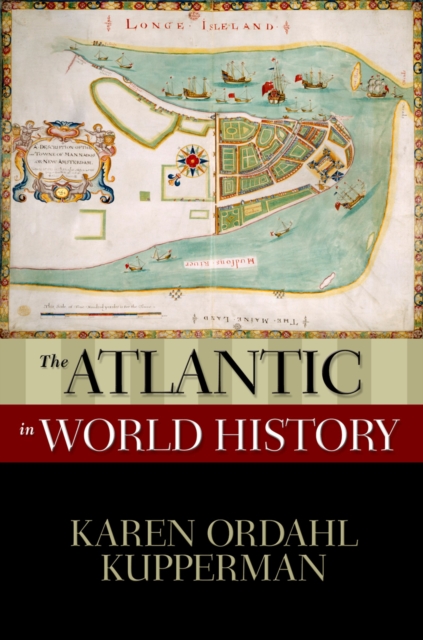
The Atlantic in world history
The Atlantic in World History tells the story of the emergence of an integrated Atlantic world after 1492 and the way lives on all four continents were transformed. Novel products, especially foods, made lives better, but intensive labor systems, especially slavery, ruined many lives. Plantation agriculture and intensified trade fed industrial processes and led to modern economic and political regimes.
eBook

Transatlantic studies : Latin America, Iberia, and Africa
Emerges from, and performs, an ongoing debate concerning the role of transatlantic approaches in the fields of Iberian, Latin American, African, and Luso-Brazilian studies. The innovative research and discussions contained in this volume's 35 essays by leading scholars in the field reframe the intertwined cultural histories of the diverse transnational spaces encompassed by the former Spanish and Portuguese empires. An emerging field, Transatlantic Studies seeks to provoke a discussion and a reconfiguration of the traditional academic notions of area studies, while critically engaging the concepts of national cultures and postcolonial relations among Spain, Portugal and their former colonies. Crucially, Transatlantic Studies transgresses national boundaries without dehistoricizing or decontextualizing the texts it seeks to incorporate within this new framework.
Book

Theorising the Ibero-American Atlantic
Theorising the Ibero-American Atlantic offers fresh and challenging perspectives on the Atlantic turn in Hispanic and Latin American studies. Contributors, while mindful of its limits, explore and establish the viability and value of the Ibero-American Atlantic as a framework of enquiry.
eBook

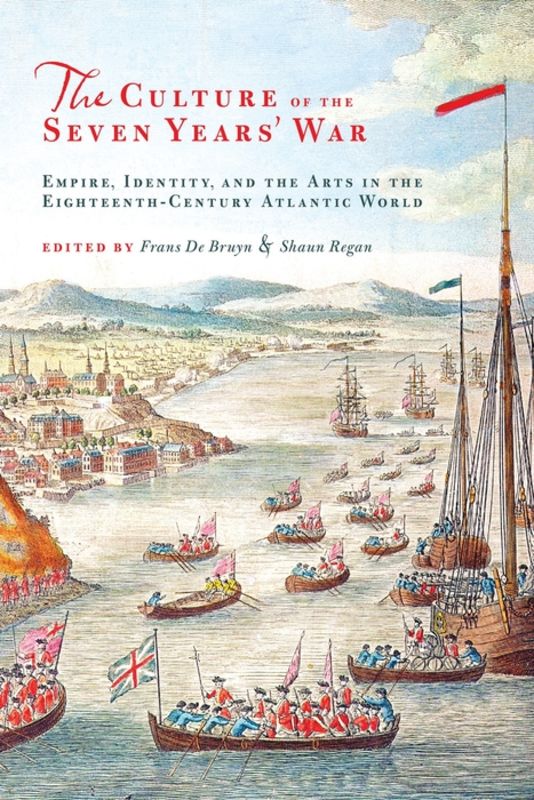
The Culture of the Seven Years' War
With essays by notable scholars that address the war's impact in Europe and the Atlantic world, this volume is sure to become essential reading for those interested in the relationship between war, culture, and the arts.
eBook