
Catalogue Search | MBRL


Are you sure you want to remove the book from the shelf?

{{itemTitle}}
25
result(s) for
"Atomkrieg"
Sort by:


A nuclear winter's tale : science and politics in the 1980s
The rise and fall of the concept of nuclear winter, played out in research activity, public relations, and Reagan-era politics.The nuclear winter phenomenon burst upon the public's consciousness in 1983.
eBook
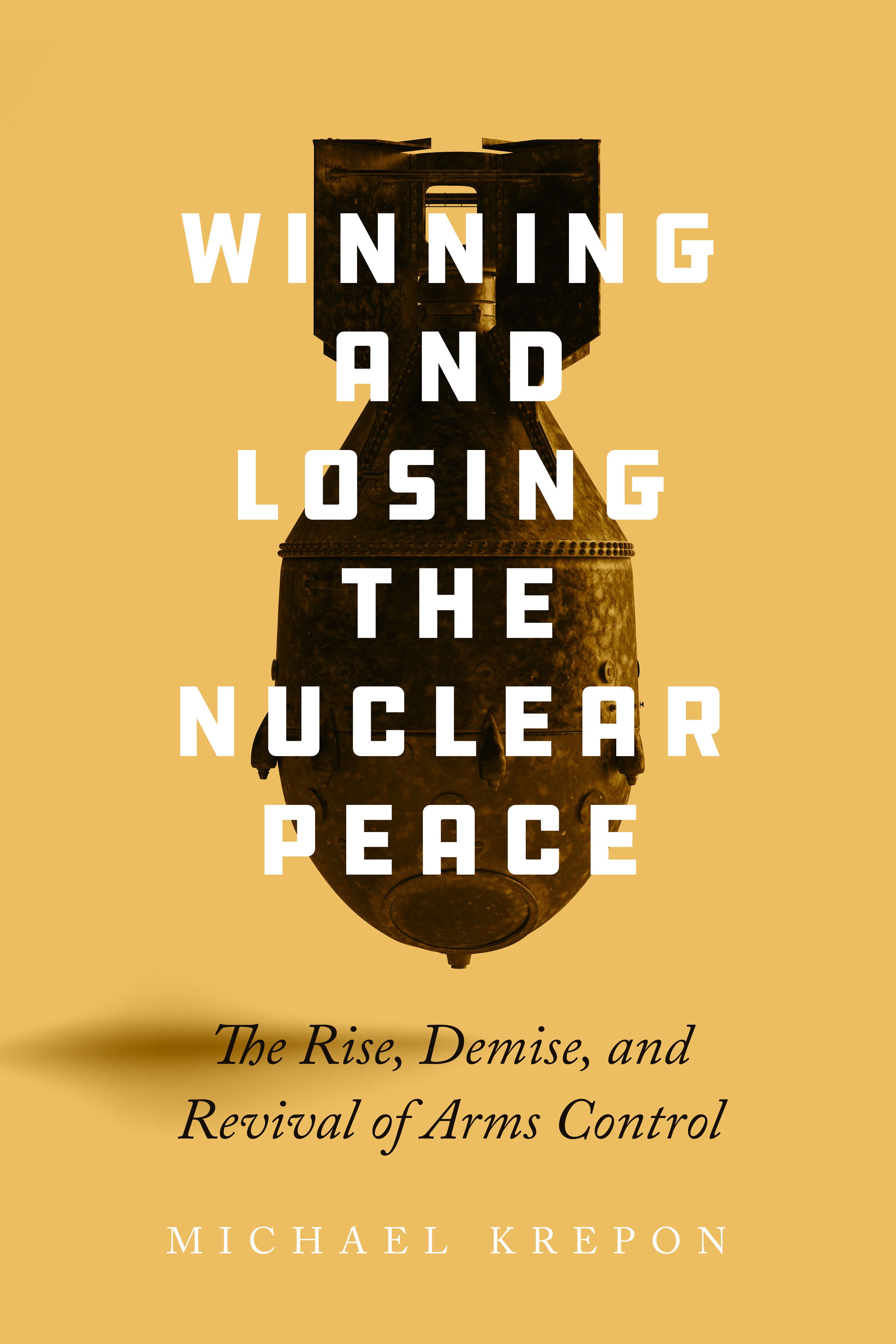
Winning and losing the nuclear peace : the rise, demise, and revival of arms control
The definitive guide to the history of nuclear arms control by a wise eavesdropper and masterful storyteller, Michael Krepon.
The greatest unacknowledged diplomatic achievement of the Cold War was the absence of mushroom clouds. Deterrence alone was too dangerous to succeed; it needed arms control to prevent nuclear warfare. So, U.S. and Soviet leaders ventured into the unknown to devise guardrails for nuclear arms control and to treat the Bomb differently than other weapons. Against the odds, they succeeded. Nuclear weapons have not been used in warfare for three quarters of a century. This book is the first in-depth history of how the nuclear peace was won by complementing deterrence with reassurance, and then jeopardized by discarding arms control after the Cold War ended.
Winning and Losing the Nuclear Peace tells a remarkable story of high-wire acts of diplomacy, close calls, dogged persistence, and extraordinary success. Michael Krepon brings to life the pitched battles between arms controllers and advocates of nuclear deterrence, the ironic twists and unexpected outcomes from Truman to Trump. What began with a ban on atmospheric testing and a nonproliferation treaty reached its apogee with treaties that mandated deep cuts and corralled \"loose nukes\" after the Soviet Union imploded.
After the Cold War ended, much of this diplomatic accomplishment was cast aside in favor of freedom of action. The nuclear peace is now imperiled by no less than four nuclear-armed rivalries. Arms control needs to be revived and reimagined for Russia and China to prevent nuclear warfare. New guardrails have to be erected. Winning and Losing the Nuclear Peace is an engaging account of how the practice of arms control was built from scratch, how it was torn down, and how it can be rebuilt.
eBook

Extraterrestrial Ethics
This unique book takes both inductive and deductive approaches to the topic of extraterrestrial ethics. Inductively, it asks what kind of ethics an advanced, intelligent extraterrestrial species might display. Deductively, it asks how human beings should transform their own understanding of ethics to prepare for widespread contact with an advanced extraterrestrial species.Using the ontological interpretation of quantum mechanics proposed by physicist and philosopher David Bohm, Extraterrestrial Ethics considers how an extraterrestrial intelligence (ETI) may view ethical concerns relating to humankind. The book examines two areas of concern: nuclear technologies; and the militarization and weaponization of space. The text of the Fiscal Year 2022 National Defense Authorization Act (FY22 NDAA) in the United States clearly states that Unidentified Aerial Phenomena (UAP) have been reported at sites associated with nuclear weapons, nuclear-powered ships and submarines, nuclear power generating stations, etc., suggesting that ETI is very concerned about the human use of nuclear technologies. Furthermore, the more ubiquitous level of UAP sightings by the U.S. military over the last few years, as documented in the June 2021 report from the Office of the Director of National Intelligence (ODNI) in the U.S., suggest that ETI also is concerned about rapid acceleration relating to the militarization and weaponization of space. The book concludes by advocating a normative approach to de-militarize space.
eBook

On limited nuclear war in the 21st century
The last two decades have seen a slow but steady increase in nuclear armed states, and in the seemingly less constrained policy goals of some of the newer \"rogue\" states in the international system. The authors ofOn Limited Nuclear War in the 21st Century argue that a time may come when one of these states makes the conscious decision that using a nuclear weapon against the United States, its allies, or forward deployed forces in the context of a crisis or a regional conventional conflict may be in its interests. They assert that we are unprepared for these types of limited nuclear wars and that it is urgent we rethink the theory, policy, and implementation of force related to our approaches to this type of engagement.
Together they critique Cold War doctrine on limited nuclear war and consider a number of the key concepts that should govern our approach to limited nuclear conflict in the future. These include identifying the factors likely to lead to limited nuclear war, examining the geopolitics of future conflict scenarios that might lead to small-scale nuclear use, and assessing strategies for crisis management and escalation control. Finally, they consider a range of strategies and operational concepts for countering, controlling, or containing limited nuclear war.
eBook

The law of arms control and the international non-proliferation regime : preventing the spread of nuclear weapons
This book analyzes the strengths, weaknesses, development and potential of the nuclear non-proliferation and disarmament regime, providing new insights on the role of public international law in a field as politicized as that of nuclear arms control.
eBook

The Worlds of Herman Kahn
Herman Kahn was the only nuclear strategist in America who might have made a living as a standup comedian. In telling his story, Ghamari-Tabrizi captures an era that is still very much with us--a time whose innocence, gruesome nuclear humor, and outrageous but deadly serious visions of annihilation have their echoes in the \"known unknowns and unknown unknowns\" that guide policymakers in our own embattled world.
eBook


This is only a Test
Please note this is a 'Palgrave to Order' title (PTO). Stock of this book requires shipment from an overseas supplier. It will be delivered to you within 12 weeks. This book tells the history of nuclear age urban planning, civil defence and continuity of government programs in one of the nation's most critical Cold War targets: Washington, D.C.
eBook

To Kill Nations
\"Edward Kaplan's To Kill Nations is a
fascinating work that packs a thermonuclear punch of ideas and
arguments... The work is suitable for anyone from advanced
undergraduates to experts in the field.\" ― Strategy
Bridge
In To Kill Nations , Edward Kaplan
traces the evolution of American strategic airpower and preparation
for nuclear war from this early air-atomic era to a later period
(1950-1965) in which the Soviet Union's atomic capability,
accelerated by thermonuclear weapons and ballistic missiles, made
American strategic assets vulnerable and gradually undermined
air-atomic strategy.
Kaplan throws into question both the inevitability and
preferability of the strategic doctrine of MAD. He looks at the
process by which cultural, institutional, and strategic ideas about
MAD took shape and makes insightful use of the comparison between
generals who thought they could win a nuclear war and the cold
institutional logic of the suicide pact that was MAD. Kaplan also
offers a reappraisal of Eisenhower's nuclear strategy and diplomacy
to make a case for the marginal viability of air-atomic military
power even in an era of ballistic missiles.
eBook