
Catalogue Search | MBRL


Are you sure you want to remove the book from the shelf?

{{itemTitle}}
1,303
result(s) for
"Atrocities Prevention."
Sort by:


The Responsibility to Protect: Ending Mass Atrocity Crimes Once and For All
After the Holocaust, the world vowed it would never again stand by and permit such heinous crimes against humanity. Yet many subsequent atrocities have gone unchecked, all over the world: from the killing fields of Cambodia, to Rwanda, and to Srebrenica. The bloody list continues to grow, led by the unfolding nightmare in Darfur. How and why were the world's best intentions derailed, and what can be done today to put these efforts back on track? The \"responsibility to protect: - R2P for short - was unanimously embraced at the UN World Summit in 2005. The heart of this new international norm is the belief that if sovereign governments fail to protect their own people from mass atrocity crimes, then responsibility shifts to the wider international community to take whatever action is appropriate, including (in extreme cases) the use of force. The world cannot, and will not, just stand by. Evens spells out the steps needed to make R2P work in practice and clarifies the misunderstandings, real or contrived, which persist about its scope and limits. He emphasizes the need for preventive action, and for preferring assistance and persuasion to coercion, but he also makes clear when it is right to fight. The book is enlivened throughout by real world examples, analyses of current events, and assessments drawn from the author's own vast experience.
eBook


Fragile Hope
Against the backdrop of the global Black Lives Matter movement, debates around the social impact of hate crime legislation have come to the political fore. In 2019, the UN Commission on Crime Prevention and Criminal Justice urgently asked how legal systems can counter bias and discrimination. In India, a nation with vast socio-cultural diversity, and a complex colonial past, questions about the relationship between law and histories of oppression have become particularly pressing. Recently, India has seen a rise in violence against Dalits (ex-untouchables) and other minorities. Consequently, an emerging \"Dalit Lives Matter\" movement has campaigned for the effective implementation of India's only hate crime law: the 1989 Scheduled Castes/Scheduled Tribes Prevention of Atrocities Act (PoA). Drawing on long-term fieldwork with Dalit survivors of caste atrocities, human rights NGOs, police, and judiciary, Sandhya Fuchs unveils how Dalit communities in the state of Rajasthan interpret and mobilize the PoA. Fuchs shows that the PoA has emerged as a project of legal meliorism: the idea that persistent and creative legal labor can gradually improve the oppressive conditions that characterize Dalit lives. Moving beyond statistics and judicial arguments, Fuchs uses the intimate lens of personal narratives to lay bare how legal processes converge and conflict with political and gendered concerns about justice for caste atrocities, creating new controversies, inequalities, and hopes.
eBook
Regionalism and human protection : reflections from Southeast Asia and Africa
\"This book provides a detailed examination of how norms concerning human rights, civilian protection and prevention of mass atrocities have fared in the regions of Southeast Asia and Africa. Originated as a special issue of the journal GR2P (vol. 8/2-3, 2016), the collection has been enriched with new chapters and revised content, which contrast the different experiences of those regions and investigates the expression of human protection norms in regional organisations and thematic policy agendas as well as the role of civil society processes. Hunt and Morada have brought together scholar-practitioners from across the world. The collection identifies a range of insights that provide rich opportunities for south-south exchange and mutual learning when it comes to promoting and building capacity for human protection at the regional level.\"-- Back cover.
Book

Regionalism and Human Protection
This book, intended as a spin off of the journal GR2P (vol. 8/2-3, 2016) and enriched with totally new chapters and revised contents, examines how norms concerning human rights, civilian protection and prevention of mass atrocities have been realised and institutionalised differently across the regions of Southeast Asia and Africa.
eBook

The Justice Dilemma
Abusive leaders are now held accountable for their crimes in a
way that was unimaginable just a few decades ago. What are the
consequences of this recent push for international justice? In
The Justice Dilemma , Daniel Krcmaric explains why the
\"golden parachute\" of exile is no longer an attractive retirement
option for oppressive rulers. He argues that this is both a
blessing and a curse: leaders culpable for atrocity crimes fight
longer civil wars because they lack good exit options, but the
threat of international prosecution deters some leaders from
committing atrocities in the first place. The Justice
Dilemma therefore diagnoses an inherent tension between
conflict resolution and atrocity prevention, two of the signature
goals of the international community.
Krcmaric also sheds light on several important puzzles in world
politics. Why do some rulers choose to fight until they are killed
or captured? Why not simply save oneself by going into exile? Why
do some civil conflicts last so much longer than others? Why has
state-sponsored violence against civilians fallen in recent
years?
While exploring these questions, Krcmaric marshals statistical
evidence on patterns of exile, civil war duration, and mass
atrocity onset. He also reconstructs the decision-making processes
of embattled leaders-including Muammar Gaddafi of Libya, Charles
Taylor of Liberia, and Blaise Compaoré of Burkina Faso-to show how
contemporary international justice both deters atrocities and
prolongs conflicts.
eBook
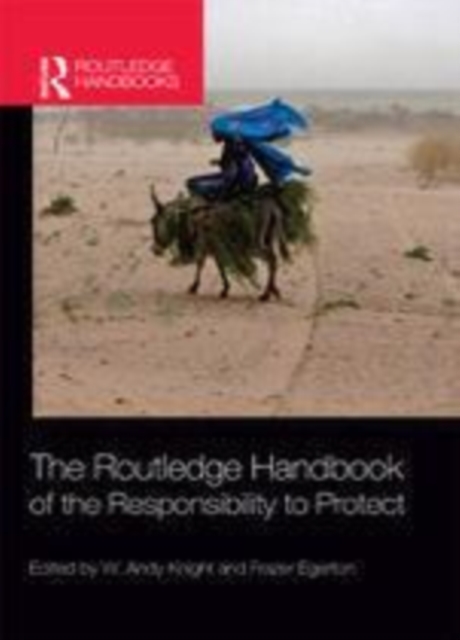
The Routledge Handbook of the Responsibility to Protect
This Handbook offers a comprehensive examination of the Responsibility to Protect norm in world politics, which aims to end mass atrocities against civilians.
The Responsibility to Protect (R2P) is amongst the most significant norms in global politics. As the authoritative guide to R2P, this edited volume gathers together the most respected and insightful voices to address key issues related to this emerging norm. The contributing authors do this over the course of three parts:
Part I: The Concept of R2P
Part II: Developing and Operationalising R2P
Part III: The view from Over Here
This book will be of much interest to students of R2P, humanitarian intervention, genocide, human rights, international law, peace studies, international organisations, security studies and IR.
eBook

Violence against noncombatant civilians in revolutionary conflicts: A psychosocial choice model and empirical tests, 1960–2018
We offer a general theoretical model, and numerical simulations thereof, that reveal conditions under which a political leader chooses, or refrains from choosing, violence against noncombatant civilians as part of a contest with an opposing force. Employing augmented rational choice theory, which incorporates perspectives from psychology and sociology, the model involves a constant elasticity of substitution (CES) utility function over two goods, consumption and political control, with the latter in turn modeled on a CES production function involving three inputs, namely, direct fighting, intentional violence against civilians, and investments in group identity. When the model’s parameters are set to reflect conditions of revolutionary as opposed to non-revolutionary conflict, the model predicts that violence against civilians is particularly high. Using data from 1960 to 2018, the model’s prediction is well-supported by our empirical analyses.
Journal Article

The R2P and atrocity prevention: Contesting human rights as a threat to international peace and security
The significant link between human rights violations and the eventual outbreak of atrocity crimes has been widely promoted across the UN system. However, the question of how the connection between the R2P norm and human rights plays out in the actual practices and debates of the UN Security Council has been relatively under explored. In response, the article builds on constructivist research into norm robustness in order to trace how the R2P's shift to an atrocity prevention focus has generated increased applicatory contestation over the push to expand the link between human rights and threats to international peace and security. Based on extensive analysis of UN Security Council meeting records and three case studies, the article highlights two competing ideological frames that currently divide the Security Council's approach to atrocity prevention. This division has emphasised a key disconnect between the work of the Security Council and other UN institutions such as the Human Rights Council, therefore severely limiting the potential for effective atrocity prevention responses. Thus, without a stronger connection to human rights in the process of threat identification, the R2P norm will remain considerably limited as a prevention tool. Consequently, the article also contributes to a new understanding of the critical role evolving institutional rules and practices play in state attempts to both constrain and reshape human protection norms.
Journal Article