
Catalogue Search | MBRL


Are you sure you want to remove the book from the shelf?

{{itemTitle}}
161
result(s) for
"Au pairs."
Sort by:

Au pair
\"This is the first book devoted to the lives of au pairs, their leisure as well as their work time. We see this world from the eyes of the visitors, and their unique perspective on what lies at the heart of our family life. The book does not flinch from documenting the realities of the situation: the racism and the problematic behaviour of the au pairs themselves, as much as the ignorance and exploitation they can be subject to. The book is a case study in how to come to feel modern life empathetically from the viewpoint of one of those many migrant groups we take for granted and rely on but rarely try to understand\"--From publisher description.
Book

au pairs, nannies and babysitters
This article argues that intersectional analyses of care work also need to include a temporal aspect. Drawing on ethnographic research on Slovak au pairs working in the UK and on interviews with both providers and employers of paid childcare in Slovakia, I examine how the temporariness of care work is created within both migrant and non-migrant settings. In particular, I demonstrate that both employers and providers conceptualise paid childcare as a temporary period in their lives and show the consequences of this conceptualisation in their valuing of care work. In both examined cases, I focus on the role of care/welfare and migration regimes in the production of temporariness in care work and argue that both providers and employers of paid care construct their involvement in domestic work as a specific life course experience. While for au pairs, working stays in the UK represent a specific transition period from adolescence to adulthood, employers in Slovakia decide to employ particular types of domestic workers in relation to the particular developmental phases of their families and households.
Journal Article

Shadow mothers : nannies, au pairs, and the micropolitics of mothering
Shadow Mothers shines new light on an aspect of contemporary motherhood often hidden from view: the need for paid childcare by women returning to the workforce, and the complex bonds mothers forge with the \"shadow mothers\" they hire. Cameron Lynne Macdonald illuminates both sides of an unequal and complicated relationship. Based on in-depth interviews with professional women and childcare providers-- immigrant and American-born nannies as well as European au pairs--Shadow Mothers locates the roots of individual skirmishes between mothers and their childcare providers in broader cultural and social tensions. Macdonald argues that these conflicts arise from unrealistic ideals about mothering and inflexible career paths and work schedules, as well as from the devaluation of paid care work.
Book

Stuck in a Vicious Cycle? Career Aspirations and Entrapment Among Turkish Au Pairs in the United States
While the service demands of au pair programs have come under much scrutiny, less visible are the ways in which au pair positions are utilized as a career transformation strategy for skilled young women. Building on in-depth and semi-structured interviews with a dozen college-educated Turkish au pairs who left their jobs in Turkey to take care of children abroad, this study shows how young women hope to utilize the educational component of the au pair year to realize their aspirations for career change. However, attempting to stretch the au pair system beyond its original purpose runs the risk of trapping mobile young women in a continuing cycle of service jobs that hinder their academic and career goals. The study shows that transient positions provide only a limited venue to create sufficient human capital and capability to realize such aspirations, instead leading to the effective entrapment of young women abroad in potentially precarious legal and financial positions.
Journal Article

The au pair
\"Seraphine Mayes and her twin brother Danny were born in the middle of summer at their family's estate on the Norfolk coast. Within hours of their birth, their mother threw herself from the cliffs, the au pair fled, and the village thrilled with whispers of dark cloaks, changelings, and the aloof couple who drew a young nanny into their inner circle. Now an adult, and mourning the recent death of her father, Seraphine begins to go through his belongings when she uncovers a family photograph that raises dangerous questions\"-- Provided by publisher.
Book

RNA design rules from a massive open laboratory
Self-assembling RNA molecules present compelling substrates for the rational interrogation and control of living systems. However, imperfect in silico models—even at the secondary structure level—hinder the design of new RNAs that function properly when synthesized. Here, we present a unique and potentially general approach to such empirical problems: the Massive Open Laboratory. The EteRNA project connects 37,000 enthusiasts to RNA design puzzles through an online interface. Uniquely, EteRNA participants not only manipulate simulated molecules but also control a remote experimental pipeline for high-throughput RNA synthesis and structure mapping. We show herein that the EteRNA community leveraged dozens of cycles of continuous wet laboratory feedback to learn strategies for solving in vitro RNA design problems on which automated methods fail. The top strategies—including several previously unrecognized negative design rules—were distilled by machine learning into an algorithm, EteRNABot. Over a rigorous 1-y testing phase, both the EteRNA community and EteRNABot significantly outperformed prior algorithms in a dozen RNA secondary structure design tests, including the creation of dendrimer-like structures and scaffolds for small molecule sensors. These results show that an online community can carry out large-scale experiments, hypothesis generation, and algorithm design to create practical advances in empirical science.
Journal Article
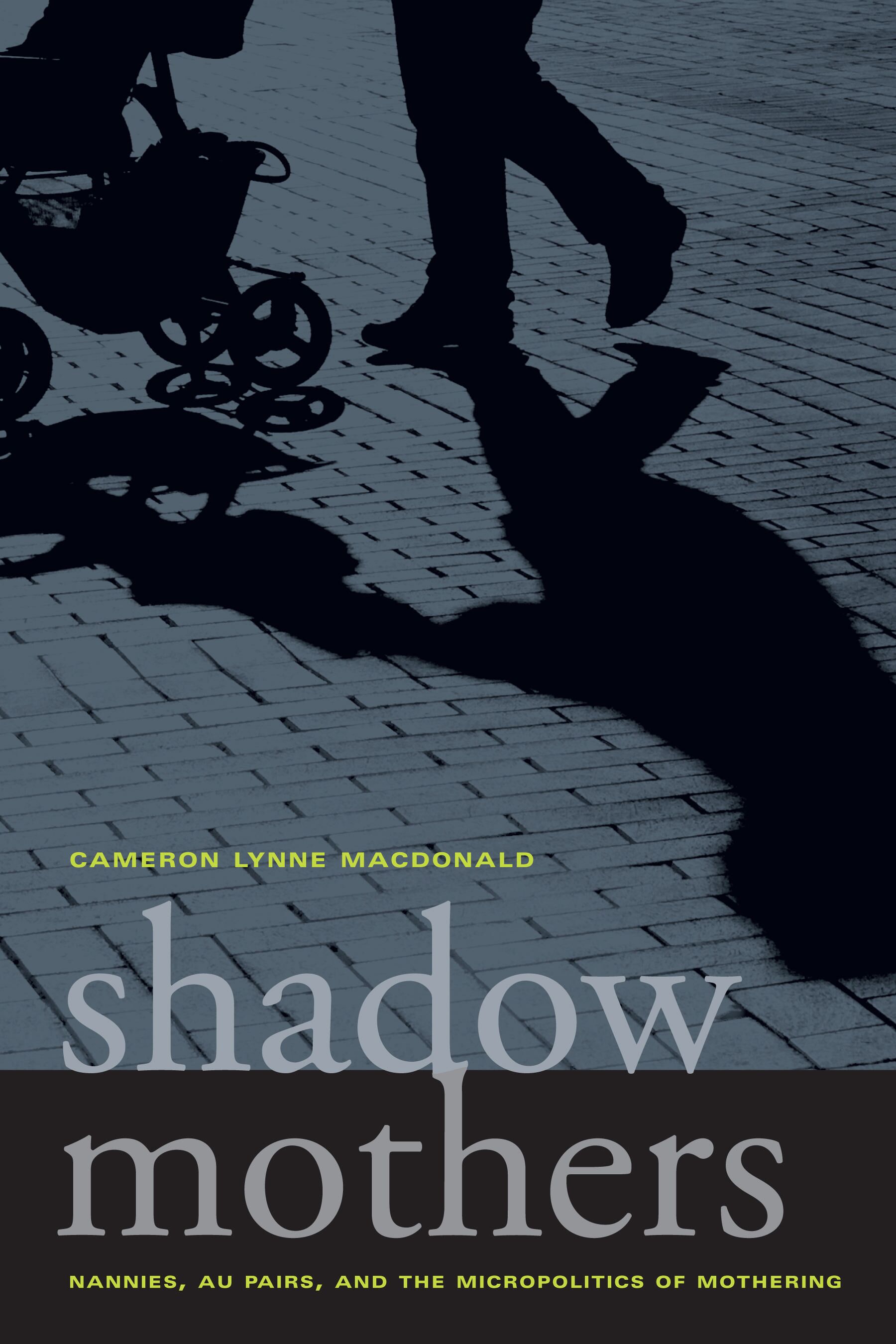
Shadow mothers
Shadow Mothers shines new light on an aspect of contemporary motherhood often hidden from view: the need for paid childcare by women returning to the workforce, and the complex bonds mothers forge with the “shadow mothers” they hire. Cameron Lynne Macdonald illuminates both sides of an unequal and complicated relationship. Based on in-depth interviews with professional women and childcare providers— immigrant and American-born nannies as well as European au pairs—Shadow Mothers locates the roots of individual skirmishes between mothers and their childcare providers in broader cultural and social tensions. Macdonald argues that these conflicts arise from unrealistic ideals about mothering and inflexible career paths and work schedules, as well as from the devaluation of paid care work.
eBook
'Big Sisters' Are Better Domestic Servants?! Comments on the Booming Au Pair Business
The au pair program in general is still known as a form of cultural exchange program and a good possibility for young women to spend a year abroad, although it has undergone great changes during the last 10 years. This article argues that due to different socio-economic and cultural processes in Western postindustrial societies as well as in the eastern and southern parts of the world the au pair program is becoming a form of domestic work with quite similar working and living conditions to that of live-in migrant domestic workers. This article which is based on two empirical studies on the globalizing au pair business in Eastern and Western Europe as well in the United States looks into the motivations and expectations, the living conditions and interactions between the au pairs and the employer families and contrasts these findings with the discourse of the au pair agencies still advertising au pair as a form of cultural exchange. In doing so the paper can show that it is the still dominant image of au-pair as a cultural exchange program (disarticulating the work aspect) that leaves the young au pair women even more vulnerable to exploitation: 'big sisters' are the best domestic servants. This article draws attention to the racialized economization of the private sphere and care work, the inherent traps and exploitative features of this very specific work place.
Journal Article
