
Catalogue Search | MBRL


Are you sure you want to remove the book from the shelf?

{{itemTitle}}
182
result(s) for
"Audience/Audiences"
Sort by:

Moving Viewers
Everyone knows the thrill of being transported by a film, but what is it that makes movie watching such a compelling emotional experience? In Moving Viewers, Carl Plantinga explores this question and the implications of its answer for aesthetics, the psychology of spectatorship, and the place of movies in culture. Through an in-depth discussion of mainstream Hollywood films, Plantinga investigates what he terms \"the paradox of negative emotion\" and the function of mainstream narratives as ritualistic fantasies. He describes the sensual nature of the movies and shows how film emotions are often elicited for rhetorical purposes. He uses cognitive science and philosophical aesthetics to demonstrate why cinema may deliver a similar emotional charge for diverse audiences.
eBook
Media and participation
Participation has become fashionable again, but at the same time it has always played a crucial role in our contemporary societies, and it has been omnipresent in a surprisingly large number of societal fields. In the case of the media sphere, the present-day media conjuncture is now considered to be the most participatory ever, but media participation has had a long and intense history. To deal with these paradoxes, this book looks at participation as a structurally unstable concept and as the object of a political-ideological struggle that makes it oscillate between minimalist and maximalist versions. This struggle is analysed in theoretical reflections in five fields (democracy, arts, development, spatial planning and media) and in eight different cases of media practice. These case studies also show participation’s close connection to power, identity, organization, technology and quality.
eBook
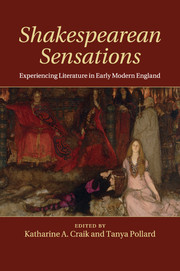
Shakespearean Sensations
This strong and timely collection provides fresh insights into how Shakespeare's plays and poems were understood to affect bodies, minds and emotions. Contemporary criticism has had surprisingly little to say about the early modern period's investment in imagining literature's impact on feeling. Shakespearean Sensations brings together scholarship from a range of well-known and new voices to address this fundamental gap. The book includes a comprehensive introduction by Katharine A. Craik and Tanya Pollard and comprises three sections focusing on sensations aroused in the plays; sensations evoked in the playhouse; and sensations found in the imaginative space of the poems. With dedicated essays on Hamlet, Macbeth, Othello and Twelfth Night, the collection explores how seriously early modern writers took their relationship with their audiences and reveals new connections between early modern literary texts and the emotional and physiological experiences of theatregoers.
eBook
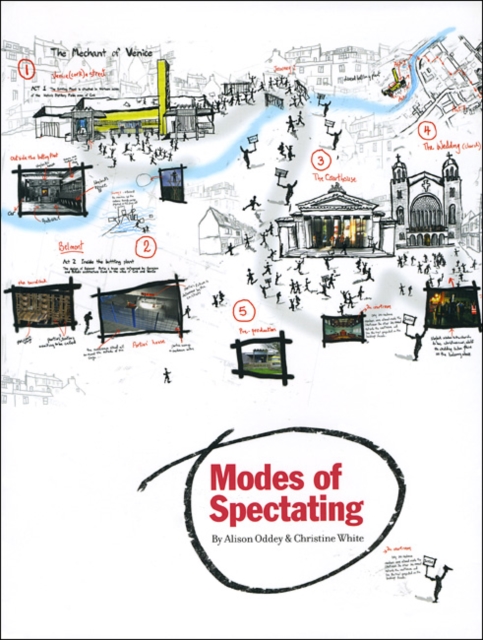
Modes of spectating
Modes of Spectating investigates the questions posed by new artistic and technological mediums on the viewer experience. Oddey and White analyze how gaming and televisual media and entertainment are used by young people and the resulting psychological challenges of understanding how viewers navigate these virtual worlds and surroundings.
eBook
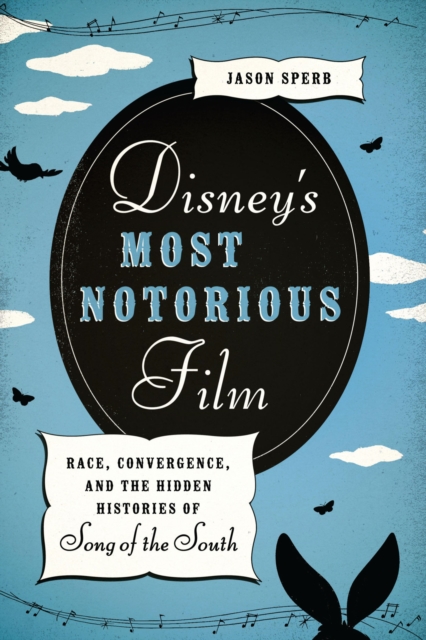
Disney's most notorious film : race, convergence, and the hidden histories of Song of the South
The Walt Disney Company offers a vast universe of movies, television shows, theme parks, and merchandise, all carefully crafted to present an image of wholesome family entertainment. Yet Disney also produced one of the most infamous Hollywood films, Song of the South. Using cartoon characters and live actors to retell the stories of Joel Chandler Harris, SotS portrays a kindly black Uncle Remus who tells tales of Brer Rabbit, Brer Fox, and the \"Tar Baby\" to adoring white children. Audiences and critics alike found its depiction of African Americans condescending and outdated when the film opened in 1946, but it grew in popularity-and controversy-with subsequent releases. Although Disney has withheld the film from American audiences since the late 1980s, SotS has an enthusiastic fan following, and pieces of the film-such as the Oscar-winning \"Zip-a-Dee-Doo-Dah\"-remain throughout Disney's media universe. Disney's Most Notorious Film examines the racial and convergence histories of Song of the South to offer new insights into how audiences and Disney have negotiated the film's controversies over the last seven decades. Jason Sperb skillfully traces the film's reception history, showing how audience perceptions of SotS have reflected debates over race in the larger society. He also explores why and how Disney, while embargoing the film as a whole, has repurposed and repackaged elements of SotS so extensively that they linger throughout American culture, serving as everything from cultural metaphors to consumer products.
eBook

Misinformation and Mass Audiences
Lies and inaccurate information are as old as humanity, but never before have they been so easy to spread. Each moment of every day, the Internet and broadcast media purvey misinformation, either deliberately or accidentally, to a mass audience on subjects ranging from politics to consumer goods to science and medicine, among many others. Because misinformation now has the potential to affect behavior on a massive scale, it is urgently important to understand how it works and what can be done to mitigate its harmful effects. Misinformation and Mass Audiences brings together evidence and ideas from communication research, public health, psychology, political science, environmental studies, and information science to investigate what constitutes misinformation, how it spreads, and how best to counter it. The expert contributors cover such topics as whether and to what extent audiences consciously notice misinformation, the possibilities for audience deception, the ethics of satire in journalism and public affairs programming, the diffusion of rumors, the role of Internet search behavior, and the evolving efforts to counteract misinformation, such as fact-checking programs. The first comprehensive social science volume exploring the prevalence and consequences of, and remedies for, misinformation as a mass communication phenomenon, Misinformation and Mass Audiences will be a crucial resource for students and faculty researching misinformation, policymakers grappling with questions of regulation and prevention, and anyone concerned about this troubling, yet perhaps unavoidable, dimension of current media systems.
eBook

Transmedia Television
The early years of the twenty-first century have seen dramatic changes within the television industry. The development of the internet and mobile phone as platforms for content directly linked to television programming has offered a challenge to the television set’s status as the sole domestic access point to audio-visual dramatic content. Viewers can engage with ‘television’ without ever turning a television set on. Whilst there has already been some exploration of these changes, little attention has been paid to the audience and the extent to which these technologies are being integrated into their daily lives. Focusing on a particular period of rapid change and using case studies including Spooks, 24 and Doctor Who, Transmedia Television considers how the television industry has exploited emergent technologies and the extent to which audiences have embraced them. How has television content been transformed by shifts towards multiplatform strategies? What is the appeal of using game formats to lose oneself within a narrative world? How can television, with its ever larger screens and association with domesticity, be reconciled with the small portable, public technology of the mobile phone? What does the shift from television schedules to online downloading mean for our understanding of ‘the television audience’? Transmedia Television will consider how the relationship between television and daily life has been altered as a result of the industry’s development of emerging new media technologies, and what ‘television’ now means for its audiences.
eBook

Study of Source Credibility of the Casual Live Streamers and Impact of Streaming Environment Atmosphere on Audiences' Perceived Value
As the advancement and innovation of network technology, live steam has become a new application of technology. This also soared the production value of live stream platforms. Though integrating the trend of eSport and live stream technology, the gaming industry has flourished in recent years. In the past, game companies looked for celebrities for endorsement; however, these companies favor streamers these days. Streaming platforms gradually become new targets where more marketers are putting their adverts. This study focuses on the relationship between source credibility, environment atmosphere, perceived value and purchase intention toward different audience involvement. This study finds out 1.Attractiveness and expertise of a streamer and the streaming atmosphere have positive and notable influence on determining audiences' perceived value. 2. Perceived value positively affects audiences' purchase intention. 3. Audience involvement positively enhances the streamer's expertise on the impacts of perceived va
Journal Article

The Listener's Voice
During the Jazz Age and Great Depression, radio broadcasters did not conjure their listening public with a throw of a switch; the public had a hand in its own making.The Listener's Voicedescribes how a diverse array of Americans-boxing fans, radio amateurs, down-and-out laborers, small-town housewives, black government clerks, and Mexican farmers-participated in the formation of American radio, its genres, and its operations.
Before the advent of sophisticated marketing research, radio producers largely relied on listeners' phone calls, telegrams, and letters to understand their audiences. Mining this rich archive, historian Elena Razlogova meticulously recreates the world of fans who undermined centralized broadcasting at each creative turn in radio history. Radio outlaws, from the earliest squatter stations and radio tube bootleggers to postwar \"payola-hungry\" rhythm and blues DJs, provided a crucial source of innovation for the medium. Engineers bent patent regulations. Network writers negotiated with devotees. Program managers invited high school students to spin records. Taken together, these and other practices embodied a participatory ethic that listeners articulated when they confronted national corporate networks and the formulaic ratings system that developed.
Using radio as a lens to examine a moral economy that Americans have imagined for their nation,The Listener's Voicedemonstrates that tenets of cooperation and reciprocity embedded in today's free software, open access, and filesharing activities apply to earlier instances of cultural production in American history, especially at times when new media have emerged.
eBook

Audiences : a sociological theory of performance and imagination
Audiences are problematic and the study of audiences has represented a key site of activity in the social sciences and humanities. Offering a timely review of the past 50 years of theoretical and methodological debate Audiences argues the case for a paradigmatic shift in audience research. This shift, argue the authors, is necessitated by the emergence of the `diffused audience'. Audience experience can no longer be simply classified as `simple' or `mass', for in modern advanced capitalist societies, people are members of an audience all the time. Being a member of an audience is no longer an exceptional event, nor even an everyday event, rather it is constitutive of everyday life. This book offers an invaluable rev
eBook