
Catalogue Search | MBRL


Are you sure you want to remove the book from the shelf?

{{itemTitle}}
205
result(s) for
"Aufstand."
Sort by:

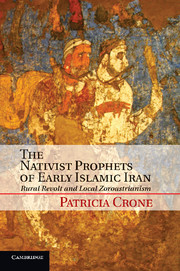
The Nativist Prophets of Early Islamic Iran
Patricia Crone's book is about the Iranian response to the Muslim penetration of the Iranian countryside, the revolts subsequently triggered there and the religious communities that these revolts revealed. The book also describes a complex of religious ideas that, however varied in space and unstable over time, has demonstrated a remarkable persistence in Iran across a period of two millennia. The central thesis is that this complex of ideas has been endemic to the mountain population of Iran and occasionally become epidemic with major consequences for the country, most strikingly in the revolts examined here and in the rise of the Safavids who imposed Shi'ism on Iran. This learned and engaging book by one of the most influential scholars of early Islamic history casts entirely new light on the nature of religion in pre-Islamic Iran and on the persistence of Iranian religious beliefs both outside and inside Islam after the Arab conquest.
eBook

The 1857 Indian Uprising and the British Empire
Situating the 1857 Indian uprising within an imperial context, Jill C. Bender traces its ramifications across the four different colonial sites of Ireland, New Zealand, Jamaica, and southern Africa. Bender argues that the 1857 uprising shaped colonial Britons' perceptions of their own empire, revealing the possibilities of an integrated empire that could provide the resources to generate and 'justify' British power. In response to the uprising, Britons throughout the Empire debated colonial responsibility, methods of counter-insurrection, military recruiting practices, and colonial governance. Even after the rebellion had been suppressed, the violence of 1857 continued to have a lasting effect. The fears generated by the uprising transformed how the British understood their relationship with the 'colonized' and shaped their own expectations of themselves as 'colonizer'. Placing the 1857 Indian uprising within an imperial context reminds us that British power was neither natural nor inevitable, but had to be constructed.
Book

Revolts and Political Violence in Early Modern Imagery
The first in-depth analysis of how early modern people produced and consumed images of revolts and political violence, drawing on evidence from Russia, China, Hungary, Portugal, Germany, North America and other regions.
eBook


Tales of high priests and taxes
In the wake of the conquests of Alexander the Great, the ancient world of the Bible—the ancient Near East—came under Greek rule, and in the land of Israel, time-old traditions and Greek culture met. But with the accession of King Antiochos IV, the soft power of culture was replaced with armed conflict, and soon the Jews rebelled against their imperial masters, as recorded in the Biblical books of the Maccabees. Whereas most scholars have dismissed the biblical accounts of religious persecution and cultural clash, Sylvie Honigman combines subtle literary analysis with deep historical insight to show how their testimony can be reconciled with modern historical analysis by conversing with the biblical authors, so to speak, in their own language to understand the way they described their experiences. Honigman contends that these stories are not mere fantasies but genuine attempts to cope with the massacre that followed the rebellion by giving it new meaning. This reading also discloses fresh political and economic factors.
eBook
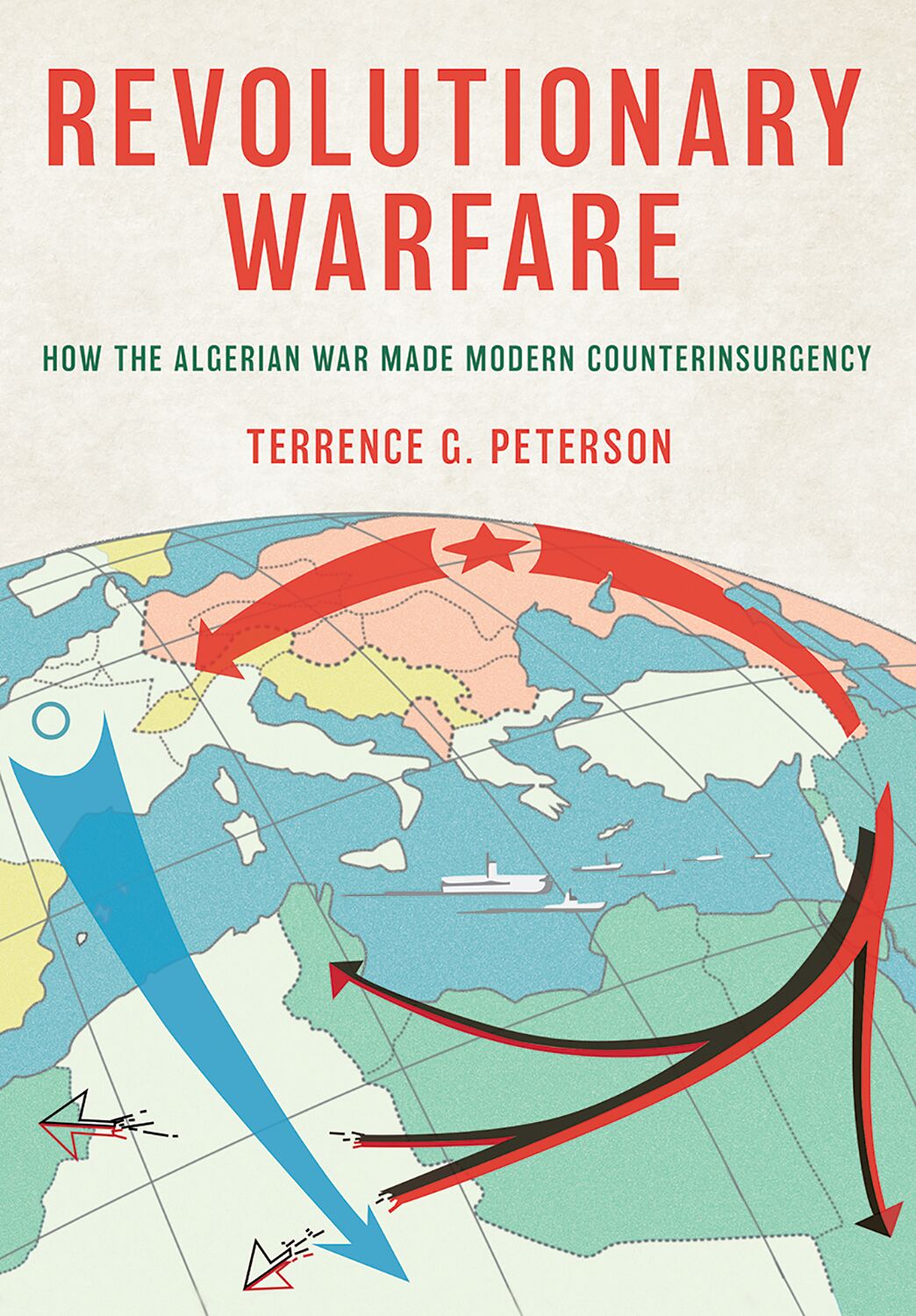
Revolutionary Warfare
Revolutionary Warfare
investigates how efforts to counter a revolution could also
be revolutionary. The Algerian War fractured the French
Empire, destroyed the legitimacy of colonial rule, and helped
launch the Third Worldist movement for the liberation of the Global
South. By tracing how French generals, officers, and civil
officials sought to counter Algerian independence with their own
project of radical social transformation, Terrence G. Peterson
reveals that the conflict also helped to transform the nature of
modern warfare.
The French war effort was never defined solely by repression. As
Peterson details, it also sought to fashion new forms of
surveillance and social control that could capture the loyalty of
Algerians and transform Algerian society. Hygiene and medical aid
efforts, youth sports and education programs, and psychological
warfare campaigns all attempted to remake Algerian social
structures and bind them more closely to the French state. In
tracing the emergence of such programs, Peterson reframes the
French war effort as a project of armed social reform that sought
not to preserve colonial rule unchanged, but to revolutionize it in
order to preserve it against the global challenges of
decolonization.
Revolutionary Warfare demonstrates how French officers'
efforts to transform warfare into an exercise in social engineering
not only shaped how the Algerian War unfolded from its earliest
months, but also helped to forge a paradigm of warfare that
dominated strategic thinking during the Cold War and after:
counterinsurgency.
eBook

The Electoral Legacies of Civil War Violence: Theory and Evidence from a Maoist-affected State in India
The literature on the electoral legacies of civil war violence offers a puzzle. While one strand of research argues that indiscriminate rebel violence will have no effect on the electoral success of rebel-aligned parties, another argues that such violence will harden anti-rebel political attitudes in the long term. This article reconciles these conflicting predictions by examining post-conflict political attitudes over the short and medium term. We hypothesize that the organizational weaknesses that both underpin and result from indiscriminate rebel violence during civil war will constrain the vote mobilization strategies of rebel-aligned parties in post-civil war elections, eventually leading to a reversal of fortune in the medium term. We assess our hypothesis in the empirical context of the state of West Bengal in India, whose southwestern districts, collectively known as Junglemahal, experienced a spell of Maoist insurgency from 2005–2014. Taking a mixed methods approach, combining surveys across West Bengal and within Junglemahal with ethnographic research, we show that voter assessments of pre-election violence had changed sharply between the 2016 legislative assembly and 2019 parliamentary elections with violence triggering a backlash against the rebel-aligned incumbent party in 2019, but not in 2016.
Journal Article

The Arab spring
In this landmark book, Hamid Dabashi argues that the revolutionary uprisings from Morocco to Iran and from Syria to Yemen were driven by a 'delayed defiance' - a point of rebellion against domestic tyranny and globalized disempowerment alike - that signifies no less than the end of Postcolonialism.
eBook

Pretext for Mass Murder
In the early morning hours of October 1, 1965, a group calling itself the September 30th Movement kidnapped and executed six generals of the Indonesian army, including its highest commander. The group claimed that it was attempting to preempt a coup, but it was quickly defeated as the senior surviving general, Haji Mohammad Suharto, drove the movement’s partisans out of Jakarta. Riding the crest of mass violence, Suharto blamed the Communist Party of Indonesia for masterminding the movement and used the emergency as a pretext for gradually eroding President Sukarno’s powers and installing himself as a ruler. Imprisoning and killing hundreds of thousands of alleged communists over the next year, Suharto remade the events of October 1, 1965 into the central event of modern Indonesian history and the cornerstone of his thirty-two-year dictatorship.
Despite its importance as a trigger for one of the twentieth century’s worst cases of mass violence, the September 30th Movement has remained shrouded in uncertainty. Who actually masterminded it? What did they hope to achieve? Why did they fail so miserably? And what was the movement’s connection to international Cold War politics? In
Pretext for Mass Murder , John Roosa draws on a wealth of new primary source material to suggest a solution to the mystery behind the movement and the enabling myth of Suharto’s repressive regime. His book is a remarkable feat of historical investigation.
Finalist, Social Sciences Book Award, the International Convention of Asian Scholars
eBook