
Catalogue Search | MBRL


Are you sure you want to remove the book from the shelf?

{{itemTitle}}
20
result(s) for
"Australian fiction -- Women authors -- History and criticism"
Sort by:


Shooting Blanks at the Anzac Legend
War is traditionally considered a male experience. By extension,
the genre of war literature is a male-dominated field, and the tale
of the battlefield remains the privileged (and only canonised) war
story.
In Australia, although women have written extensively about
their wartime experiences, their voices have been distinctively
silenced. Shooting Blanks at the Anzac Legend calls for a
re-definition of war literature to include the numerous voices of
women writers, and further recommends a re-reading of Australian
national literatures, with women's war writing foregrounded, to
break the hold of a male-dominated literary tradition and pass on a
vital, but unexplored, women's tradition.
Shooting Blanks at the Anzac Legend examines the rich
body of World Wars I and II and Vietnam War literature by
Australian women, providing the critical attention and treatment
that they deserve. Donna Coates records the reaction of Australian
women writers to these conflicts, illuminating the complex role of
gender in the interpretation of war and in the cultural history of
twentieth-century Australia.
By visiting an astonishing number of unfamiliar, non-canonical
texts, Shooting Blanks at the Anzac Legend profoundly
alters our understanding of how Australian women writers have
interpreted war, especially in a nation where the experience of
colonising a frontier has spawned enduring myths of identity and
statehood.
eBook
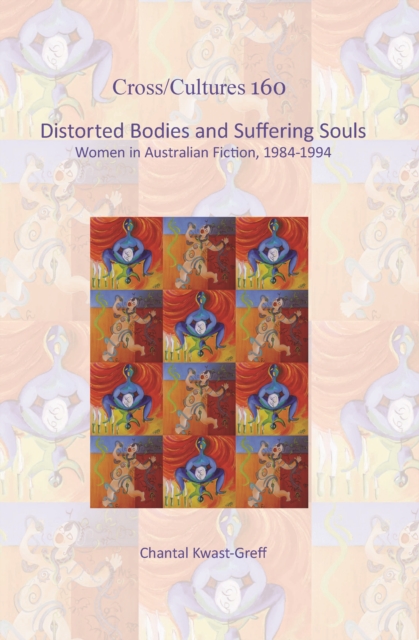
Distorted Bodies and Suffering Souls
Chaos. Pain. Self-mutilation. Women starve themselves. They burn or slash their own flesh or their babies' throats, and slam their newborns against walls. Their bodies are the canvases on which the suffering of the soul carves itself with knife and razor. In Australian fiction written by women between 1984 and 1994, female characters inscribe their inner chaos on their bodies to exert whatever power they have over themselves. Their self-inflicted pain is both reaction and language, the bodily sign not only of their enfeeblement but also to a certain extent of their empowerment, of themselves and their world. The texts considered in this book - chiefly by Margaret Coombs, Kate Grenville, Fiona Place, Penelope Rowe, Leone Sperling, and Amy Witting - function as both defiance and acceptance of prevailing discourses of femininity and patriarchy, between submission and a possible future. The narratives of anorexia, bulimia, fatness, self-mutilation, incest, and murder shock the reader into an understanding of deeper meanings of body and soul, and prompt a tentative interpretation of fiction in relation to the world of 'real' women and men in contemporary (white) Australia. This is affective literature with the reader in voyeuristic complicity. Holding up the mirror of fiction, the women writers act perforce as a social lever, their narratives as Bildungsromane. But there is a risk, that of reinforcing stereotypes and codes of conduct which, supposedly long gone, still represent women as victims. Why are the female characters (self-)destroyers and victims? Why are they not heroes, saviours or conquerors? If women read about women / themselves and feel pity for the Other they read about, they will also feel pity for themselves: there is little happiness in being a woman. But infanticide and distorting the body are problem-solving behaviours. In truth,
the bodies of the female characters bear the marks and scars of the history of their mothers and the history of their grandmothers - indeed, that of their own: the history of survivors.
eBook
Writing Woman, Writing Place
Contemporary women writers in these two societies are still writing about similar issues as did earlier generations of women, such as exclusions from discourses of nation, a problematic relationship to place and belonging, relations with indigenous people and the way in which women's subjectivity has been constructed through national stereotypes and representations. This book describes and analyses some contemporary responses to 'writing woman, writing place' through close readings of particular texts that explore these issues. Three main strands run through the readings offered in Writing Woman, Writing Place - the theme of violence and the violence of representational practice itself, the revisioning of history, and the writers' consciousness of their own paradoxical subject-position within the nation as both privileged and excluded. Texts by established writers from both Australia and South Africa are examined in this context, including international prize-winning novelists Kate Grenville and Thea Astley from Australia and Nadine Gordimer from South Africa, as well as those by newly-emerging and younger writers. This book will be of essential interest to students and academics within the fields of Postcolonial Literature and Women's Writing.
Sue Kossew was born in South Africa and spent her childhood in Zambia. She lived and taught in England and has been in Australia since 1987. She is a senior lecturer in the School of English at the University of New South Wales. Her previous publications have been in the field of South African and Australian literature, notably on J.M. Coetzee, André Brink and Nadine Gordimer.
\"The strength of Kossew’s book lies especially in her detailed, rich, and thoughtful readings of the selected works. Writing Woman, Writing Place takes a critically rigorous approach and offers meticulous attention to the possibilities that emerge at the crossover of colonial and postcolonial identity formation, especially as this relates to place, space, time, and, crucially, gender.\"
--H-Net Reviews
eBook

TransCanadian Feminist Fictions
In this contradictory era of uneven globalization, borders multiply yet fantasies of borderlessness prevail. Particularly since September 11th, this paradox has shaped deeply the lives of border-crossing subjects such as the queer, the refugee, and the activist within and beyond Canadian frontiers. In search of creative ways to engage with the conundrums related to how borders mould social and bodily space, Libe García Zarranz formulates a new cross-border ethic through post-9/11 feminist and queer transnational writing in Canada. Drawing on material feminism, critical race studies, non-humanist philosophy, and affect theory, she proposes a renewed understanding of relationality beyond the lethal binaries that saturate everyday life. TransCanadian Feminist Fictions considers the corporeal, biopolitical, and affective dimensions of border crossing in the works of Dionne Brand, Emma Donoghue, Hiromi Goto, and Larissa Lai. Intersecting the genres of memoir, fiction, poetry, and young adult literature, García Zarranz shows how these texts address the permeability of boundaries and consider the ethical implications for minoritized populations. Urging readers to question the proclaimed glamours of globality, TransCanadian Feminist Fictions responds to a time of increasing inequality, mounting racism, and feminist backlash.In this contradictory era of uneven globalization, borders multiply yet fantasies of borderlessness prevail. Particularly since September 11th, this paradox has shaped deeply the lives of border-crossing subjects such as the queer, the refugee, and the activist within and beyond Canadian frontiers. In search of creative ways to engage with the conundrums related to how borders mould social and bodily space, Libe García Zarranz formulates a new cross-border ethic through post-9/11 feminist and queer transnational writing in Canada. Drawing on material feminism, critical race studies, non-humanist philosophy, and affect theory, she proposes a renewed understanding of relationality beyond the lethal binaries that saturate everyday life. TransCanadian Feminist Fictions considers the corporeal, biopolitical, and affective dimensions of border crossing in the works of Dionne Brand, Emma Donoghue, Hiromi Goto, and Larissa Lai. Intersecting the genres of memoir, fiction, poetry, and young adult literature, García Zarranz shows how these texts address the permeability of boundaries and consider the ethical implications for minoritized populations. Urging readers to question the proclaimed glamours of globality, TransCanadian Feminist Fictions responds to a time of increasing inequality, mounting racism, and feminist backlash.
eBook
Reading contemporary Indonesian muslim women writers
Most literary analysis of the canon of Indonesian literature overlooks its religious aspect. This book is the first to discuss the construction of gender and Islamic identities in literary writing by four prominent Indonesian Muslim women writers: Titis Basino P I, Ratna Indraswari Ibrahim, Abidah El Kalieqy and Helvy Tiana Rosa. The narratives of the four writers are rich sources for revealing the construction of Indonesian Muslim women's identities. Within their feminist reading the writers understand that gender roles are negotiable rather than inherent. In representing women in a variety of discourses they draw multi-faceted women struggling against repression and domination, and resisting their status as powerless.
Dit is het eerste boek waarin de verhouding tussen geslacht en islamitische identiteit in de Indonesische literatuur wordt onderzocht. Diah Ariani Arimbi doet dit aan de hand van vier schrijfsters: Titis Basino P I, Ratna Indraswari Ibrahim, Abidah El Kalieqy en Helvy Tiana Rosa. Het verhaal van deze vier vrouwen onthult de ware identiteit van Indonesische moslima's. Vanuit hun feministisch standpunt laten deze schrijfsters zien dat verhoudingen tussen man en vrouw niet statisch zijn, maar veranderlijk en onderhandelbaar. Arimbi schetst een innemend beeld van deze veelzijdige vrouwen en hun strijd tegen onderdrukking en discriminatie. Zij blijken allesbehalve weerloze zielen te zijn.
eBook
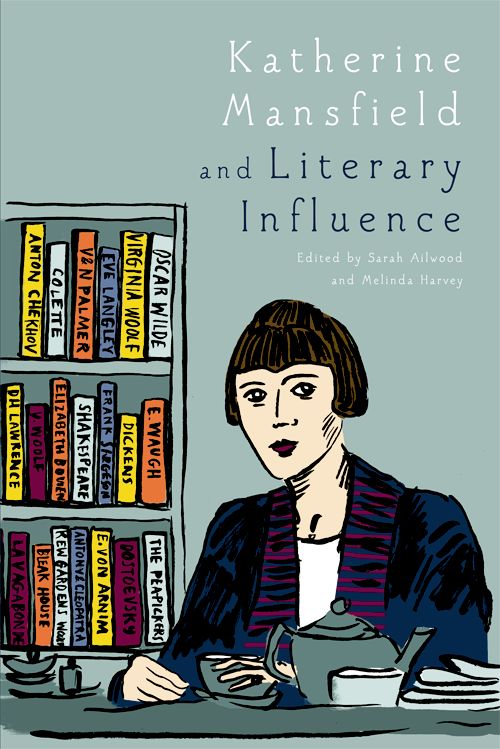
Katherine Mansfield and Literary Influence
Provides new reflections on literary influence using Katherine Mansfield as a case study
Katherine Mansfield and Literary Influence identifies Mansfield's involvement in six modes of literary influence - Ambivalence, Exchange, Identification, Imitation, Enchantment and Legacy. In so doing, it revisits key issues in Mansfield studies, including her relationships with Virginia Woolf, John Middleton Murry and S. S. Koteliansky, as well as the famous plagiarism case regarding Anton Chekhov. It also charts new territories for exploration, expanding the terrain of Mansfield's influence to include writers as diverse as Colette, Evelyn Waugh, Nettie Palmer, Eve Langley and Frank Sargeson.
Key Features
Extends upon models of literary influence that are oriented around the ideas of anxiety and coteries
Engages with and develops areas of scholarly inquiry investigating modernism as the product of social and intellectual networks
Offers new interpretations of Mansfield's relationships with writers with whom she is often associated, such as D H Lawrence, Anton Chekhov and Virginia Woolf
Traces new connections between Mansfield's work and the work of writers not previously linked to Mansfield, such as Evelyn Waugh, Colette and Nettie Palmer
eBook
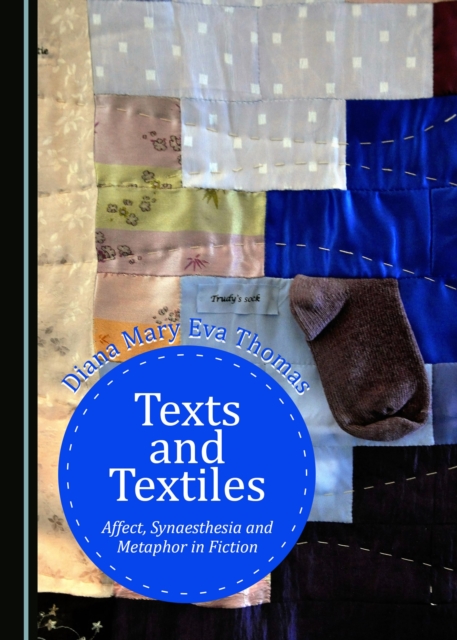
Texts and Textiles
This study shows how fiction that makes use of textiles as an essential element utilizes synaesthetic writing and synaesthetic metaphor to create an affective link to, and response in, the reader. These links and responses are examined using affect theory from Silvan Tomkins and Brian Massumi and work on synaesthesia by Richard Cytowic, Lawrence Marks, and V.S. Ramachandran, among others. Synaesthetic writing, including synaesthetic metaphors, has been explored in poetry since the 1920s and, more recently, in fiction, but these studies have been general in nature. By narrowing the field of investigation to those novels that specifically employ three types of hand-crafted textiles (quilt-making, knitting and embroidery), the book isolates how these textiles are used in fiction. The combination of synaesthesia, memory, metaphor and, particularly, synaesthetic metaphor in fiction with textiles in the text of the case studies selected, shows how these are used to create affect in readers, enhancing their engagement in the story. The work is framed within the context of the history of textile production and the use of textiles in fiction internationally, but concentrates on Australian authors who have used textiles in their writing. The decision to focus on Australian authors was taken in light of the quality and depth of the writing of textile fiction produced in Australia between 1980 and 2005 in the three categories of hand-crafted textiles - quilt-making, knitting and embroidery. The texts chosen for intensive study are: Kate Grenville's The Idea of Perfection (1999, quilting); Marele Day's Lambs of God (1997, knitting) and Anne Bartlett's Knitting (2005, knitting); Jessica Anderson's Tirra Lirra by the River (1978, embroidery) and Marion Halligan's Spider Cup (1990, embroidery).
eBook

Unnatural narratology : extensions, revisions, and challenges
Unnatural Narratology: Extensions, Revisions, and Challenges offers a number of developments, refinements, and defenses of key aspects of unnatural narrative studies.The first section applies unnatural narrative theory and analysis to ideologically charged areas such as feminism, postcolonial studies, cultural alterity, and subaltern discourse.
eBook

New African Writing and the Question of Audience
Postcolonial novels that tend to become popularly acclaimed in Western Europe and North America share a number of features: they are predominantly written by women; they are presented from the perspectives of culturally innocent or marginal protagonists; they thematize the emotional consequences of familial or public upheavals; and they are not too long but, if they are, they compensate by being thematically, formally, or linguistically unadventurous. This is the primary context of reception of much contemporary African writing, and it is not surprising that new works of fiction by African writers feed into this typology. The novel remains about the most inclusive of literary forms, but a certain kind of novel has become so dominant today as to be viewed as the gold standard, especially when this is measured by popular or critical success. This paper discusses these features in relation to three issues: the structure of the prose form, especially the novel; the external factors of economics and symbolic capital; and the politics of postcolonial stories. The paper argues that the process of cultural politics through which symbolic capital is reproduced in postcolonial stories is a function of what writers perceive to be the market of their works. By reading against the grain of Allah Is Not Obliged (Ahmadou Kourouma) and Purple Hibiscus (Chimamanda Ngozi Adichie), the paper suggests that contemporary African writing remains fraught with a paradox, the productive foreignness of a sensibility that is estranged from its own interests.
Journal Article