
Catalogue Search | MBRL


Are you sure you want to remove the book from the shelf?

{{itemTitle}}
119
result(s) for
"Australian literature-History and criticism"
Sort by:

Writing Australian unsettlement : Modes of Poetic Invention, 1796-1945
\"This book rewrites the history of Australian literature, through reading the unorthodox poetics of colonial life writing, from letters to tree carvings. Farrell examines page, punctuation and grammar to present a new version of Australian literature, including texts by poets, bushrangers, Indigenous stockmen, a Chinese miner and migrant women\" -- Provided by publisher.
Book
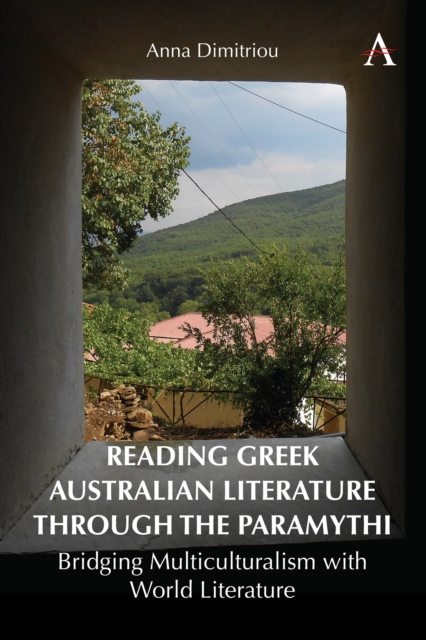
Reading Greek Australian Literature Through the Paramythi
This is a comparative textual analysis of a body of relatively neglected works by Greek Australian writers Dimitris Tsaloumas, Antigone Kefala, Stylianos Charkianakis, Dean Kalimnios, Christos Tsiolkas, Fotini Epanomitis and Helen Koukoutsis. The focus is on reading their texts as a bridge between multiculturalism and world literature given each writer identifies in various ways with peripheral cosmopolitanism as they merge high-brow literary forms with the quotidian paramythi, or the storytelling oral tradition. The different ways they do this registers the writers' ambivalent relationship with their origins through their transculturally mediated expression. Discovering new possibilities in literary texts which have oral traces becomes a productive way to look at the question of translatability as posed by scholars of multiculturalism and world literature, such as Sneja Gunew, Emily Apter and Pheng Cheah.
eBook


The Routledge Companion to Australian Literature
In recent years, Australian literature has experienced a revival of interest both domestically and internationally. The increasing prominence of work by writers like Christos Tsiolkas, heightened through television and film adaptation, as well as the award of major international prizes to writers like Richard Flanagan, and the development of new, high-profile prizes like the Stella Prize have all reinvigorated interest in Australian literature both at home and abroad. This Companion emerges as a part of that reinvigoration, considering anew the history and development of Australian literature and its key themes, as well as tracing the transition of the field through those critical debates. It considers works of Australian literature on their own terms, as well as positioning them in their critical and historical context and their ethical and interactive position in the public and private spheres. With an emphasis on literature's responsibilities, this book claims Australian literary studies as a field uniquely positioned to expose the ways in which literature engages with, produces, and is produced by its context, provoking a critical re-evaluation of the concept of the relationship between national literatures, cultures, and histories, and the social function of literary texts.
eBook


Selected Essays on Canadian, Australian and New Zealand Literatures
These selected essays on Canadian, Australian and New Zealand literatures often, although not always, consider individual texts and literary authors within the post-colonial paradigm. They discuss some of the most prominent, mostly contemporary literary authors in these genres, including, for example, Margaret Atwood, C. K. Stead, Christopher Koch, David Malouf, Richard Flanagan, Andrew Riemer, Ouyang Yu, A. D. Hope, Teju Cole from the USA, and others. Several studies focus on significant issues in recent diasporic and transcultural writing in English, including the specific Slovenian literary production, while some of the essays examine the literary representations of a country in a particular national collective consciousness.
eBook

The Cambridge companion to the Australian novel
Covering writers from Michelle de Kretser to Gerald Murnane, Alexis Wright to Helen Garner, 'The Cambridge Companion to the Australian Novel' provides a contemporary view of Australian fiction, including unprecedented coverage of First Nations authors.
Book

Locating Australian Literary Memory
Locating Australian Literary Memory' explores the cultural meanings suffusing local literary commemorations. It is orientated around eleven authors – Adam Lindsay Gordon, Joseph Furphy, Henry Handel Richardson, Henry Lawson, A. B. ‘Banjo’ Paterson, Nan Chauncy, Katharine Susannah Prichard, Eleanor Dark, P. L. Travers, Kylie Tennant and David Unaipon – who have all been celebrated through a range of forms including statues, huts, trees, writers’ houses and assorted objects. Brigid Magner illuminates the social memory residing in these monuments and artefacts, which were largely created as bulwarks against forgetting. Acknowledging the value of literary memorials and the voluntary labour that enables them, she traverses the many contradictions, ironies and eccentricities of authorial commemoration in Australia, arguing for an expanded repertoire of practices to recognise those who have been hitherto excluded.
eBook


Australian Literature
The Oxford Studies in Postcolonial Literatures series offers stimulating and accessible introductions to definitive topics and key genres and regions within the rapidly diversifying field of postcolonial literary studies in English. In a provocative contribution to the series, Graham Huggan presents fresh readings of an outstanding, sometimes deeply unsettling national literature whose writers and readers just as unmistakably belong to the wider world. Australian literature is not the unique province of Australian readers and critics; nor is its exclusive task to provide an internal commentary on changing national concerns. Huggan’s book adopts a transnational approach, motivated by postcolonial interests, in which contemporary ideas taken from postcolonial criticism and critical race theory are productively combined and imaginatively transformed. Rejecting the fashionable view that Australia is not, and never will be, postcolonial, Huggan argues on the contrary that Australian literature, like other settler literatures, requires close attention to postcolonial methods and concerns. A postcolonial approach to Australian literature, he suggests, is more than just a case for a more inclusive nationalism; it also involves a general acknowledgement of the nation’s changed relationship to an increasingly globalized world. As such, the book helps to deprovincialize Australian literary studies. Australian Literature also contributes to debates about the continuing history of racism in Australia-a history in which the nation’s literature has played a constitutive role, as both product and producer of racial tensions and anxieties, nowhere more visible than in the discourse it has produced about race, both within and beyond the national context.
eBook