
Catalogue Search | MBRL


Are you sure you want to remove the book from the shelf?

{{itemTitle}}
1,047
result(s) for
"Austria Economic policy."
Sort by:


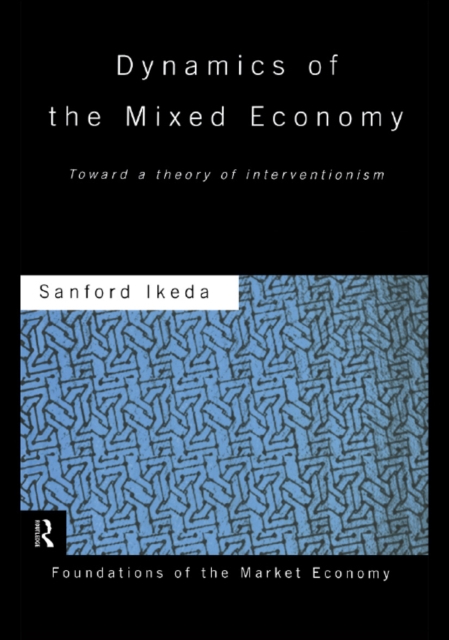
Dynamics of the Mixed Economy
Dynamics of the Mixed Economy applies the insights of modern Austrian political economy to examine economic policy in mixed economies. It compares and contrasts standard approaches to the growth of the state (including public choice) with that of modern Austrian political economy; examines in detail the nature and operation of the interventionist process in the context of nationalization, regulation and the welfare state; analyzes conditions that produce instability under laissez-faire capitalism; argues that the interventionist process is a 'spontaneous order'; and offers several 'pattern predictions' regarding the character and behaviour of really existing economies.
eBook

Austria
KEY ISSUESContext: Austria did not experience a severe boom-bust cycle and came through thecrisis relatively well. The main impact was on the banking sector and public debt. With cyclical slack low and the recovery taking hold, this is the time to resolve crisis legacies and address long-standing structural issues.Outlook and risks: The recovery is taking hold, driven by a pick-up in exports. The most acute risks are mainly geopolitical and could in particular lead to financial spillovers.Financial sector policies: Bank restructuring should now be rapidly completed and bad asset disposal accel
Book

Austria : 2014 Article IV Consultation-Staff Report; Press Release; and Statement by the Executive Director for Austria
KEY ISSUES Context: Austria did not experience a severe boom-bust cycle and came through the crisis relatively well. The main impact was on the banking sector and public debt. With cyclical slack low and the recovery taking hold, this is the time to resolve crisis legacies and address long-standing structural issues. Outlook and risks: The recovery is taking hold, driven by a pick-up in exports. The most acute risks are mainly geopolitical and could in particular lead to financial spillovers. Financial sector policies: Bank restructuring should now be rapidly completed and bad asset disposal accelerated. Large internationally active banks should stand ready for further capital increases, and the EU banking union framework needs to be swiftly transposed at the national level. Public expenditure reforms: More decisive expenditure reforms in key areas such as pensions, health care, subsidies, and fiscal federalism would generate savings that could be used for both an accelerated debt reduction and lower labor taxation. Boosting potential output growth: Enhancing IT adaptation, improving the performance of the education system, facilitating access to financing for innovative start- ups, and reducing administrative barriers for new businesses would raise potential growth and labor productivity.
eBook

OECD Reviews of Innovation Policy: Austria 2018
Over the past two decades, Austria has become one of the most R&D intensive economies among OECD countries and in the world, dedicating 3.1% of its GDP on R&D in 2016, the second highest figure in the European Union. To fully harness this R&D capacity, Austrian innovation policy needs to put a stronger emphasis on efficiency in transforming R&D inputs into impacts. To achieve higher impacts, Austria also needs to steer its research and innovation system towards leadership excellence in global markets. This requires enhanced international attractiveness for top-level researchers and talent, and a conducive environment for highly innovative enterprises. Austria could also benefit from strengthening R&D and innovation to support key transitions, such as digitalisation and Industry 4.0, and to tackle key societal challenges. The STI policy mix and governance arrangements should be adapted accordingly.
eBook

Dynamics of the Mixed Economy
Dynamics of the Mixed Economy applies the insights of modern Austrian political economy to examine economic policy in mixed economies. It compares and contrasts standard approaches to the growth of the state (including public choice) with that of modern Austrian political economy; examines in detail the nature and operation of the interventionist process in the context of nationalization, regulation and the welfare state; analyzes conditions that produce instability under laissez-faire capitalism; argues that the interventionist process is a 'spontaneous order'; and offers several 'pattern pre
Book

Social concertation in times of austerity
A term specifically found in European politics, social concertation refers to cooperation between trade unions, governments and employers in public policy-making.Social Concertation in Times of Austerityinvestigates the political underpinnings of social concertation in the context of European integration. Alexandre Afonso focuses on the regulation of labor mobility and unemployment protection in Austria and Switzerland, two of Europe's most prosperous countries, and he looks at nonpartisan policymaking as a strategy for compromise. With this smart, new study, Afonso powerfully enters the debate on the need for a shared social agenda in post-crisis Western Europe.
eBook

The size of government : measurement, methodology and official statistics
What is the optimum size of government? And how does it relate to economic growth? Indeed, how do we measure it? This book explores the growing economic power of government across the EU and offers an insightful analysis of public sector dynamics and the shortcomings of official statistics.
eBook

Exogenously Led and Policy-Supported New Path Development in Peripheral Regions: Analytical and Synthetic Routes
The aim of this article is to explore how new industrial paths emerge and grow in peripheral regional economies. Current conceptualizations of regional path development are based on experiences from core regions and fail to provide satisfactory theoretical explanations of new path-creating activities in peripheral areas. Our conceptual approach combines the notions of path development and knowledge bases, enabling us to distinguish between an analytic and a synthetic route of path creation. We argue that due emphasis should be given to exogenous sources of new path development and policy actions in order to understand how analytical and synthetic routes unfold in peripheral regions. These factors are still underappreciated in prevailing models of path creation. The article contains an analysis of the emergence and evolution of new industries in two peripheral regions in Norway and Austria: the electronics and software industry in Arendal-Grimstad in southeastern Norway, and the software industry in Mühlviertel in Upper Austria. The two industries have developed differently: through the synthetic route based on the emergence and restructuring of manufacturing firms in Arendal-Grimstad and through the analytical route building on the establishment of research facilities in Mühlviertel. Our analysis suggests that the inflow of new analytical and synthetic knowledge from exogenous sources and various types of policy interventions have been vital in sparking the formation of new industrial paths in both regions. The findings clearly challenge uniform, narrowly conceptualized models of industrial evolution and support recent work that advocates a broader theoretical framework to capture exogenously led and policy-supported path-creation processes.
Journal Article