
Catalogue Search | MBRL


Are you sure you want to remove the book from the shelf?

{{itemTitle}}
225
result(s) for
"Austro-Hungarian Empire"
Sort by:

Rationed life
Far from the battlefront, hundreds of thousands of workers toiled in Bohemian factories over the course of World War I, and their lives were inescapably shaped by the conflict. In particular, they faced new and dramatic forms of material hardship that strained social ties and placed in sharp relief the most mundane aspects of daily life, such as when, what, and with whom to eat. This study reconstructs the experience of the Bohemian working class during the Great War through explorations of four basic spheres—food, labor, gender, and protest—that comprise a fascinating case study in early twentieth-century social history.
eBook
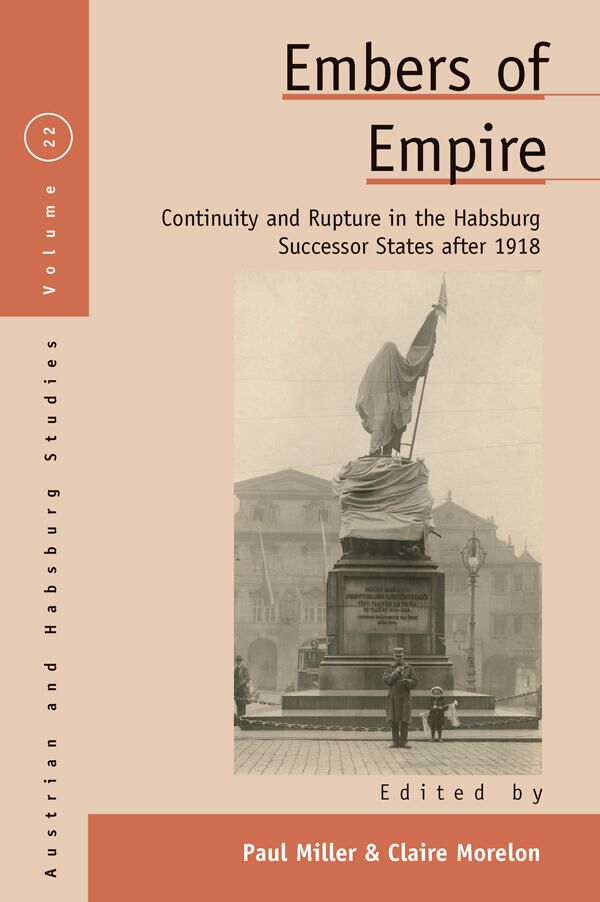
Embers of empire : continuity and rupture in the Habsburg successor states after 1918
The collapse of the Habsburg Monarchy at the end of World War I ushered in a period of radical change for East-Central European political structures and national identities. Yet this transformed landscape inevitably still bore the traces of its imperial past. Breaking with traditional histories that take 1918 as a strict line of demarcation, this collection focuses on the complexities that attended the transition from the Habsburg Empire to its successor states. In so doing, it produces new and more nuanced insights into the persistence and effectiveness of imperial institutions, as well as the sources of instability in the newly formed nation-states.
eBook
Embers of Empire
The collapse of the Habsburg Monarchy at the end of World War I ushered in a period of radical change for East-Central European political structures and national identities. Yet this transformed landscape inevitably still bore the traces of its imperial past. Breaking with traditional histories that take 1918 as a strict line of demarcation, this collection focuses on the complexities that attended the transition from the Habsburg Empire to its successor states. In so doing, it produces new and more nuanced insights into the persistence and effectiveness of imperial institutions, as well as the sources of instability in the newly formed nation-states.
eBook

Urban tissue typology and urban typology : special cases: Zagreb and Rijeka/ Tipologija gradskoga tkiva i urbana tipologija u razdoblju od 1868. do 1918. godine: posebni slucajevi: Zagreb i Rijeka
In the last third of the 19th century urban modernisation processes took place in Austria-Hungary. The urban evolution took new direction and created similar urban forms: the urban tissue types were studied in case of more than seventy towns and enabled the taxonomy of the urban types. Among the low number of special urban types found, two are situated in Croatia. The study is about to discuss and define the unique type of Zagreb and Rijeka. AUSTRIA-HUNGARY SPECIAL CASES URBAN FORMS URBAN TISSUE URBAN TYPOLOGY Tijekom zadnje trecine 19. stoljeca u Austro-Ugarskoj je doslo do modernizacije urbanih sredista. Razvoj gradova krenuo je novim smjerom pa su se razvile slicne urbane forme: na temelju analize vise od 70 gradova, izvedena je tipologija urbanog tkiva s pripadajucom taksonomskom organizacijom. Od malog broja specificnih urbanih tipova, dva se nalaze u Hrvatskoj. Ovaj rad istrazuje gradove Zagreb i Rijeku kao jedinstvene primjere. AUSTRO-UGARSKA POSEBNI SLUCAJEVI URBANE FORME URBANO TKIVO URBANA TIPOLOGIJA
Journal Article
Urban tissue typology and urban typology
In the last third of the 19th century urban modernisation processes took place in Austria-Hungary. The urban evolution took new direction and created similar urban forms: the urban tissue types were studied in case of more than seventy towns and enabled the taxonomy of the urban types. Among the low number of special urban types found, two are situated in Croatia. The study is about to discuss and define the unique type of Zagreb and Rijeka.
Journal Article

The Political Activities of a Catholic Church Leader During the Period of Secularization in Hungary
In the Kingdom of Hungary, the process of secularization started rather late. After 1867, the country was led by liberal political forces but, despite this, the separation of church and state continued for a long time. Some ecclesiastical dignitaries were members of the upper house by virtue of their position, which obviously slowed down the process of secularization. By the 1890s, there were still many legal institutions in which public power was exercised by the churches instead of the state. The most important of these was the area of marriage law. Civil marriage was introduced by the Marriage Act passed in 1894, the adoption of which was preceded by sharp parliamentary debates. This was the culmination of the first wave of discourse on secularization in the country, which ended with the adoption of the law. Károly Hornig was appointed bishop of Veszprém by the pope in 1888 and, as a result of his position, he became a member of the upper house. Assessing Hornig’s parliamentary activities is more difficult. Joining the spirit of Rerum Novarum, he spoke, for example, in favor of the prohibition of industrial workers from working on Sundays. On the other hand, in the debates about secularization, he advocated positions that would have hindered it, although he eventually withdrew several of his proposals due to counterarguments. In my work, with the help of Hornig’s example, I would like to present an important stage of the process of secularization in Hungary.
Journal Article
Art history and its institutions in the Austro-Hungarian Empire’ 28th-30th September 2023
The conference Art History and Its Institutions in the Austro-Hungarian Empire marked the 150th anniversary of the establishment in 1873 of the Commission of Art History of the Academy of Science and Arts in Cracow andwas held at the Wawel Royal Castle between 28th and 30th September 2023. The papers presented within four panel dealt with the institutional context of establishing the discipline, biographies of particular researchers and institutional mechanisms, art historical mileus and narratives around them and, last but not least, extra-European archaeology and art history.
Journal Article

Lost illusions in Interwar Europe: nation and self in Robert Musil
The work of Robert Musil Der Mann ohne Eigenschaften is not only considered one of the heights of the twentieth century novel, but also constitutes an essay of deep political theoretical depth on the nation and nationalism in interwar Europe. The crisis of the Austro-Hungarian Empire serves as the reason for the author to develop a deep critique of some of the fundamental theoretical foundations of modern political thought. This article shows how the systematic criticism to which essentialist and racist nationalism is subjected in the work is based on a review of two of the philosophical assumptions that make it possible: the linear conception of time and history, and the metaphysics of the subject. The analysis explores the deep relationship that exists in the work between individual identity (the subject) and collective identity (the nation), between the crisis of the modern unitary subject as an autonomous individual and the difficulties of the construction of a pluralist and democratic, inclusive concept of Nation.
Journal Article
Architects and builders in Mostar during the Austro-Hungarian monarchy
This paper presents the Mostar-based architects, builders, and surveyors in the period of the Austro-Hungarian Monarchy as well as in the last phase of the Ottoman Empire. It looks at their biographies, professional positions and authorship of some structures and urban planning interventions. It also analyses their professional work in terms of the circumstances, legislative and legal framework, and methods of work that eventually changed the image of the city. ARCHITECT AUSTRO-HUNGARIAN MONARCHY BUILDER SURVEYOR MOSTAR Tema su ovoga rada arhitekti, graditelji i mjernici (geometri) na prostoru grada Mostara u razdoblju austrougarske uprave, ali i u posljednjem razdoblju osmanske vladavine. Otkrivene su njihove biografije, pozicije koje su zauzimali u graditeljskoj strukturi i autorstvo nad objektima ili urbanistiekim potezima. UtvrDeni su uvjeti unutar kojih su radili, zakonodavno-pravni okvir i metode rada koje su dovele do promjena slike grada. ARHITEKT AUSTRO-UGARSKA MONARHIJA GRADITELJ MJERNIK MOSTAR This paper presents the Mostar-based architects, builders, and surveyors in the period of the Austro-Hungarian rule between 1878 and 1918. They brought to Mostar and the entire region of Bosnia and Herzegovina their own specific technical expertise as well as the fruits of human culture and civilization including a new administrative and legal framework for the regulation of all construction processes. Over a period of forty years they successfully transformed the city from an Ottoman backwater hick town into a Central European city at the turn of the centuries. Professional planning and design was adopted as a mandatory legally binding method of construction that could be performed only by the highly-educated licensed professionals such as architects, engineers, and land surveyors. The first part of the paper gives an analysis of the previous Ottoman period and its construction system. It presents the first engineers from Dalmatia who built the first infrastructure facilities. Among those was a Dalmatian Franjo Linardovic followed by his brother Antun. Some other builders came later: Slado and Moise from Dalmatia, Przozevski from Poland, and Hadden from England. It was at that time that Marko Fontana came as well. After that, the legal, administrative, local and national framework of construction activities between 1878 and 1918 was carefully analyzed. In order to improve the quality of construction, the City Council established a Department for Buildings in 1897. Their duty was to supervise the construction process and give their opinion concerning every building activity. The establishment of such a Council was not common practice at the time but quite specific for Mostar. The second part of the paper gives a thorough record of all the architects, builders, and surveyors including building technicians and construction entrepreneurs. The most renowned figures who used to work for many years in Mostar were Milos Komadina, Dorde Knezic, Dragutin Kohler, and Max David. Milos Komadina designed some of the most remarkable structures: the Franciscan monastery, the Girls' High School, the Trade School, Cejvanbeg's Mekteb, the District Office, and numerous single-family houses. In addition, he designed many bridges in the city and on the city's outskirts. His contribution to urban planning and design was substantial, primarily to the expansion of the existing streets and to the planning of new neighbourhoods. Dorde Knezic, although lacking formal engineering education, showed great drawing skills and talent as well as technical maturity. He actively promoted Secession in Mostar. He was one of the most significant builders of the city regarding the number of structures he produced and their quality. Some of his most remarkable achievements are the First Serbian Orthodox School in Luka, the Second Serbian Orthodox School in Carina, and numerous single-family houses. Dragutin Kohler made drawings for the first public toilets built in 1913. He worked as member of the appointed Commission for building the Harbour Bridge and the Customs Bridge. He made regulation plan for some of the most important city spaces: the Regulation plan of Kolodvorska and Ricina streets as well as a square and the streets of the Rondo complex. In the prolific body of work produced by Max David, some projects deserve to be singled out: the District Court building and the prison, the reconstruction of the Mostar Franciscan church with a new pulpit and a side altar, the Bishop's Palace and a few churches in the surroundings. Josip Vancas, Franz Blazek and Alexander Wittek were the most renowned figures among the architects from other environments who left indelible mark on Mostar architecture. Josip Vancas designed the Military Headquarters building which is nowadays a dilapidated municipality building. In 1901 he designed another military building and in 1910 the Land Bank Subsidiary on Main Street. Franz Blazek designed the Great High School, the Jubilee Elementary School, the Franz Josef Military Barracks in the south camp, building no 1 in the Konak military complex in Mostar and an unidentified military building. Alexander Wittek designed the Neretva Hotel in 1890. The final part of the paper is dedicated to research results which clearly show that in the examined period 14 architects, builders, surveyors, and technicians used to work in the Town Government, while 24 were employed in the Regional District. There is no indication of the employment positions for 10 of them while for 11 there are no biographical data available. There were 11 professionals from other environments and 6 building contractors. There were 76 professionals in planning, design, and construction in the analyzed period. They mostly came from other countries within the Monarchy, primarily from Croatia (11). All those engineers from other regions were educated in great cities of the Monarchy (Vienna, Graz, Brno, Berlin, Budapest, Salzburg and others). There were 11 of them from Croatia, 9 from Bohemia, 8 from Austria, 2 from Slovenia, 1 from Poland, Ukraine, Germany and Hungary. Local people were employed in the building sector by the end of the examined period when graduates from the Technical High School came to Mostar. Consequently, new urban types appeared as a byproduct of the capitalist and Central European city: the building for rent, the villa, new types of administrative and public buildings, factories, railway stations, hotels, schools, etc. New administrative system of the Enlightened Absolutism brought a new building system and new, modern building regulations, educated engineers and mandatory design documentation. All analyzed buildings were built in the new architectural forms of Historicism in the late 19th century and Secession in the early 20th century as well as in local pseudo-Moorish style. All those builders created a new urban form in local natural and social circumstances and this can be rightly considered their major contribution to Mostar's urban fabric.
Journal Article

Social Determinants of Head Trauma? Skull Fractures in Nineteenth-Century Male Prisoners in Graz, Austria-Hungary
This study investigates whether social factors influence patterns of head trauma in a bioarchaeological population sample of known identity. By examining the relationship between individual-level social variables and head trauma, it is hypothesized that social determinants shape behaviors leading to injury. Skulls and crania of 135 males who died in Karlau Prison, Graz, Austria-Hungary, between 1858 and 1908 were analyzed. Head trauma was quantified statistically by region (cranial base, vault, and face) and type. Social variables were defined from historical records and included age, legitimacy status at birth, language, and occupation. Head trauma was present in 23.0% of all individuals, with 2.2% to cranial bases, 20.5% to vaults, and 5.9% to faces. The social variables considered have a limited impact on the occurrence and patterns of head injuries in this group. The only significant patterns observed related to legitimacy status in individuals older than 40 years. Individuals born to married parents displayed a higher trauma rate, as well as Slovenian speakers classified as unskilled laborers. A logistic regression analysis revealed that social variables poorly predicted trauma outcomes, despite the well-contextualized sample. The random pattern of head trauma could possibly be linked to the social dynamics within the prison system, rather than life outside the institution that the variables considered in this study reflect. This study highlights how social complexity, which is evident from the historical records pertaining to these individuals, does not necessarily manifest as patterns of health and injury in bioarchaeological population samples.
Journal Article