
Catalogue Search | MBRL


Are you sure you want to remove the book from the shelf?

{{itemTitle}}
631
result(s) for
"Authoritarianism United States History."
Sort by:

Democracy awakening : notes on the state of America
In 'Democracy Awakening', American historian Heather Cox Richardson examines how, over the decades, an elite minority have made war on American ideals. By weaponising language and promoting false history, they are leading Americans into authoritarianism and creating a disaffected population. Many books tell us what has happened over the last five years. In 'Democracy Awakening', Richardson wrangles America's meandering and confusing news feed into a coherent story to explain how America got to this perilous point, what Americans should pay attention to, and what the future of democracy holds.
Book

Economic Crises and the Breakdown of Authoritarian Regimes
Why do some authoritarian regimes topple during financial crises, while others steer through financial crises relatively unscathed? In this book, Thomas B. Pepinsky uses the experiences of Indonesia and Malaysia and the analytical tools of open economy macroeconomics to answer this question. Focusing on the economic interests of authoritarian regimes' supporters, Pepinsky shows that differences in cross-border asset specificity produce dramatically different outcomes in regimes facing financial crises. When asset specificity divides supporters, as in Indonesia, they desire mutually incompatible adjustment policies, yielding incoherent adjustment policy followed by regime collapse. When coalitions are not divided by asset specificity, as in Malaysia, regimes adopt radical adjustment measures that enable them to survive financial crises. Combining rich qualitative evidence from Southeast Asia with cross-national time-series data and comparative case studies of Latin American autocracies, Pepinsky reveals the power of coalitions and capital mobility to explain how financial crises produce regime change.
eBook

American nightmare : Donald Trump, media spectacle, and authoritarian populism
Explaining the Donald Trump phenomenon is a challenge that will occupy critical theorists of U.S. politics for years to come. Firstly, Donald Trump won the Republican primary contest and is now a contender in the U.S. Presidential Election because he is the master of media spectacle, which he has deployed to create resonant images of himself in his business career, in his effort to become a celebrity and reality-TV superstar, and now his political campaign. More disturbingly, Trump embodies Authoritarian Populism and has used racism, nationalism, xenophobia, Islamophobia, and the disturbing underside of American politics to mobilize his supporters in his successful Republican primary campaign and in the hotly contested 2016 general election. The Trump phenomenon is a teachable moment that helps us understand the changes and contour of U.S. politics in the contemporary moment and the role of broadcast media, new media and social networking, and the politics of the spectacle.
Book
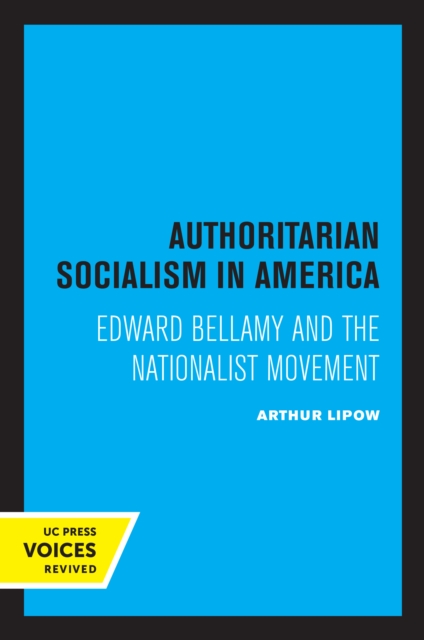
Authoritarian Socialism in America
In Authoritarian Socialism Arthur Lipow raises important issues about the nature of democracy and defines the intellectual roots of the authoritarian side of the socialist tradition in America and distinguishes it from democratic socialism. This title is part of UC Press's Voices Revived program, which commemorates University of California Press's mission to seek out and cultivate the brightest minds and give them voice, reach, and impact. Drawing on a backlist dating to 1893, Voices Revived makes high-quality, peer-reviewed scholarship accessible once again using print-on-demand technology. This title was originally published in 1982. Many titles in the Voices Revived program are also newly available as ebooks, offered at a discounted price to support wider access to scholarly work.
eBook

The American press and the Cold War : the rise of authoritarianism in South Korea, 1945-1954
During the Cold War, the United States enabled the rise of President Syngman Rhee's repressive government in South Korea, and yet neither the American occupation nor Rhee's growing authoritarianism ever became particularly controversial news stories in the United States. Could the press have done more to scrutinize American actions in Korea? Did journalists fail to act as an adequate check on American power? In the first archive-based account of how American journalism responded to one of the most significant stories in the history of American foreign relations, Oliver Elliott shows how a group of foreign correspondents, battling U.S. military authorities and pro-Rhee lobbyists, brought the issue of South Korean authoritarianism into the American political mainstream on the eve of the Korean War. However, when war came in June 1950, the press rapidly abandoned its scrutiny of South Korean democracy, marking a crucial moment of transition from the era of postwar idealism to the Cold War norm of American support for authoritarian allies.
Book

Tyranny Comes Home: The Domestic Fate of U.S. Militarism
Many Americans believe that foreign military intervention is central to protecting our domestic freedoms. But Christopher J. Coyne and Abigail R. Hall urge engaged citizens to think again. Overseas, our government takes actions in the name of defense that would not be permissible within national borders. Emboldened by the relative weakness of governance abroad, the U.S. government is able to experiment with a broader range of social controls. Under certain conditions, these policies, tactics, and technologies are then re-imported to America, changing the national landscape and increasing the extent to which we live in a police state. Coyne and Hall examine this pattern—which they dub \"the boomerang effect\"—considering a variety of rich cases that include the rise of state surveillance, the militarization of domestic law enforcement, the expanding use of drones, and torture in U.S. prisons. Synthesizing research and applying an economic lens, they develop a generalizable theory to predict and explain a startling trend. Tyranny Comes Home unveils a new aspect of the symbiotic relationship between foreign interventions and domestic politics. It gives us alarming insight into incidents like the shooting in Ferguson, Missouri and the Snowden case—which tell a common story about contemporary foreign policy and its impact on our civil liberties.
eBook

Executive Power in Crisis
Major crises can threaten political regimes by empowering demagogues and promoting authoritarian rule. While existing research argues that national emergencies weaken formal checks on executive authority and increase public appetites for strong leadership, no research evaluates whether crises increase mass support for the president’s institutional authority. We study this question in the context of the coronavirus/COVID-19 pandemic with an experiment embedded in a national survey of more than 8,000 U.S. adults. We find no evidence that the public evaluated policies differently if they were implemented via unilateral power rather than through the legislative process, nor did the severity of the pandemic at either the state, local, or individual levels moderate evaluations of executive power. Instead, individuals’ partisan and ideological views were consistently strong predictors of policy attitudes. Perhaps paradoxically, our results suggest that elite and mass polarization limit the opportunity for crises to promote public acceptance of strengthened executive authority.
Journal Article

The Fascist Threat
Observers of the January 6, 2021, events were astonished by the absence of an adequate police or security presence given the size of the crowd and prior knowledge of the groups that would be attending the march.8 By contrast, the police and Army Reserve were present in substantial numbers and responded violently to a peaceful demonstration of Black Lives Matter on June 1,2020, when the church and bible scene was staged in front of the parish house of St. John's Episcopal Church in Washington, DC.9,10 We want to believe that a fascist takeover is improbable, but there is urgency to consider it seriously. Think about the outcome of the Republican primaries in 201611 and of the following presidential election,12 or the 74 million Americans who voted for the then-current leadership, or a US president calling on far right militias to march on the Capitol.13 All these events were deemed a priori improbable by many experts. The \"Camp Auschwitz\" hoodie referred to the so-called \"final solution\" (1941 -1945), comprising the extermination of the Jews, which was the third phase of the Nazi \"public health\" program, following mass sterilization which began in 1933, and mass euthanasia on disabled Germans which began in 1939.
Journal Article

The Fujimori Legacy
President Alberto Fujimori’s sudden resignation in November 2000 brought an end to a highly controversial period in Peruvian history. His meteoric rise to power in 1990 fueled by widespread popular support, followed by his decision to dissolve Congress and rule by decree in 1992, has made his regime a focus of special attention by scholars trying to understand this complex and contradictory presidency.This book offers a comprehensive assessment of Fujimori’s regime in the context of Latin America’s struggle to consolidate democracy after years of authoritarian rule. Setting the regime conceptually in a discussion of alternative forms of government—delegative democracy, neopopulism, and electoral authoritarianism—the essays study it from two different perspectives: external (in its relations with political parties, Lima’s mayors, public opinion, women, the U.S. government) and internal (examining economic policies as determined by governing coalitions, networks of corruption, and Fujimori’s unsavory relationship with his security advisor Vladimiro Montesinos). Overall, The Fujimori Legacy helps illuminate the persistent obstacles that Latin American countries face in establishing democracy.In addition to the editor, contributors are Robert Barr, Maxwell Cameron, Catherine Conaghan, Henry Dietz, Philip Mauceri, Cynthia McClintock, David Scott Palmer, Kenneth Roberts, Gregory Schmidt, John Sheahan, Kurt Weyland, and Carol Wise.
eBook

China Experiments
All societies face a key question: how to empower governments to perform essential governmental functions while constraining the arbitrary exercise of power. This balance, always in flux, is particularly fluid in today's China. This insightful book examines the changing relationship between that state and its society, as demonstrated by numerous experiments in governance at subnational levels, and explores the implications for China's future political trajectory.
Ann Florini, Hairong Lai, and Yeling Tan set their analysis at the level of townships and counties, investigating the striking diversity of China's exploration into different governance tools and comparing these experiments with developments and debates elsewhere in the world. China Experiments draws on multiple cases of innovation to show how local authorities are breaking down traditional models of governance in responding to the challenges posed by the rapid transformations taking place across China's economy and society. The book thus differs from others on China that focus on dynamics taking place at the elite level in Beijing, and is unique in its broad but detailed, empirically grounded analysis.
The introduction examines China's changing governance architecture and raises key overarching questions. It addresses the motivations behind the wide variety of experiments underway by which authorities are trying to adapt local governance structures to meet new demands. Chapters 2-5 then explore each type of innovation in detail, from administrative streamlining and elections to partnerships in civil society and transparency measures. Each chapter explains the importance of the experiment in terms of implications for governance and draws upon specific case studies. The final chapter considers what these growing numbers of experiments add up to, whether China is headed towards a stronger more resilient authoritarianism or evolving towards its own version of democracy, and suggests a series of criteria by which China's political trajectory can be assessed.
Contents
1. China at a Crossroads
2. Streamlining the State
3. The Evolution of Voting Mechanisms
4. Civil Society
5. From Local Experiments to National Rules: China Lets the Sunshine In
6. Where is China Going?
eBook