
Catalogue Search | MBRL


Are you sure you want to remove the book from the shelf?

{{itemTitle}}
2,499
result(s) for
"Authority in literature"
Sort by:

Narratives of kingship in Eurasian empires, 1300-1800
\"In 'Narratives of Kingship in Eurasian Empires, 1300-1800' Richard van Leeuwen analyses representations and constructions of the idea of kingship in fictional texts of various genres, especially belonging to the intermediate layer between popular and official literature. The analysis shows how ideologies of power are embedded in the literary and cultural imagination of societies, their cultural values and conceptualizations of authority. By referring to examples from various empires (Chinese, Indian, Persian, Arabic, Turkish, European) the parallels between literary traditions are laid bare, revealing remarkable common concerns. The process of interaction and transmission are highlighted to illustrate how literature served as a repository for ideological and cultural values transforming power into authority in various imperial environments.\"--Cover page 4.
Book

L'Autorité De La Parole Spirituelle Féminine En Français Au XVIe Siècle
Les études réunies dans ce volume explorent la question de l'autorité de l'écriture spirituelle féminine au XVIe siècle en France. L'enjeu est de comprendre l'émergence spectaculaire du discours religieux écrit par des femmes en langue française à cette période. En s'appuyant sur les textes littéraires, les discours polémiques et les mémoires, les autrices et auteurs évaluent sur l'espace d'un siècle élargi les contradictions, les difficultés et les soutiens que rencontrent les initiatives féminines chrétiennes. Ils abordent notamment les sources de l'innutrition chrétienne, la question des modèles, la circulation et la réception de ces écrits, les foyers de l'autorité féminine et les marques textuelles de cette autorité, pour ouvrir de nouvelles perspectives sur l'écriture spirituelle féminine au début de l'époque moderne. This book provides new perspectives on the question of the authority of female spiritual writing in sixteenth-century France. This topic is crucial for understanding the emergence of religious discourse written by women in French language during this period. Drawing on literary texts, polemical discourses, and memoirs, the essays by leading scholars explore the contradictions, difficulties, and support on the part of men for Christian women's initiatives over the course of an extended century. In particular, they address the sources of Christian thought about women, the question of models, the circulation and reception of Renaissance feminine writings, and the textual marks of this authority in order to open up new perspectives on feminine spiritual writing in the early modern era.
eBook

1611 : authority, gender and the word in early modern England
\"1611: Authority, Gender, and the Word in Early Modern England explores issues of authority, gender, and language within and across the variety of literary works produced in one of most landmark years in literary and cultural history. Represents an exploration of a year in the textual life of early modern England juxtaposes the variety and range of texts that were published, performed, read, or heard in the same year, 1611 offers an account of the textual culture of the year 1611, the environment of language, and the ideas from which the authorised version of the English Bible emerged \"-- Provided by publisher.
Book
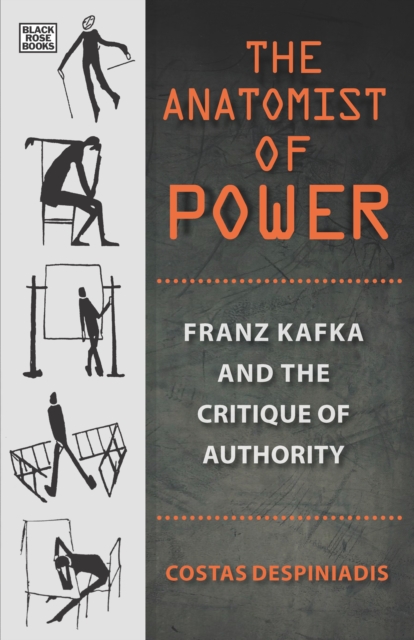
The Anatomist of Power
Few twentieth-century writers remain as potent as Franz Kafka—one of the rare figures to maintain both a major presence in the academy and on the shelves of general readers. Yet, remarkably, no work has yet fully focused on his politics and anti-authoritarian sensibilities. The Anatomist of Power: Franz Kafka and the Critique of Authority is a fascinating new look at his widely known novels and stories (including The Trial, Metamorphosis, In the Penal Colony and Amerika ), portraying him as a powerful critic of authority, bureaucracy, capitalism, law, patriarchy, and prisons. Making deft use of Kafka's diaries, his friends' memoirs, and his original sketches, Costas Despiniadis addresses his active participation in Prague's anarchist circles, his wide interest in anarchist authors, his skepticism about the Russian Revolution, and his ambivalent relationship with utopian Zionism. The portrait of Kafka that emerges is striking and fresh—rife with insights and a refusal to accept the structures of power that dominated his society.
eBook

The lily's tongue : figure and authority in Kierkegaard's Lily discourses
\"The Lily's Tongue offers a nuanced, sustained reading of what Maughan-Brown calls the \"Lily Discourses\"--Four discourses that Kierkegaard wrote about the instruction in the Gospel of Matthew to \"consider the lilies.\" Kierkegaard suggests that the lilies are \"authoritative\" rather than merely \"figural\" or \"metaphorical.\" The aim of this book is to explore what exactly Kierkegaard means by asking, How do texts speak with authority? In Maughan-Brown's reading, Kierkegaard argues that the key to a text's authority is in the act of reading itself. No text can have authority unless the reader grants it that authority. That is because, paradoxically, no text can avoid or escape the use of figural language. If the lilies speak authoritatively it is precisely because they are also figural. Texts do not speak directly; their tongue is always the lily's tongue. Drawing on the work of Kant, Hegel, Nietzsche, Benjamin, and Derrida, The Lily's Tongue situates Kierkegaard's reading of Matthew at the intersection of theological, philosophical, political, and literary investigations of figural language. It uniquely contributes to the ongoing discussion of Kierkegaard's theory and practice of \"indirect communication\" by introducing four pivotal signed discourses into this debate. In so doing, Maughan-Brown reveals a groundbreaking theory of figure--one that ultimately requires a renewed reading of the major pseudonymous works\"-- Provided by publisher.
Book
Reconstituting authority: American fiction in the province of the law, 1880-1920
In Reconstituting Authority, William Moddelmog explores the ways in which American law and literature converged in the late nineteenth and early twentieth centuries. Through close readings of significant texts from the era, he reveals not only how novelists invoked specific legal principles and ideals in their fictions but also how they sought to reconceptualize the boundaries of law and literature in ways that transformed previous versions of both legal and literary authority.Moddelmog does not assume a sharp distinction between literary and legal institutions and practices but shows how writers imagined the two fields as engaged in the same cultural process. He argues that because the law was instrumental in setting the terms by which concepts such as race, gender, nationhood, ownership, and citizenship were defined in the nineteenth century, authors challenging those definitions had to engage the law on its own terrain: to place their work in a dialogue with the law by telling stories that were already authorized (though perhaps suppressed) by legal institutions.The first half of the book is devoted in separate chapters to William Dean Howells, Helen Hunt Jackson, and Pauline Hopkins. The focus shifts from large theoretical concerns to questions of contract and native sovereignty, to issues of African American citizenship and racial entitlement. In each case the discussion is rooted in a larger consideration of the rule (or misrule) of law.The second half of the book turns from the rule of law to the issue of property, specifically the Lockean version of the self that tied identity to legal conceptions of property and economic value. In separate discussions of Charles Chesnutt, Edith Wharton, and Theodore Dreiser, Reconstituting Authority reveals authors as closely engaged with those changing perspectives on property and identity, in ways that challenged the racial, gendered, and economic consequences of America's possessive individualism.
eBook


Writing Captivity in the Early Modern Atlantic
Drawing on texts written by and about European and Euro-American captives in a variety of languages and genres, Lisa Voigt explores the role of captivity in the production of knowledge, identity, and authority in the early modern imperial world.The practice of captivity attests to the violence that infused relations between peoples of different faiths and cultures in an age of extraordinary religious divisiveness and imperial ambitions. But as Voigt demonstrates, tales of Christian captives among Muslims, Amerindians, and hostile European nations were not only exploited in order to emphasize cultural oppositions and geopolitical hostilities. Voigt's examination of Spanish, Portuguese, and English texts reveals another early modern discourse about captivity--one that valorized the knowledge and mediating abilities acquired by captives through cross-cultural experience.Voigt demonstrates how the flexible identities of captives complicate clear-cut national, colonial, and religious distinctions. Using fictional and nonfictional, canonical and little-known works about captivity in Europe, North Africa, and the Americas, Voigt exposes the circulation of texts, discourses, and peoples across cultural borders and in both directions across the Atlantic.
eBook

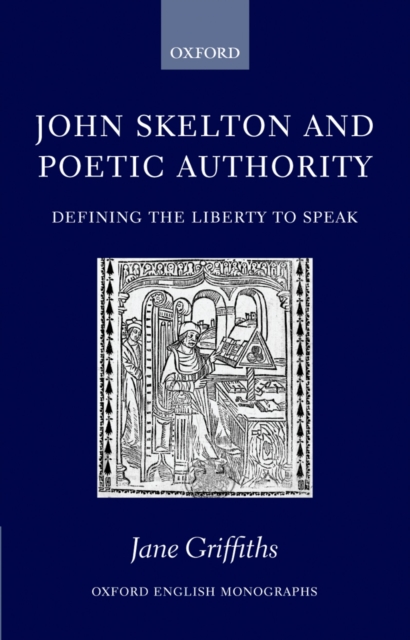
John Skelton and poetic authority : defining the liberty to speak
This book is the first book-length study of Skelton for almost twenty years (including the only substantial study to date of Skelton's translation of the Bibliotheca Historica of Diodorus Siculus), and the first to trace the roots of his poetic theory to his practice as a writer and translator. It demonstrates that much of what has been found challenging in his work may be attributed to his attempt to reconcile existing views of the poet's role in society with discoveries about the writing process itself. The result is a highly idiosyncratic poetics that locates the poet's authority decisively within his own person, yet at the same time predicates his ‘liberty to speak’ upon the existence of an engaged, imaginative audience. Skelton is frequently treated as a maverick, but this book places his theory and practice firmly in the context of later sixteenth as well as 15th-century traditions. Focusing on his relations with both past and present readers, it reassesses his place in the English literary canon.
eBook