
Catalogue Search | MBRL


Are you sure you want to remove the book from the shelf?

{{itemTitle}}
17
result(s) for
"Authors, English 19th century Political and social views."
Sort by:

Romantic cosmopolitanism
\"Romantic Cosmopolitanism shows how cosmopolitanism in the early nineteenth century offers a non-unified formulation of the nation that stands in contrast to more unified models such as Edmund Burke's which found nationality in, among other things, language, history, blood and geography\"--Provided by publisher.
Book

Word by Word
Consigned to illiteracy, American slaves left little record of their thoughts and feelings—or so we have believed. But a few learned to use pen and paper to make sense of their experiences, despite prohibitions. These authors’ perspectives rewrite the history of emancipation and force us to rethink the relationship between literacy and freedom.
eBook


The political work of Northern women writers and the Civil War, 1850-1872
This volume explores the lives and works of nine Northern women who wrote during the Civil War period, examining the ways in which, through their writing, they engaged in the national debates of the time. Lyde Sizer shows that from the 1850 publication of Uncle Tom's Cabin through Reconstruction, these women, as well as a larger mosaic of lesser-known writers, used their mainstream writings publicly to make sense of war, womanhood, Union, slavery, republicanism, heroism, and death. Among the authors discussed are Lydia Maria Child, Harriet Beecher Stowe, Sara Willis Parton (Fanny Fern), Frances Ellen Watkins Harper, Mrs. E. D. E. N. Southworth, Mary Abigail Dodge (Gail Hamilton), Louisa May Alcott, Rebecca Harding Davis, and Elizabeth Stuart Phelps. Although direct political or partisan power was denied to women, these writers actively participated in discussions of national issues through their sentimental novels, short stories, essays, poetry, and letters to the editor. Sizer pays close attention to how these mostly middle-class women attempted to create a \"\"rhetoric of unity,\"\" giving common purpose to women despite differences in class, race, and politics. This theme of unity was ultimately deployed to establish a white middle-class standard of womanhood, meant to exclude as well as include. |Explores the lives and works of nine Northern women who wrote during the Civil War period, examining the ways in which they engaged in the national debates of the time. Authors discussed are Lydia Maria Child, Harriet Beecher Stowe, Sara Willis Parton (Fanny Fern), Frances Ellen Watkins Harper, Mrs. E. D. E. N. Southworth, Mary Abigail Dodge (Gail Hamilton), Louisa May Alcott, Rebecca Harding Davis, and Elizabeth Stuart Phelps.
eBook

Thinking Outside the Book
In Thinking Outside the Book, Augusta Rohrbach works through the increasing convergences between digital humanities and literary studies to explore the meaning and primacy of the book as a literary, material, and cultural artifact. Rohrbach assembles a rather unlikely cohort of nineteenth-century women writers -- Jane Johnston Schoolcraft, Sojourner Truth, Hannah Crafts, Augusta Evans, and Mary Chesnut -- to consider the publishing culture of their period from the perspective of our current digital age, bringing together scholarly concepts from both print culture and new media studies.
In nineteenth-century America, women from a variety of racial and class affiliations were bombarding the print market with their literary productions, taking advantage of burgeoning rates of literacy and advances in publishing technology. Their work challenged prevailing modes of authorship and continues to do so today. Each chapter of Thinking Outside the Book positions a focal figure as both paradigmatic and problematic within the context of key terms that define the study of the book. In lieu of terms such as literacy, authorship, publication, edition, and editor, Rohrbach develops an alternate typology that includes mediation, memory, history, testimony, and loss. Recognizing that the field spans radio, cinema, television, and the Internet, she draws comparisons to the present day, when Web 2.0 allows writers from varying backgrounds and positions to seek out readers without \"gatekeepers\" limiting their exposure.
More than a literary history, this book takes up theories of recovery, literacy, authorship, narrative, the book, and new media in connection with race, gender, class, and region.
eBook

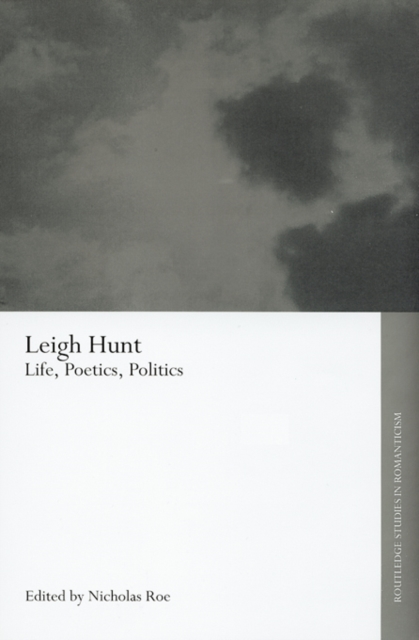
Leigh Hunt
Recent critical and scholarly interest in John Keats has encouraged a resurgence of interest in his friend and mentor, the poet and journalist Leigh Hunt. This timely collection of essays by leading British and North America romanticists explores Hunt's life, writings and cultural significance over the full length of his career, arguing for the recognition of Hunt's importance to British intellectual and literary culture in the Romantic period.
eBook

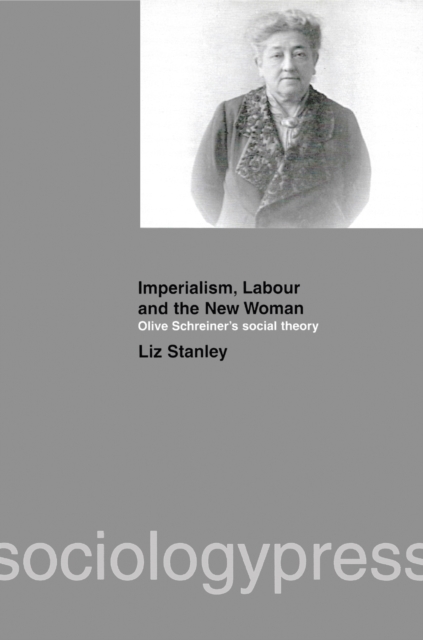
Imperialism, Labour and the New Woman
Olive Schreiner (1855-1920) was the best-known feminist theorist and writer of her time. Her writings spanned a number of conventionally separate genres (including the novel, short story, allegory, political essay, polemic and theoretical treatise), which she crafted to produce a highly distinctive feminist and analytical 'voice'. A feminist who was contemporaneously an internationally-renowned social commentator, Schreiner's developing political analysis was - and still is - highly original. She developed a materially-based socialist and feminist analysis of 'labour' which led her to theorise social and economic change, divisions of labour in society and between women and men, capitalism and imperialism, around innovative ideas about how -- and by whom -- economic and social value was produced. She combined with this a keen attention to inter-personal relations, between women as literally or politically sisters, between 'respectable' and sexually outcast women, between feminist women and the 'New Men', and within the family. Distinctively, Schreiner's writings on economic and political life in South Africa criticised the policies and practice of Rhodes in the Cape Colony and British imperialism in southern Africa more widely. She opposed the South African War of 1899-1902, promoted federation rather than union as the form the South African state should take and insisted on equal political rights for all. Schreiner steadfastly opposed the development of apartheid segregationist policies and provided a radical analysis of the relationship between 'race' and capital.
Imperialism, Labour and the New Woman is based on primary archive research, making particular use of Schreiner's unpublished letters and other major manuscript sources to provide a major reconceptualisation of the scope and importance of her writings and innovative and experimental ideas about genre and form. It offers a major rethinking of Schreiner's political writings on South Afric
eBook
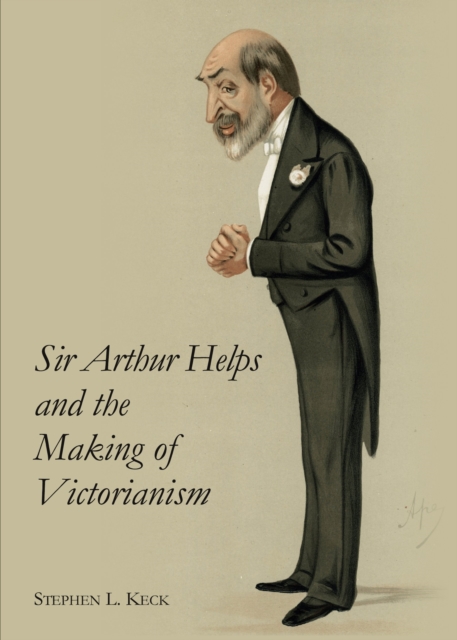
Sir Arthur Helps and the Making of Victorianism
This study is the first treatment devoted to Sir Arthur Helps (1813-1875), who was a prominent figure in the mid-Victorian world. Readers will discover that from the 1840s until his death, Helps was influential and well-known to many key figures: Carlyle, Ruskin, Froude and the Queen were among those whom he befriended. In fact, it was almost certainly these relationships which Helps sought to protect by directing that the bulk of his private papers and correspondence be destroyed upon his de.
eBook